

For upholstery, heavy canvas and bags, a built-in walking-foot machine is a different purchase from a household sewing machine with a snap-on even-feed foot. The Consew P1206RB is the general industrial setup to compare first; the Reliable Barracuda 200ZW offers portable straight and zigzag sewing; and the JUKI DNU-1541 is a compound-feed choice for repeated heavy seams. Six machines below cover distinct needs, including a medium-weight top-and-bottom-feed JUKI and a head-only Consew upgrade.
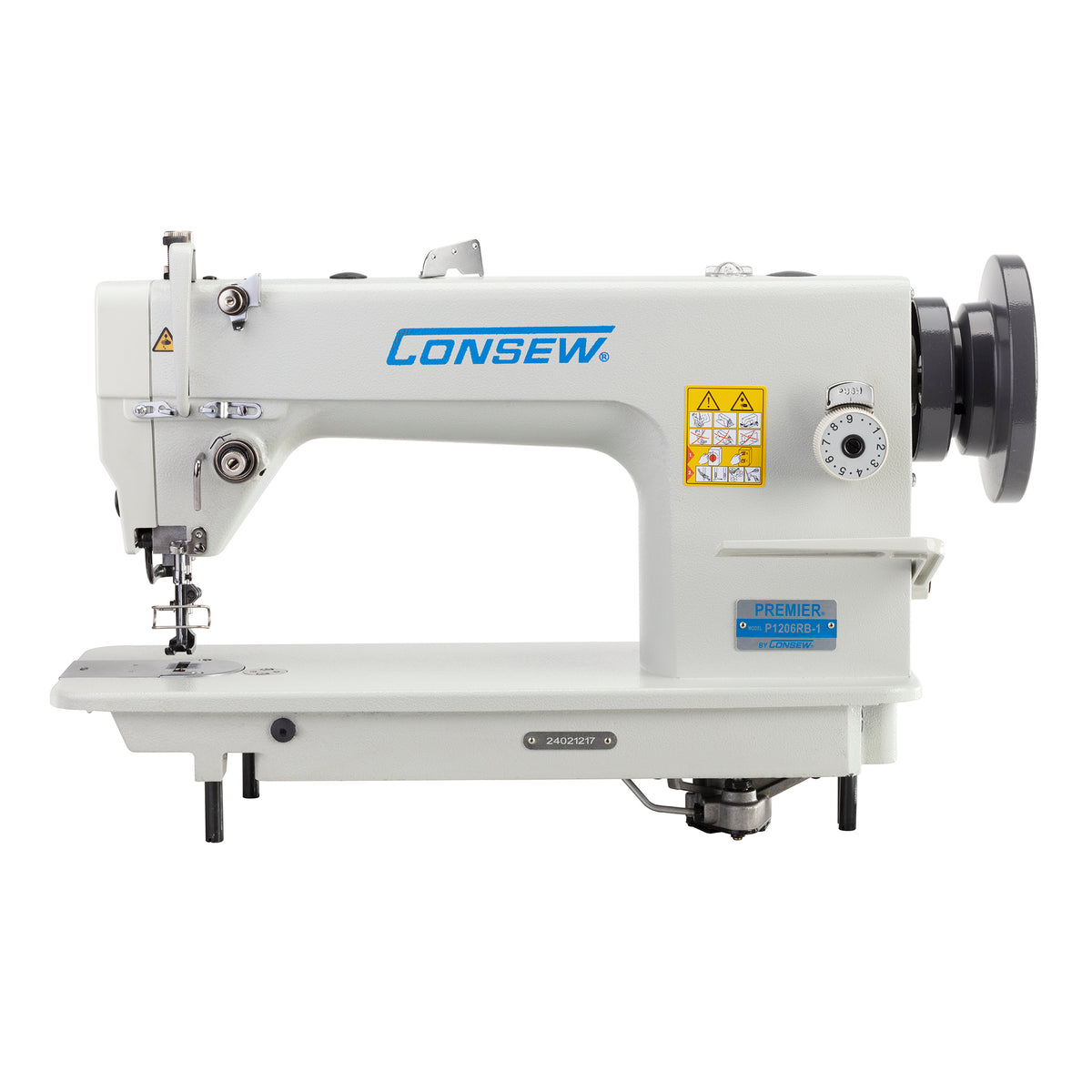
A compound-feed straight-stitch station for upholstery and canvas; verify the table and servo package.
A carryable top-and-bottom-feed machine with zigzag for marine canvas and repairs.
A JUKI compound-feed head for recurring layered heavy-material seams.
| Machine | Feed and stitch | Choose it for | Check before buying |
|---|---|---|---|
| Consew P1206RB Walking Foot Machine | Compound feed; straight stitch | Upholstery and canvas work with a table and servo motor | Confirm exact P1206RB configuration and assembly |
| Reliable Barracuda 200ZW | Top-and-bottom walking feed; straight/zigzag | Boat canvas repairs and a movable work area | 34 lb portable unit; smaller work space |
| JUKI DU-1181N | Top-and-bottom feed; straight stitch | Consistent handling of layered textiles and piping | No needle feed; industrial installation |
| JUKI DNU-1541 | Unison/compound feed; straight stitch | Repeated heavy-material seams and controlled layer feeding | Large industrial station; variant features differ |
| Reliable 4000SW | Compound walking foot; straight stitch | A listed table, servo motor and light in one offer | Fixed work area; inspect shipping and setup details |
| Consew 206RB-5 Sewing Machine Head | Triple/compound feed; straight stitch | A shop that already has or plans the right industrial stand | Linked Amazon item is a head only |
A top-and-bottom-feed machine uses alternating feet with the lower feed dog to move layers. A compound or unison-feed machine also moves the needle with the work during the feed cycle. Both differ from a household walking-foot attachment, which is useful for quilts and layered everyday fabrics but does not change the underlying machine into a shop-grade industrial system. Choose by the fabric, seam thickness, thread and frequency of use, not by the words “heavy duty” in a listing.
The Barracuda 200ZW can sew a zigzag up to 5 mm wide as well as a straight stitch, useful for certain canvas work. The other five picks here are straight-stitch machines. A straight-stitch head can excel at a long, even seam, but it cannot make a zigzag merely by changing the presser foot. Confirm your project’s stitch requirement before comparing motor speed.
A head-only offer, such as the linked Consew 206RB-5, needs a compatible table, motor, stand and setup before sewing. Other listings describe a complete workstation, but freight, assembly and voltage still need checking. Budget for suitable 135×17 needles where specified, thread, bobbins, machine oil and service. The Barracuda is portable but has less room to maneuver large panels; industrial flatbeds claim a dedicated work area.
Maximum stitch length gives room for longer topstitching, but the ideal setting depends on the material and thread. Presser-foot lift tells you how much clearance you have to place a seam under the foot; it does not prove the machine will sew that full thickness reliably. Rated top speed is not the speed to use over a bulky junction. Ask for a sample sewn from your real stack—fabric, interfacing, webbing, piping or leather—with the intended needle and thread.
If your main work is quilting or ordinary garment layers, compare sewing machines for quilting and a compatible even-feed foot. For leather projects, our leather sewing machine guide discusses the material separately; the thickness and finish of leather still determine the right machine.
Key details: Consew P1206RB-1 maker specifications: compound walking foot feed; 7 mm maximum stitch; 16 mm knee-lift clearance; 135×17 needles; 3,000 stitches/minute rated maximum. The linked Amazon offer describes a table and servo motor.
For a dedicated upholstery or canvas station, this is the most straightforward place to start. The moving needle, alternating feet and lower feed work together so the top and bottom layers travel more evenly through a seam. A servo motor can make low-speed control less intimidating than an older clutch-motor installation, although the machine still needs industrial setup, correct threading and regular oiling.
Consew currently documents the P1206RB-1, while the Amazon title abbreviates the model to an upholstery walking-foot machine. Check the model plate and the live package listing before purchase, especially whether the table, stand, motor, knee lifter and hardware are included and whether the stand needs assembly. It is a straight-stitch flatbed: choose the portable Barracuda if a zigzag stitch is essential, or the 206RB-5 if its longer maximum stitch and specific head-only purchase suit your shop.
Key details: Up to 800 stitches/minute; 0–6 mm stitch length; 0–5 mm zigzag width; 7 in work space; 34 lb; built-in speed reducer; 135×17 needle system; 110/120 V model.
The Barracuda is the practical alternative when a permanent industrial table cannot fit your space. It combines top and bottom feeding with straight and zigzag stitches in a carryable metal machine, and the speed reducer helps with controlled work through canvas and layered marine fabric. The reverse lever is useful for securing seams. Its 5 mm zigzag option makes it more flexible for certain repairs than the straight-stitch industrial heads in this list.
Portable still means 34 pounds, and the seven-inch work space is tighter when wrestling with a large sail or upholstery panel. Reliable describes the machine for medium to heavy material and warns against very thin fabrics. It is not a substitute for a wide industrial table in daily production. The listing is the 120 V unit; confirm the voltage, included accessory kit and any optional stand separately.
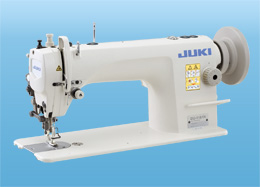
Key details: Top-and-bottom feed; 9 mm maximum stitch; 15 mm presser-foot lift with knee lifter; double-capacity hook; up to 2,000 stitches/minute; automatic lubrication.
JUKI’s DU-1181N uses alternating top feed and lower feed to help difficult layered textiles move through the machine with less slipping. It offers a nine-millimeter maximum stitch and a generous knee-operated presser-foot lift, useful when positioning a bulky seam or piping. The double-capacity hook reduces bobbin changes during repeated work, and the top-foot movement can be adjusted for changes in material height.
This is top-and-bottom feed, not the needle-feed compound system in the DNU-1541, Consew models or Reliable 4000SW. That distinction matters for thick, slippery assemblies that need the needle to travel with the fabric. It is a straight-stitch industrial head requiring the right table, motor and installation; verify exactly what the current Amazon seller includes. For occasional small repairs, the Barracuda is easier to put away.
Key details: DNU-1541 base model: compound/unison feed; 9 mm maximum stitch; 16 mm knee-lift clearance; double-capacity hook; up to 2,500 stitches/minute. The 1541S and 1541-7 have different features.
The DNU-1541 is a stronger match than the DU-1181N when the needle, lower feed and alternating feet should carry thick or slippery layers together. JUKI specifies a nine-millimeter maximum stitch, a high knee lift and adjustable foot motion for crossing uneven seams. These capabilities are useful for bags, upholstery and heavier canvas where layers try to creep apart.
Check the suffix carefully. JUKI lists the standard DNU-1541, the 1541S with a safety mechanism and the 1541-7 with automatic thread trimming as separate variants. The linked Amazon title says DNU-1541, so do not assume the S safety mechanism or -7 trimmer is included. Likewise confirm whether the offer includes a table, motor and stand; the product title alone does not settle that. Expect industrial threading, oiling and setup rather than home-machine convenience features.
Key details: Amazon offer describes a single-needle walking-foot machine with 550 W SewQuiet servo motor, heavy-duty table and K-legs, LED light, 14 mm foot lift and up to 2,000 stitches/minute. Confirm included parts in the live offer.
The 4000SW suits a buyer who wants to compare a full industrial workstation rather than source a machine head, servo motor and table separately. The linked listing names those components, plus a work light, and describes a compound-feed straight-stitch machine for medium to heavy work. The large hook and knee lifter support longer sessions with upholstery, canvas or bags.
This is a full-size installation with a dedicated flatbed and table. Confirm assembled versus freight-packed delivery, motor specification, voltage and local service before ordering. Reliable has newer machines in its range, so check the live 4000SW offer and support arrangements closely.

Key details: Triple feed; up to 10 mm stitch length; 14 mm foot clearance; 135×17 needle system; large horizontal-axis hook; safety clutch. Linked Amazon listing explicitly says “Sewing Machine Head.”
Consew’s 206RB-5 is a long-standing compound-feed option for upholstery, vinyl, canvas and leather projects. Its moving needle and alternating presser feet help keep multiple layers together, while the ten-millimeter maximum stitch and large hook are useful for visible topstitching and longer production runs. The safety clutch and adjustable reverse are practical features for shop use.
The linked Amazon offer is for the machine head. Plan for a compatible table, motor, stand, knee lifter and professional setup if you do not already have them; the additional parts can materially change total cost. This is why it is the specialist upgrade here, not the default first purchase. Compare it against the complete Consew P1206RB offer and verify the actual bundled components before paying.
No. A domestic even-feed foot can help a quilt sandwich or slippery fabric layers move more evenly, but the machine retains its original needle, feed, motor and material limits. The industrial machines here have alternating walking feet built into the feed mechanism; several also have needle feed.
Top-and-bottom feed, as on the JUKI DU-1181N or Barracuda, can help layered textiles travel together. Compound feed also advances the needle with the material and is especially worth considering for repeated bulky or slippery assemblies. Material tests, stitch quality and the right machine setup matter more than a label alone.
Several manufacturers list leather among suitable applications, but leather thickness, temper, seam stack, needle point, thread and motor setup all matter. Do not treat a maximum presser-foot lift as a guaranteed leather thickness rating. Test the actual project material and ask the seller or technician about the intended workload.
Industrial heads are often sold separately to let shops select a compatible motor, stand and table. The linked Consew 206RB-5 is explicitly a head-only listing. For every listing, inspect the current contents and delivery terms; do not infer a complete station from a photo of a mounted machine.
The Reliable Barracuda 200ZW is the portable pick, though its 34-pound weight still calls for a stable work surface and careful lifting. The industrial flatbeds are designed around dedicated tables and should be planned as workstations.
Choose the Consew P1206RB if you are building a straight-stitch industrial station for upholstery and canvas and the live package includes the parts you need. Choose the Reliable Barracuda 200ZW when portability and zigzag are priorities. For a dedicated compound-feed JUKI, choose the DNU-1541 after checking its exact variant and package; the DU-1181N is the top-and-bottom-feed alternative for medium-weight layers. The Reliable 4000SW listing describes a workstation package, while the Consew 206RB-5 link is for a head-only upgrade.