

As an Amazon Associate I earn from qualifying purchases.
A good sewing table should fit your machine, your chair and your projects. A recessed platform helps fabric feed at tabletop height; a folding table saves space; a storage cart hides supplies; and an adjustable cutting table makes standing work easier.
For most regular sewists, start with the Sew Ready Eclipse 13362. Choose the Arrow Gidget II for fold-flat storage or the Sauder Cart for tidy supplies. Before buying, compare machine weight with the platform or lift rating, not just the tabletop rating.
Dedicated recessed workstation with an extension leaf and three drawers.
A proper machine cutout that stows to just 4.5 inches high.
Closed-door supply storage and a flexible drop-leaf worktop.
The footprint shown is the open working size where known. Machine capacity refers to the sewing platform or lift, not the general tabletop. Scroll the table sideways on smaller screens.
| Sewing table | Choose it for | Open footprint | Machine arrangement / limit |
|---|---|---|---|
| Sew Ready Eclipse 13362 | Best everyday sewing workstation | 60.25 x 23.75 in | 25 lb sewing platform |
| Arrow Gidget II 611 | Best fold-flat table | 40.5 x 19.75 in | 45 lb machine maximum |
| Sauder Cart 414873 | Best cabinet for hidden supplies | 40.08 x 19.45 in* | Machine works on top, not a drop platform |
| Sew Ready Pivot 13395 | Best small-space organizer | 47.75 x 23.5 in | 20 lb sewing platform |
| Arrow Judy 101 | Best lift cabinet for heavier machines | 50.75 x 17.25 in open | 55 lb machine maximum |
| Sew Ready Cutting Table 13374 | Best for standing fabric cutting | 58.75 x 36 in | Not a recessed sewing-machine desk |
| Sew Ready Folding 13373 | Best multipurpose fold-away desk | 47.5 x 28 in | 20 lb sewing platform |
*For the Sauder cart, the listed cabinet width describes the main furniture, not a guaranteed maximum span with every leaf fully unfolded. Confirm the exact assembly dimensions.
For someone who sews regularly but does not want a room-dominating cabinet, the Eclipse 13362 offers the most sensible mix of workspace and storage. The drop-down machine shelf lets you bring the bed closer to tabletop height while leaving the main surface available for pinning, guiding fabric and keeping tools within reach.
The important number is the 25-pound limit on the machine platform, not the 100-pound limit advertised for the main tabletop. If your sewing machine is heavier than 25 pounds, this is not the right lowered-platform desk even though the overall furniture looks substantial.
The 9.5-inch folding leaf is genuinely useful when you need extra space for a seam or pattern piece, and it can be folded away after a project. The three cloth drawers work well for thread, small notions and tools; they are less suitable for heavy supplies than rigid cabinet drawers. The 60-inch open width also needs more wall space than a small-room desk.
Who should buy it: Choose it if you want one dedicated seated sewing station that can also hold patterns, threads and small tools.
Who should skip it: Skip it for heavy embroidery machines, large quilt support needs or rooms without roughly five feet of wall space.
The Gidget II solves the problem most fold-up craft tables do not: it provides a cutout and adjustable sewing-machine platform while still storing almost flat. It folds to roughly 4.5 inches high, and the wheels at one end make moving it more manageable once the machine is removed.
Compared with inexpensive folding desks, the 45-pound stated machine capacity and generous lift opening make it a better candidate for many full-size machines. However, a large opening does not guarantee your particular machine fits. Check the base shape, power-cord location, and whether a custom acrylic insert exists for your model. An insert for a truly flush surface is sold separately.
The tradeoff is straightforward: you get a stable, portable sewing surface, not a storage station. It has no fabric drawers or broad rear extension for large quilts. For an occasional sewist whose table must disappear between projects, that is often a very worthwhile exchange.
Who should buy it: Choose it for a shared room, frequent fold-away storage or a heavier machine that fits the opening.
Who should skip it: Skip it if you need built-in supplies storage or a generous surface behind the needle.
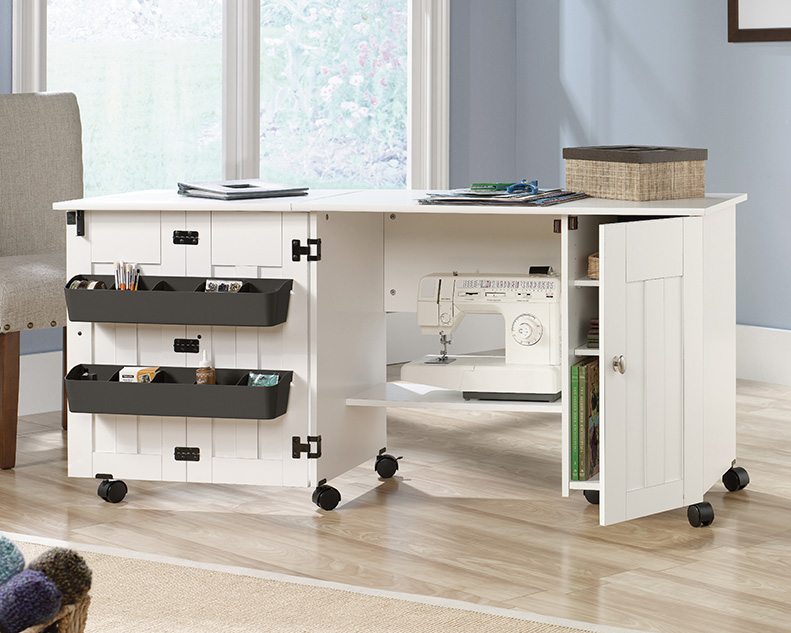
Not every sewist needs a recessed machine platform. If keeping a living room or guest bedroom tidy is the priority, the Sauder cart makes more sense than a wide open-frame sewing desk. Thread, small accessories and part-finished projects can be put away behind the cabinet door, and the fold-out working surface is useful for temporary cutting or marking.
Its major limitation is also the reason to choose it correctly: this is not a flatbed cabinet with a lowering lift. The machine sits on the top when you sew, so the machine bed is higher than the tabletop. You can store supplies or a suitably sized machine inside when not in use, but verify shelf dimensions and weight ratings before treating an interior shelf as a machine lift.
The casters make repositioning easier, although the cart is still furniture rather than something to haul from class to class. If your main annoyance is visible clutter and not the height of the machine bed, the Sauder has the stronger proposition.
Who should buy it: Choose it when organizing supplies and closing everything away matters more than a flush sewing surface.
Who should skip it: Skip it if a recessed sewing position or support for a large quilt is essential.
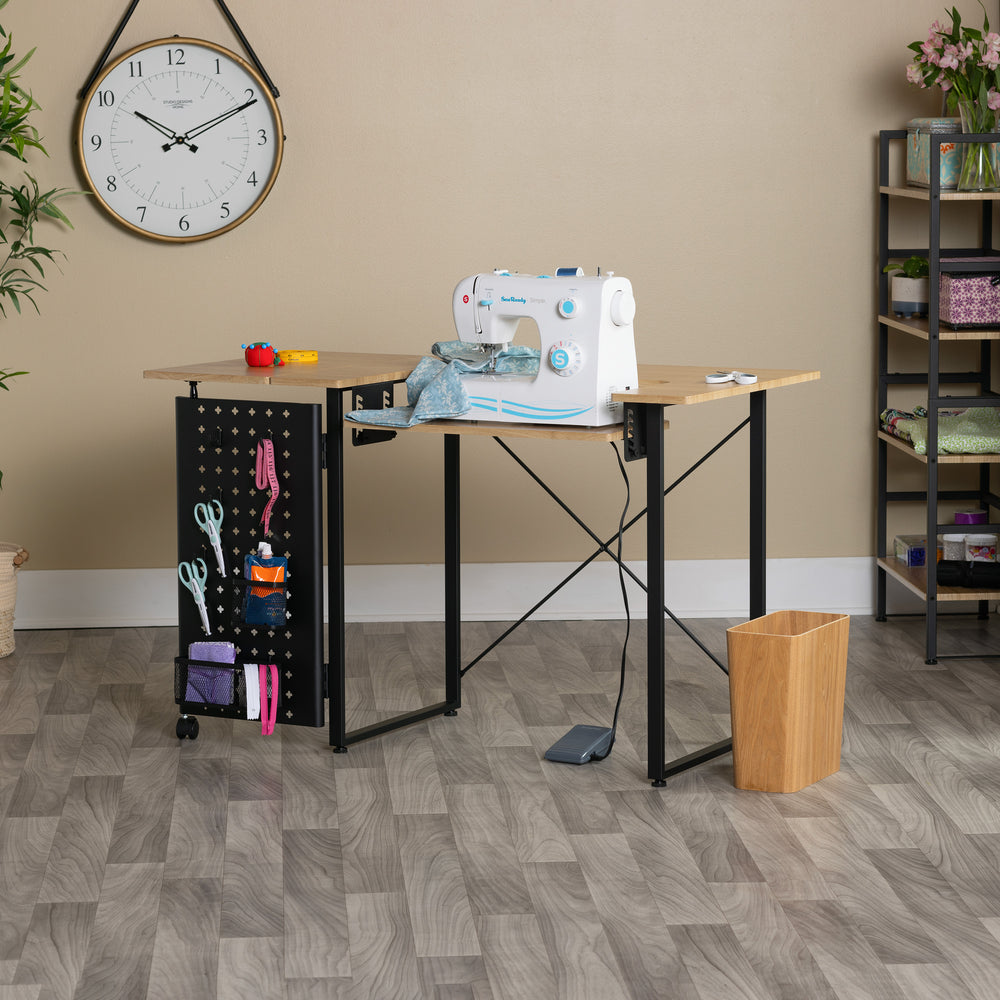
The Pivot 13395 is an appealing compromise for a bedroom or corner sewing station. The 36-inch main top feels less imposing than a conventional craft table, while the swing-out pegboard panel provides immediate access to scissors, seam rippers, measuring tools and other small essentials.
It has six machine-platform height positions, which is more adaptable than a single fixed cutout. But do not mistake adjustable height for universal compatibility. Its 20-pound platform limit rules out some heavier sewing and embroidery machines. Check machine dimensions and weight before buying, and allow clearance so the panel can swing out without hitting nearby furniture.
The storage baskets are great for frequently used notions, not for enclosing piles of fabric. In return you get a more accessible setup than a rolling cabinet where everything has to be unpacked before stitching.
Who should buy it: Choose it for a light to medium sewing machine and a compact, organized crafting corner.
Who should skip it: Skip it if you need full cabinetry, a machine platform above 20 lb, or room for large fabric cutting.
The Judy is the choice for sewists who want a proper cabinet-style setup but do not have space for a huge quilting workstation. The hydraulic lift lets the machine move between free-arm, flatbed and storage positions, so you do not have to lift a heavy machine on and off the tabletop for every session.
Its 55-pound machine limit puts it in a different class from the lighter Sew Ready desks above. That said, the lift opening is about 20.75 by 11 inches. A machine can be under the weight limit and still fail to fit because of its base width, front controls or power connection; the correct fit chart matters.
When closed, the cabinet uses much less floor width, and the locking casters help you place it where needed. A custom acrylic insert to bridge the gap around your exact machine is generally an extra purchase. This is a meaningful upgrade for regular sewing, not the low-cost option for someone who only repairs hems occasionally.
Who should buy it: Choose it if you need enclosed machine storage and a powered-by-hand hydraulic lift for a substantial machine.
Who should skip it: Skip it if you want a giant cutting surface or cannot accommodate assembly and cabinet movement.
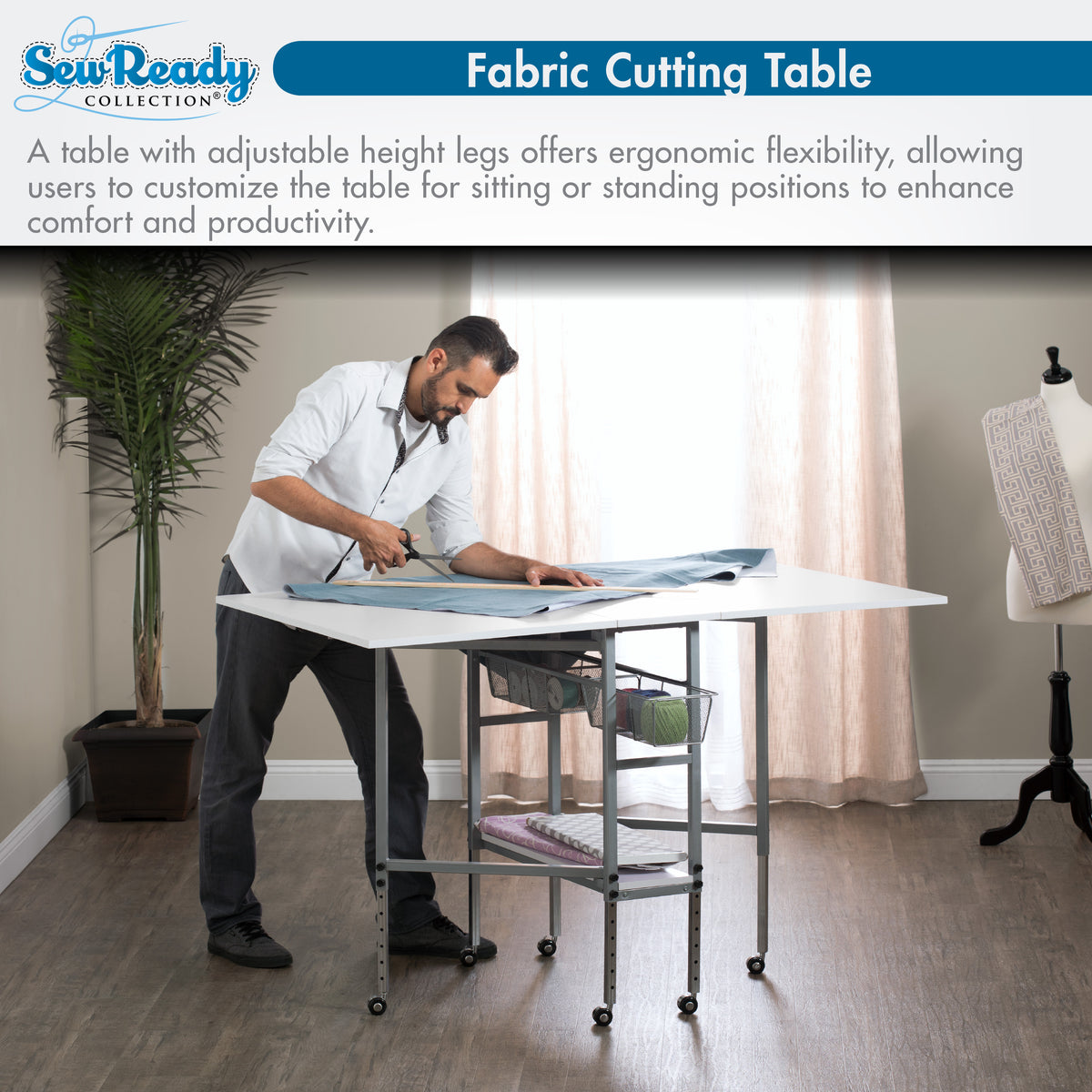
A comfortable cutting station is one of the biggest upgrades for garment sewing and quilting. Spreading fabric on a low dining table encourages awkward bending and makes keeping long patterns straight harder. The 13374 offers a broad 36-inch-deep layout area and adjusts from 30.25 to 39.25 inches high, so the standing work surface can be better matched to the person using it.
Both wings fold down, leaving a narrow 12.25-inch-wide cart for storage. Mesh drawers and a lower shelf hold rulers, chalk and pattern tools. Manufacturer limits are 50 pounds for the center and bottom panels, and 25 pounds for each side panel; those are separate limits, not a combined rating for placing one heavy object across the tabletop.
This is not a machine-lift table. You can use it for temporary projects, but the height range and fold-out leaves are optimized for standing cutting, pinning and layout rather than hours at a seated sewing machine.
Who should buy it: Choose it for regular pattern drafting, quilting cuts and fabric preparation where standing posture matters.
Who should skip it: Skip it as your only seated sewing station or for a room where the 36-inch depth is impractical.
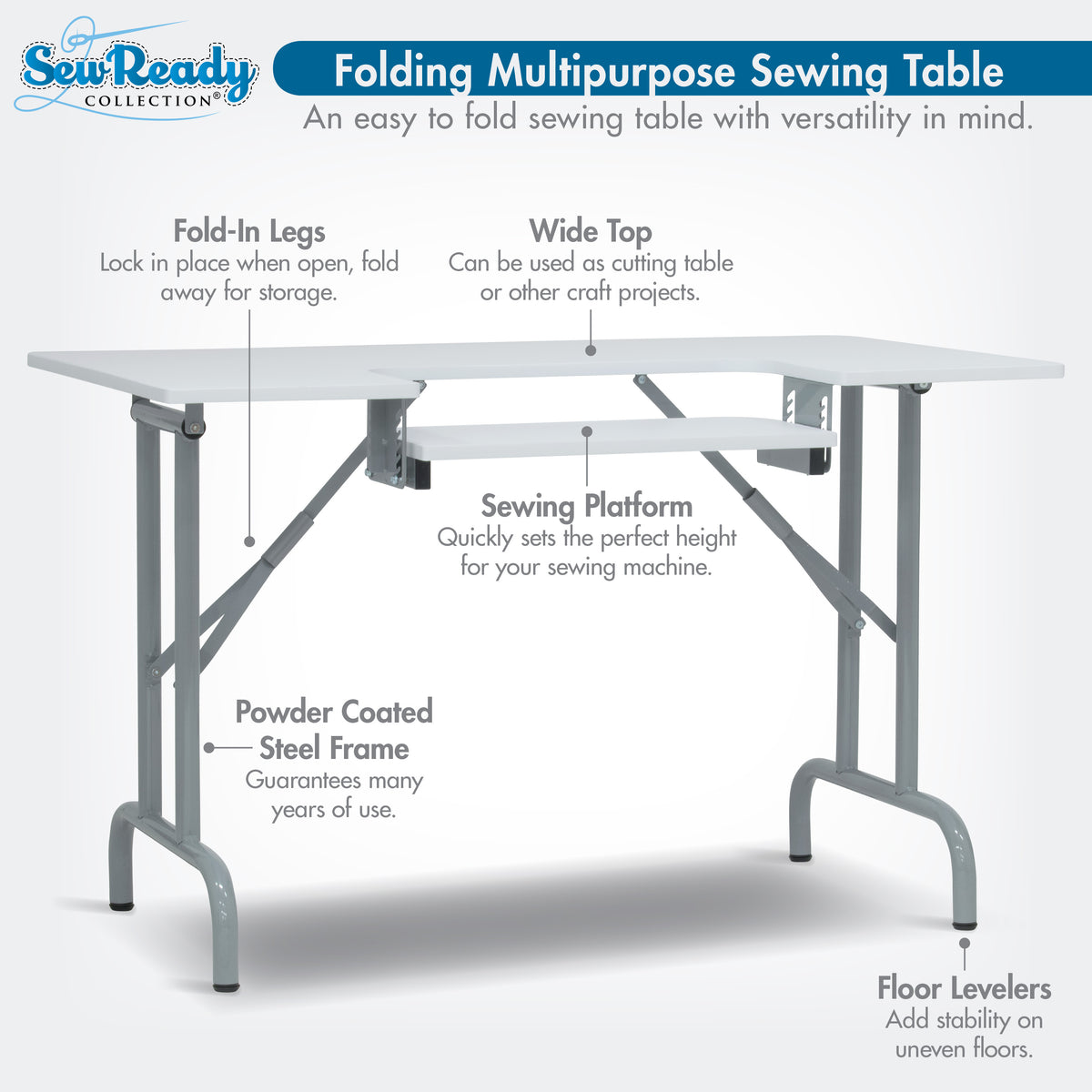
For someone who needs a craft table one day and a clear room the next, the 13373 is a practical middle ground. Unlike an ordinary folding banquet table, its six-position adjustable platform brings the machine down from tabletop level. The 28-inch depth offers more front-to-back workspace than the narrow Gidget II.
The compromises are the 20-pound machine-platform rating and the complete lack of storage. The table folds flat by bringing in the legs, but you should remove the sewing machine before folding or repositioning it. Because it is a simple steel-frame table, it also has fewer options for organizing tools than a dedicated sewing cabinet.
If your machine is light enough and you use the same room for many purposes, it provides usable working space without the cost and bulk of enclosed furniture. For a heavier machine, the Gidget II or Judy is the safer direction.
Who should buy it: Choose it for a light sewing machine and a flexible hobby or guest room.
Who should skip it: Skip it for machines above 20 pounds on the recessed platform or for permanent organized storage.
A desk can have the perfect-looking cutout and still be unsuitable for your machine. Before ordering, use your machine manual and the furniture manufacturer’s fit diagram for these checks.
For a practical sizing estimate, try the CraftyHangouts Sewing Table Size Calculator. It helps you compare room size, machine clearance and chair space before committing to furniture.
Open width is only one dimension of usable space. Allow extra room for pulling out a chair, swinging doors and supporting fabric behind the needle. The visual below compares the nominal open widths of four models, not their depth or total floor area.
Best for routine seated sewing, especially when you want less fabric drag and a more continuous working surface.
Best when the room has a second purpose. Check folded thickness, safe machine removal and where you will store the machine.
Best for regularly sewing with a heavier machine and hiding it between sessions. Fit-chart accuracy is essential.
A cart prioritizes hidden notions, while a cutting table prioritizes broad standing-height layout. Neither automatically replaces a recessed machine desk.
Align the work, not just the furniture. When seated, your shoulders should relax and your hands should reach the machine without hiking your elbows. Adjust the chair and, where possible, the sewing platform; do not assume the manufacturer’s nominal desk height suits every person. A foot pedal should sit where your leg can rest naturally.
Support the fabric weight. For quilts or wide garments, use a rear extension or auxiliary table so the project does not pull the seam off course. A narrow surface can work for repairs but become tiring with large panels.
Stop vibration before it becomes a problem. Level the table on the floor, tighten approved fasteners and avoid exceeding platform limits. A heavy machine on a lightly supported drop shelf can be a problem even when the desk itself is sturdy.
Think about storage accessibility. Open shelves are convenient for frequently used tools. Enclosed cabinets are better when dust, pets or shared-room appearance matter. Choose the storage you will actually use instead of paying for drawer volume you cannot reach while sewing.
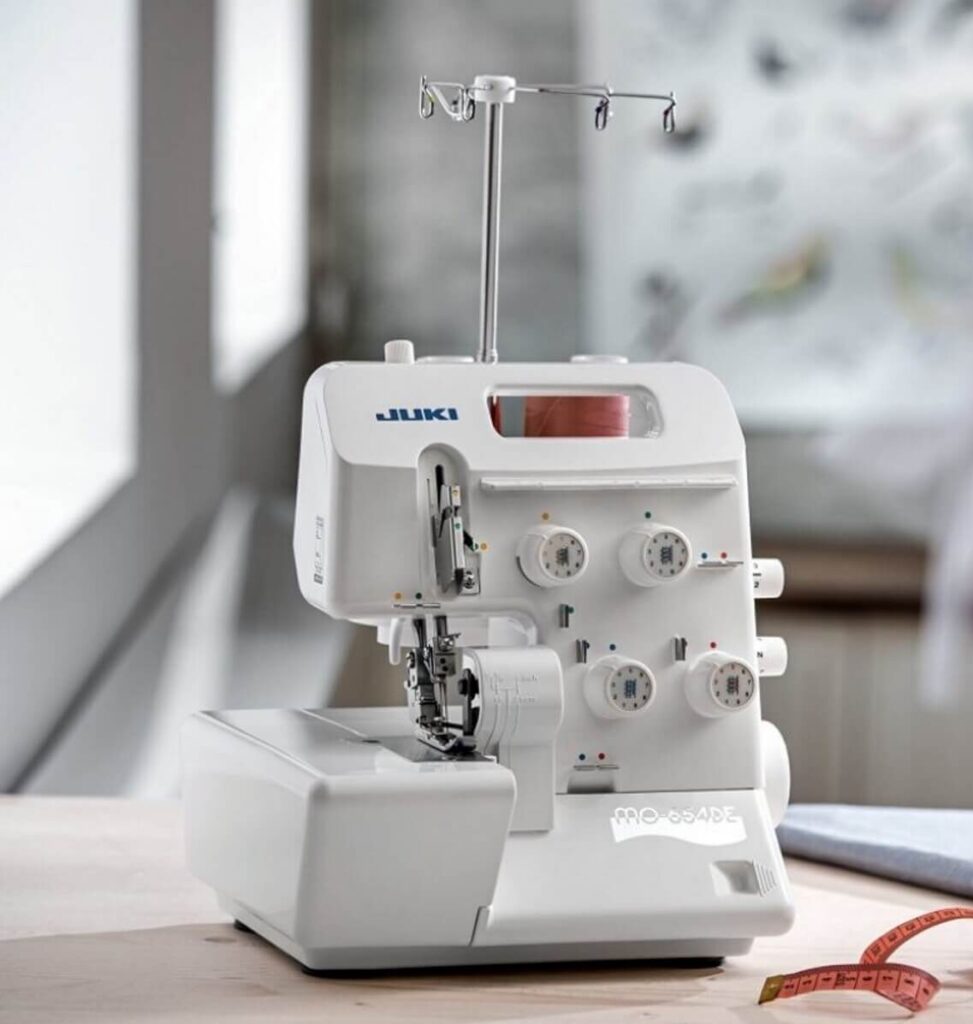
If you are choosing a machine as well, the best mini sewing machines guide can help with portability, while the Juki serger guide explains why larger specialty machines may need more tabletop width and cord clearance.
A sturdy regular desk can handle occasional sewing if the machine is safely supported at a comfortable height. A sewing table with a lowering platform can improve fabric handling because the machine bed can approach tabletop height. Measure machine fit and platform capacity before assuming a recessed table is better.
For basic repairs, around 40-48 inches of worktop width may be enough, depending on the machine and room. Garments, quilting and pattern layout benefit from a wider surface. Depth and free area behind the needle matter as much as width.
Not necessarily. Many sewing tables have a high main tabletop capacity but a much lower limit for the adjustable machine platform. For example, the Eclipse 13362 has a 100-pound top rating and a 25-pound machine-platform rating. The lower number is the relevant one when the machine rests on that platform.
A custom insert fills the gap around the sewing machine when it is in a lowered position, creating a smoother working surface. It is helpful for some projects but is commonly sold separately. Confirm the insert fits both your exact machine and the table opening.
You can place lightweight tools on a suitable cutting table within its stated limits, but a standing-height cutting table is not a substitute for a comfortable seated sewing station. The 13374 is optimized for standing layout and cutting rather than a recessed machine position.
Start with the exact machine dimensions and weight, then look for a lift cabinet rated for that weight. The Arrow Judy is rated to hold machines up to 55 pounds, but the lift opening still has to fit the machine. Check support for an embroidery unit and large project clearance separately.
Leave enough for your chair to move, machine cords to exit safely and fabric to feed without hitting the wall. Quilting may require substantially more rear support. Measure your layout in its fully open configuration rather than only checking the furniture footprint.
For an everyday dedicated sewing area, we would start with the Sew Ready Eclipse 13362. The drop-down sewing platform, side leaf and storage strike the best balance for many home sewists, as long as the machine weighs no more than the platform limit. Need to put the table away? Choose the Arrow Gidget II. Need to hide your supplies in a shared room? The Sauder 414873 is the smarter furniture choice. And if your main job is standing fabric cutting, the Sew Ready 13374 is a different, better tool for that task.