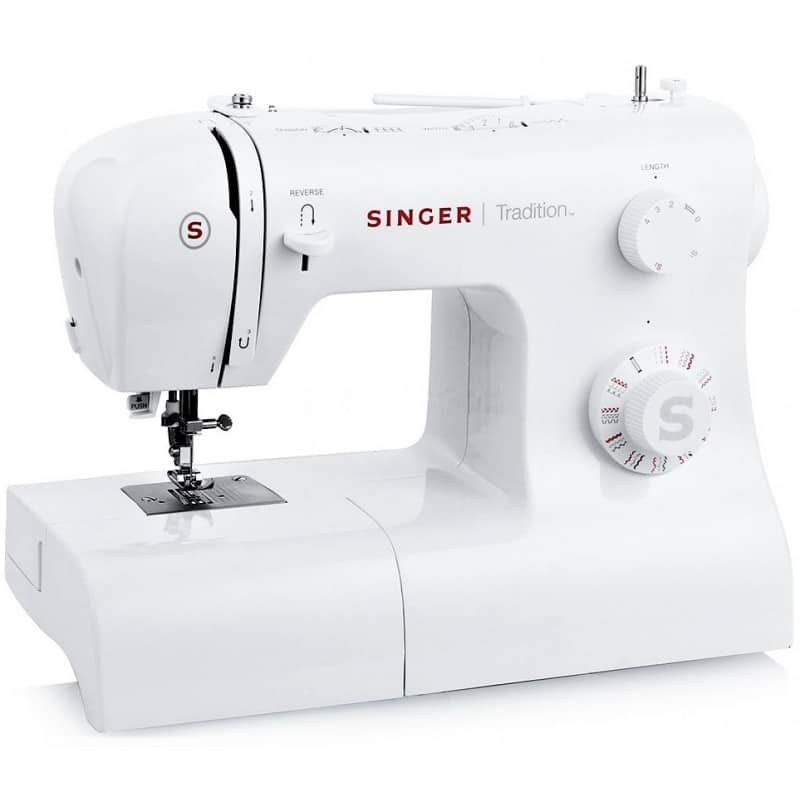


Brother and Singer both make good home sewing machines, but the better brand depends on the type of machine you want. Brother is especially strong in lightweight computerized sewing, quilting features and accessible sewing/embroidery combos. Singer remains particularly compelling when you want a straightforward mechanical machine with high sewing speed and a strong heavy-fabric focus.
For most beginners who want one machine for garments, alterations and occasional quilting, I would start with the Brother CS7000X. If denim, canvas, vinyl or multiple thick layers are the main job, the SINGER Heavy Duty 4452 is the more natural fit. If embroidery is part of the plan, the Brother SE700 is the best entry point in this comparison because it combines normal sewing with wireless 4 × 4-inch embroidery.
If you already know the kind of sewing you want to do, these three machines explain the current Brother-vs-Singer split better than a brand logo does.


| Buying Priority | Brother | Singer | Practical Takeaway |
|---|---|---|---|
| Beginner computerized sewing | Strong value in light machines such as CS7000X, CP-series and XR-series | Current computerized machines such as C7290Q are more capable than the old Singer stereotype suggests | Brother is usually the easier value starting point; Singer becomes interesting when you want more built-in stitch/quilting features |
| Simple mechanical sewing | Still offers mechanical models such as XM2701/MZ53-class machines | Large traditional mechanical and Heavy Duty presence | Singer has the more recognizable mechanical-heavy-duty path |
| Heavy fabrics | ST531HD is Brother’s current Strong & Tough option | Heavy Duty 44xx family is a major part of Singer’s lineup | Singer 4452 is the cleaner heavy-fabric recommendation for most home users |
| Quilting | CS7000X includes wide table, walking foot and quilting foot | C7290Q includes extension table, 12 feet, lettering and built-in thread cutter | Brother wins on lightweight value; Singer wins if you specifically want the richer C7290Q feature set |
| Sewing + embroidery | Deep lineup; SE700 offers wireless 4 × 4 combo entry point | SE9180 offers 150 designs, 250+ sewing stitches, 7-inch screen and larger 170 × 100 mm area | Brother has the cleaner entry-level combo; Singer has a compelling step-up option |
| Portability | CS7000X is only 10.5 lb and includes a hard cover | Many Singer machines are heavier because of their metal-frame designs | Brother is usually easier to carry to classes |
| Warranty | Varies by model; CS7000X has a 25-year limited warranty, SE700 uses a 1/2/25-year structure | Varies by model; 4452 uses 90-day/2-year/24-year coverage tiers while Singer markets up to 25-year coverage | Read the exact warranty terms; “25 years” is not 25 years of full labor/electronics coverage |
If you compare a Brother computerized quilting machine against a Singer Heavy Duty mechanical machine, the differences tell you more about machine type than brand quality. Start with the job:
If you are not sure which type of sewing machine belongs in your craft room, use the site’s existing finder instead of guessing from brand reputation.
| Feature | Brother CS7000X | SINGER C7290Q |
|---|---|---|
| Built-in stitches | 70 | 200 built-in stitches / 417 stitch applications |
| Buttonholes | 7 one-step styles | 8 one-step styles |
| Lettering | No built-in font | 1 built-in lettering font |
| Thread cutter | Manual cutter | Built-in automatic thread cutter |
| Included feet | 10 feet plus quilt guide | 12 sewing/quilting feet |
| Extension table | Included | Included |
| Weight | 10.5 lb | 14 lb |
| Best reason to choose it | Lightweight value and beginner-friendly speed control | More decorative/quilting features, lettering and automatic thread cutting |
The old Brother-vs-Singer article compared the discontinued CS6000i with SINGER 7258. That is no longer the useful match. The current CS7000X is Brother’s much stronger value reference, while the current C7290Q proves Singer still competes seriously in computerized quilting.
Key specifications: 10.5 lb; 70 built-in stitches; 7 one-step buttonholes; 750 stitches per minute; LCD; adjustable speed control; automatic needle threader; top drop-in bobbin; drop feed; 10 included feet; wide table; hard cover.
The CS7000X is the machine I would recommend to the broadest group of first-time buyers choosing between Brother and Singer. It combines a low carrying weight with features that make learning easier rather than simply adding decorative stitch count.
The most useful beginner feature is adjustable speed control. You can slow the machine down while learning corners, curves and seam allowances instead of relying entirely on foot-pedal pressure. The start/stop control also lets you sew without the pedal when that feels more comfortable.
Brother includes a practical quilting package too: a detachable wide table, walking foot, quilting foot, 1/4-inch foot and drop feed. That means the machine can start as a general garment/alteration machine and still handle small-to-medium quilting projects without immediately requiring a bag of upgrades.
At 10.5 pounds it is also noticeably easier to carry than many full-size Singer models. Brother includes a hard protective cover and specifically positions it for portability and classes.
The limitation is that CS7000X is still an affordable computerized machine. It does not have an automatic thread cutter, lettering font or the deeper decorative/quilting library of Singer’s C7290Q. If those features matter more than weight and price, Singer’s current computerized machine deserves a real look.
What we like
What could be better
Best for: beginners, classes, garment sewing, alterations, occasional quilting and anyone who wants a lightweight computerized machine with room to grow.
Because portability is one of the CS7000X’s biggest advantages, compare it with the other current choices in our best portable sewing machine guide.
Key specifications: 14.6 lb; 32 built-in stitches / 110 stitch applications; 1,100 stitches per minute; heavy-duty metal frame; stainless steel bed plate; adjustable presser-foot pressure; top drop-in bobbin; automatic needle threader; one-step buttonhole; six included feet plus heavy-duty accessories.
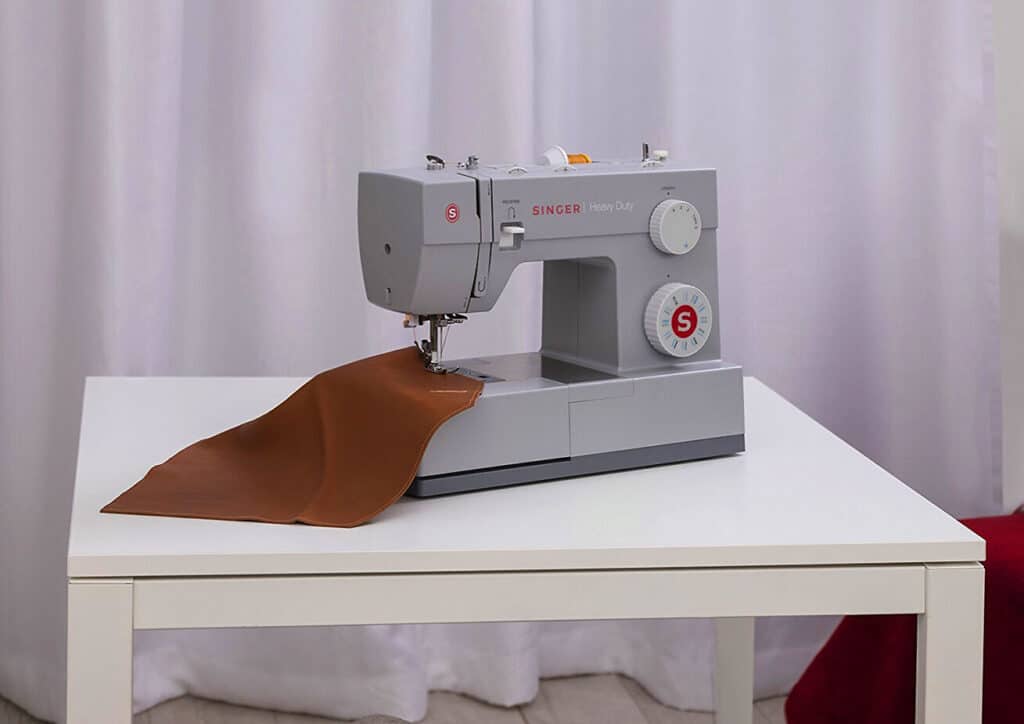
The 4452 is where Singer’s current identity is clearest. It is not trying to beat Brother on LCD menus or embroidery connectivity. It gives you a simple dial-based machine, high maximum sewing speed and a package designed around thicker or awkward fabrics.
Singer includes an even-feed/walking foot, non-stick foot, heavy-duty needles and a clearance plate. Those accessories make sense for denim seams, canvas, vinyl and leather-like materials in a way that a long decorative-stitch list does not.
The 1,100-stitch-per-minute maximum is much faster than the 750 SPM CS7000X. That does not automatically make Singer better—beginners often benefit from slowing down—but it is useful when you sew long seams or repeated home-décor projects.
Another advantage is adjustable presser-foot pressure. That gives you more control when moving between lightweight fabric and thick layers. Brother’s current CS7000X does not offer adjustable presser-foot pressure.
The tradeoff is speed control. The 4452’s speed is controlled through the foot pedal rather than a separate electronic speed-limit slider. Singer now sells newer Heavy Duty variants with speed-control additions, but the 4452 remains the straightforward mechanical workhorse of the line.
What we like
What could be better
Best for: denim hems, canvas, bags, home décor, vinyl/leather-like materials and sewists who prefer a powerful mechanical-style machine over computerized menus.
Brother’s current Strong & Tough alternative is the ST531HD. Brother specifically markets it for fabric ranging from silk to up to six layers of denim, with a metal frame, metal needle plate, heavy-duty needles and a non-stick foot. Its maximum speed is 800 SPM.
For most buyers whose first priority is thick fabric, I still prefer the 4452 because its 1,100 SPM speed, adjustable presser-foot pressure and heavy-duty accessory package make its purpose clearer. But the Brother ST531HD is worth considering if you prefer Brother’s bobbin/threading system or want a lower maximum speed.
Key specifications: 15.06 lb; 103 sewing stitches; 10 one-step buttonholes; 135 built-in embroidery designs; 10 embroidery fonts; 4 × 4-inch embroidery area; wireless LAN; Artspira compatibility; automatic thread cutter; 710 SPM maximum sewing speed.
The SE700 is the strongest reason to choose Brother if you are buying your first machine and know embroidery is part of the plan. It combines a normal computerized sewing machine with a 4 × 4-inch embroidery system in one footprint.
Brother’s wireless workflow is a meaningful advantage at this price level. Design Database Transfer can send compatible designs from a computer, while the Artspira app supports mobile design transfer and simple drawing-based embroidery creation. You are not limited to the 135 built-in designs.
The 4 × 4-inch hoop is both the strength and the main limitation. It is big enough for monograms, chest logos, patches and small motifs, but it is not the right field for large jacket backs or oversized embroidery. If embroidery becomes the main business, you will eventually want a larger hoop area.
Singer is not absent from this category. Its current SE9180 is a much more serious embroidery competitor than older Singer comparisons acknowledge: Singer lists 150 embroidery designs, 250+ sewing stitches, 10 fonts, Wi-Fi, a 7-inch color touchscreen and a 170 × 100 mm embroidery area. It is a step-up product, not a like-for-like budget alternative to the SE700.
What we like
What could be better
Best for: someone who wants one machine for normal sewing plus monograms, patches, small logos and entry-level machine embroidery.
For a beginner who wants computerized controls, I prefer Brother. Machines such as CS7000X make speed limiting, stitch selection, threading and bobbin setup easy without requiring a premium budget.
For a beginner who actively wants mechanical controls and thicker-fabric capability, Singer becomes more attractive. A 4452 is simpler conceptually: choose a stitch on the dial, set length/width/tension/presser pressure as needed, and control the machine with the pedal.
Neither philosophy is automatically easier. A computerized machine removes some manual settings; a mechanical machine removes menus. Choose the kind of complexity you prefer.
The CS7000X is a better value quilting starter because Brother includes the wide table, walking foot, quilting foot and drop feed in a very light machine. It makes sense for piecing, small quilts and learning free-motion quilting.
Singer’s C7290Q is the more feature-rich current Singer quilting choice. Singer lists 200 built-in stitches, 417 stitch applications, 8 one-step buttonholes, a lettering font, automatic thread cutter, extension table and 12 included feet. At 14 pounds it is still portable enough for many classes, but it is a different price/features tier than CS7000X.
If quilting is the primary use rather than a side project, compare both with our best sewing machines for quilting. Large quilts eventually make throat space and table support more important than brand.
Singer has the clearer consumer heavy-duty identity. The 4452, 4423 and related Heavy Duty models are built around high speed, metal frames and thick-fabric accessories. Brother’s ST531HD is a legitimate alternative and Brother explicitly demonstrates six layers of denim, but the Singer Heavy Duty family gives buyers more obvious model choices around the same job.
Do not confuse either with an industrial upholstery machine. Domestic “heavy-duty” machines can handle denim, canvas and many leather-like projects within reason, but repeated thick leather, upholstery stacks, webbing or large bags may justify a dedicated walking-foot machine. If that is your project, see our upholstery sewing machine guide.
Brother has a particularly broad consumer embroidery identity, from inexpensive 4 × 4 machines through much larger sewing/embroidery systems. The SE700 is a strong gateway because it lets a beginner learn both normal sewing and embroidery without buying two machines.
Singer’s current SE9180/SE9185 family shows why it is wrong to call Singer “low-tech.” The current machine family includes Wi-Fi connectivity, a 7-inch color touchscreen, 150 built-in embroidery designs, 10 fonts and a 170 × 100 mm embroidery field, along with more than 250 sewing stitches.
The decision here should be based on hoop size, design transfer and software ecosystem, not the brand’s age or reputation. A 4 × 4 field is enough for many logos and monograms; larger embroidery quickly changes the price and workspace requirements.
| You Prefer… | Look First At | Why |
|---|---|---|
| Simple dials and foot-pedal control | Singer Heavy Duty / basic mechanical Singer | Large current mechanical lineup and straightforward controls |
| Speed slider and start/stop button | Brother computerized models | These features appear frequently in Brother’s beginner computerized range |
| Lots of decorative stitches + lettering + auto thread cutting | Singer C7290Q-class computerized | Singer now has capable computerized sewing/quilting machines |
| Wireless embroidery and mobile-app transfer | Brother SE700-class or Singer SE9180-class | Both brands now offer connected embroidery ecosystems |
| Lowest carrying weight | Brother lightweight sewing models | CS7000X is 10.5 lb and includes a hard cover |
Both companies use long warranty language, but the coverage is tiered.
Brother lists a 25-year limited warranty for the CS7000X and provides free phone/online technical support for the life of that product. The SE700 uses a 1/2/25-year limited warranty, meaning different components are covered for different periods.
Singer markets up to 25 years of warranty coverage, but on the Heavy Duty 4452 the current U.S. warranty is presented as separate 90-day, 2-year and 24-year tiers. Do not interpret “25-year warranty” as 25 years of free labor, electronics and replacement parts.
Before buying either brand, check the exact warranty attached to the exact SKU and country. Voltage and region matter too; a U.S. 120V machine should not be assumed to carry the same warranty if used abroad.
Accessories are where brand choice becomes sticky after purchase. The machine itself may last years, but you will repeatedly buy bobbins, needles, feet, tables and specialty attachments.
If you are setting up a dedicated sewing space, our best sewing tables guide is more important than chasing an extra 50 decorative stitches you may never use.
For most beginners I prefer Brother’s computerized value models, especially CS7000X, because adjustable speed control, easy threading and the included accessory package reduce friction while learning. If the beginner specifically wants simple mechanical controls and expects to sew denim/canvas regularly, a Singer Heavy Duty model can be the better fit.
Singer has a broader and more visible consumer Heavy Duty family, and the 4452 combines a metal frame, 1,100 SPM speed and accessories for thick/tricky fabrics. Brother’s current ST531HD is also designed for heavy home sewing and Brother says it can handle up to six layers of denim. Neither should be mistaken for an industrial walking-foot machine.
Brother CS7000X is an excellent value quilting starter because its wide table, walking foot, quilting foot and drop feed are included. Singer C7290Q is a stronger step-up if you want more stitches, lettering, automatic thread cutting and a larger included foot collection.
Brother has a particularly accessible embroidery lineup, with SE700 combining normal sewing and 4 × 4-inch wireless embroidery. Singer’s SE9180 is a serious connected competitor with a larger 170 × 100 mm field and 7-inch screen. Choose by hoop size, design-transfer workflow and budget rather than assuming one brand always wins.
Many current Singer machines do. For example, Singer specifically lists a heavy-duty metal interior frame for the 4452 and C7290Q. The outside casing is still largely plastic, as it is on most modern domestic sewing machines.
Many current Brother home machines also use internal metal structures or reinforced frames, but construction varies by model. For buying decisions, feeding, needle stability, weight, motor behavior and serviceability are more useful than a generic “metal frame” marketing claim.
There is no useful brand-wide lifespan number. Machine type, maintenance, fabric load, lubrication/service requirements and how often the machine is used matter more than the logo. A heavily stressed budget mechanical machine can wear faster than a lightly used computerized model, and vice versa.
Not automatically. Some domestic machines may use similarly named or sized bobbins, but you should always match the exact bobbin class/part number specified for the model. Using the wrong bobbin can cause tension and feeding problems.
Brother generally has more compelling lightweight options. CS7000X weighs 10.5 pounds and includes a hard cover, so it is easy to store between projects. Our portable sewing machine guide compares lightweight options directly.
Brother is my default recommendation for the average beginner buying a computerized home sewing machine. CS7000X is light, easy to slow down, well equipped and useful for both garments and quilting.
Singer is my first stop when the buyer wants a simple high-speed home machine for thicker fabrics. The 4452’s combination of metal frame, 1,100 SPM speed, adjustable presser-foot pressure and useful heavy-duty feet gives it a clear purpose.
For embroidery, compare the actual machines instead of choosing by brand. Brother SE700 is an excellent entry-level 2-in-1, while Singer SE9180 is a more advanced connected machine with a larger screen and embroidery field.
The best Brother-vs-Singer decision is therefore not “which company is better?” It is which current machine type matches the fabric, projects and controls you actually want to use.