

As an Amazon Associate we earn from qualifying purchases.
For a loose hem or a short seam on light fabric, a handheld sewing machine can save you from unpacking a full-size machine. The SINGER Stitch Quick+ D01774 is the most flexible electric pick because it makes a two-thread stitch and works in your hand or on a tabletop. The Michley SewSimple is a two-thread lockstitch option with an included power adapter. For a basic single-thread repair tool, consider the SINGER Stitch Sew Quick D01663. None replaces a regular machine for complete garments or thick seams.
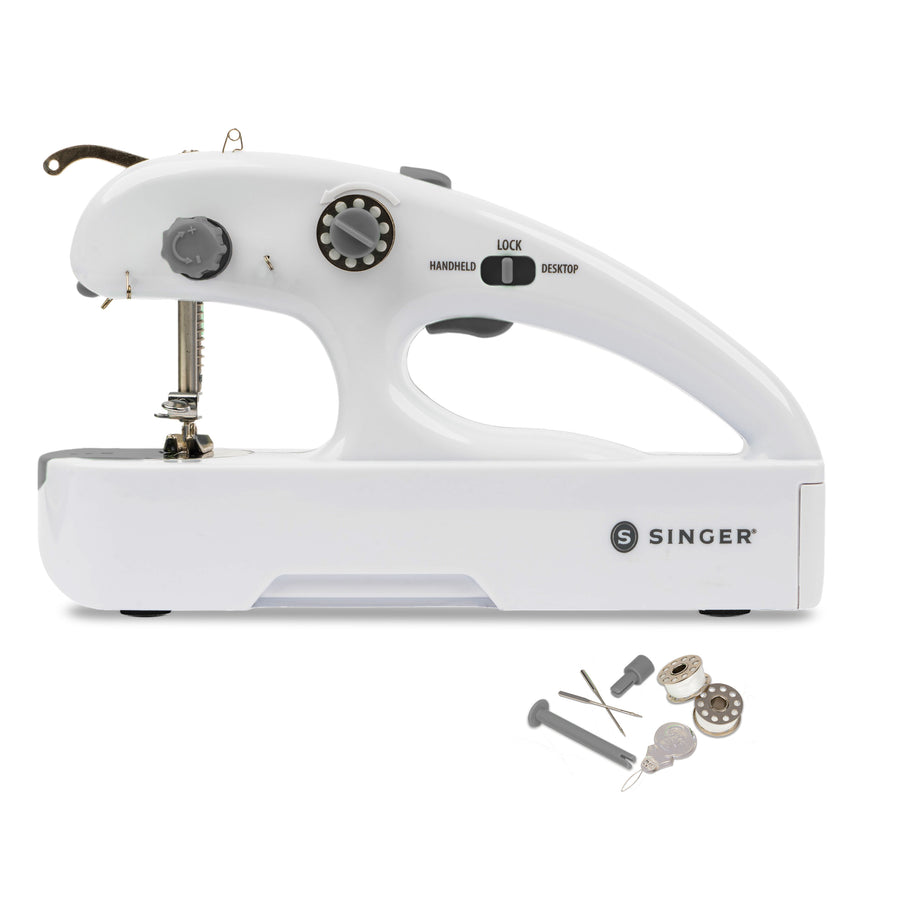
Two-thread mending with both handheld and tabletop control.
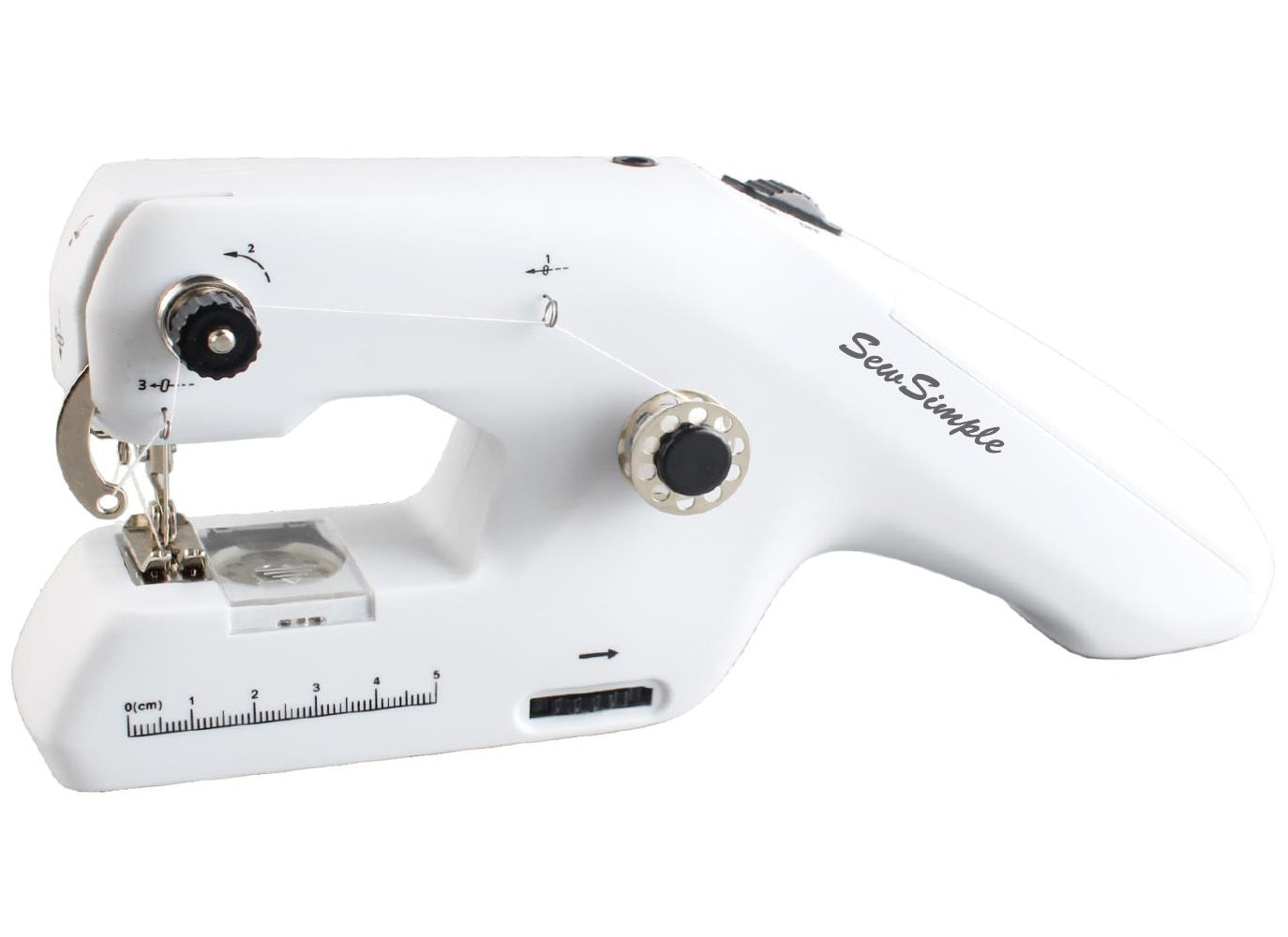
Two-thread lockstitch with a top drop-in bobbin and included power adapter.
A straightforward single-thread tool for occasional lightweight fixes.
| Tool | Stitch / power | Best for | Important limit |
|---|---|---|---|
| SINGER Stitch Quick+ D01774 | Two-thread; 4 AA or optional cord | Versatile short repairs; tabletop or hand use | Limited space and power for thick seams |
| Michley SewSimple | Two-thread lockstitch; 4 AA or included adapter | Small repairs with plug-in option | Small work area; one basic stitch |
| SINGER Stitch Sew Quick D01663 | Single-thread chain stitch; 4 AA or separate 6V adapter | Light hemming and basting | Unsecured tail can unravel |
| Michley ZDML-2 | Single-thread chain stitch; 4 AA or separate 6V adapter | Very compact travel mending | One speed; chain-stitch finish |
| Speedy Stitcher Deluxe #110 | Manual awl; no power needed | Canvas, straps, dense hand repairs | Not a sewing machine; slower stitch by stitch |
Choose a two-thread machine when you want a small seam that is less dependent on tying off a chain. Michley explicitly identifies SewSimple’s stitch as a lockstitch; SINGER describes Stitch Quick+ as a two-thread machine. Each still needs proper threading and the correct needle for the fabric. For a longer garment seam or more consistent feeding, a portable household sewing machine is the more capable choice.
A chain-stitch handheld can catch a short hem or hold a temporary seam, but the free tail needs securing. If the wrong end is tugged, stitches may run out. These machines have little room under the needle for multiple layers. Try a scrap of the same fabric and fold before attempting a visible repair, especially with slippery or stretchy cloth.
The Speedy Stitcher kit earns a place here as a separate kind of handheld sewing tool. Its waxed thread and manually placed stitches suit many outdoor repairs better than forcing a battery machine through leather or canvas. If your projects are mostly normal garments, it is the wrong primary tool. Compare our mini sewing machine guide if you can work on a tabletop but need something compact.
Key details: Two-thread stitch · handheld or tabletop mode · 4 AA batteries (not included) · optional cord power.
The adjustable way to use this machine is its main advantage. Hold it for a quick repair in place, or set it down when a short straight seam needs steadier fabric guidance. SINGER supplies bobbins, a needle, threader, and spindle; the built-in compartment keeps small notions with the machine. The two-thread design is a more sensible first choice than a chain-stitch gadget when you want the repaired seam to stay put.
Its small feeding area and modest drive are still suited to short, accessible repairs on manageable fabrics. It will not give you the throat space, fabric control, stitch selection, or sustained power of a tabletop household machine. The linked Amazon listing is a Stitch Quick+ bundle; confirm the included notions and power accessories on the current listing. SINGER says four AA batteries are required and are not supplied.
Key details: Two-thread lockstitch · top drop-in bobbin · 4 AA batteries or included adapter · 0.75 lb.
This Michley model specifically makes a two-thread lockstitch, which addresses the unraveling risk of single-thread chain-stitch menders. The top drop-in bobbin makes it easy to see which style of machine you are buying, and the included adapter is useful for repeated small repairs at home. It also accepts four AA batteries when you need cordless operation.
A lockstitch does not turn this compact machine into a heavy-duty dressmaking tool. Keep the repair short, use fabric that feeds freely, and try a scrap before working on a visible hem. Choose this over the SINGER Stitch Quick+ if an included plug-in power option and a clearly specified lockstitch matter most; choose the SINGER if tabletop operation is your priority.
Key details: Single-thread chain stitch · 4 AA batteries or 6V adapter (neither included) · portable cordless form.
This is the simple SINGER handheld many shoppers have in mind: place the fabric at the needle, guide a short edge, and finish the thread tail after sewing. It is useful for basting, a small hem touch-up, and a temporary repair when carrying a conventional machine would be excessive. SINGER describes it as a single-thread mending machine, so buy it with that stitch limitation in mind.
Do not expect a chain stitch to hold if you pull on its open end. Follow the supplied instructions for securing the tail and test a similar fabric first. This model is less suitable for load-bearing seams, bulky folded hems, or leather. The adapter and batteries are not included, so allow for the power source you plan to use.
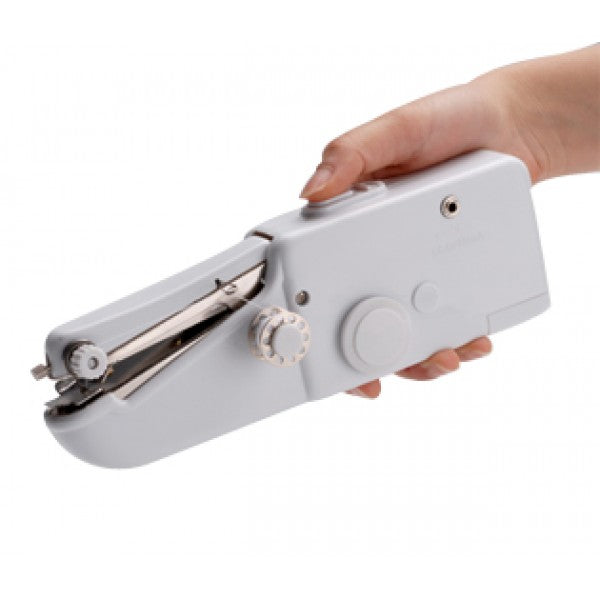
Key details: Single-thread chain stitch · one speed · 0.6 lb · 4 AA batteries or 6V DC (adapter not included).
The ZDML-2 is the most compact electric option here on the maker’s published figures: it weighs 0.6 pound and measures 8.3 by 2.8 by 1.5 inches. It is a sensible bag or travel-kit tool if you mainly want to catch a loose hem before an event. Its single-speed mechanism keeps operation simple, and Michley lists a small thread bag with the machine.
The tradeoff is the same chain-stitch behavior as the basic SINGER. Secure its tail, avoid pulling the reverse side of a fresh seam, and do not treat it as a durable structural stitch. A 6V adapter is an option but is not included. If you are doing more than quick light-fabric fixes, the two-thread machines above are better purchases.
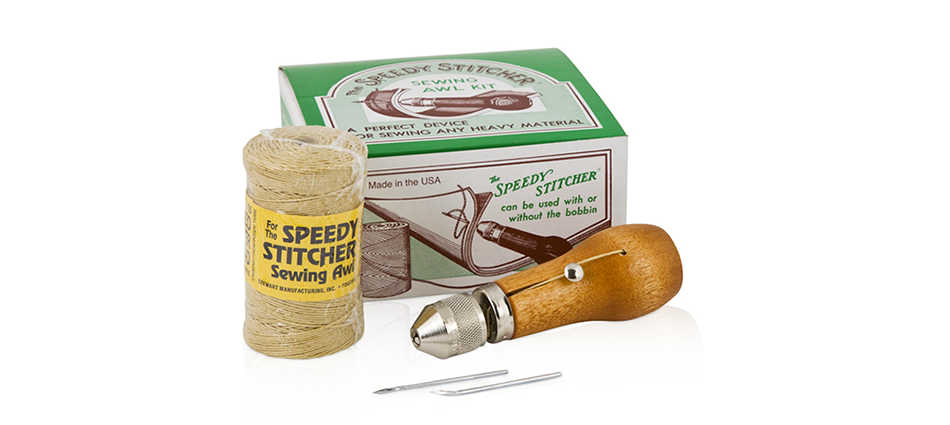
Key details: Manual sewing awl, not a motorized machine · four needles (two straight, two curved) · 14-yard wound bobbin plus 180-yard waxed thread tube.
If the real problem is a torn canvas bag, outdoor cover, or strap, hand pressure and an awl needle are more relevant than the tiny motor on a battery mender. The #110 kit includes straight and curved needles and a generous supply of coarse waxed thread. You choose each stitch placement manually, which gives control around a thick repair and works without batteries or an outlet.
This is explicitly a manual sewing awl, not a handheld sewing machine. It takes practice and time, especially for a long line of stitches, and needle safety matters when pushing through dense material. It is the useful category alternative for heavy repairs, not a substitute for the quick electric hemming jobs handled by the four machines above. Confirm that the Amazon listing is the #110 Deluxe kit with the extra thread tube.
Yes, but the stitch type differs. The SINGER Stitch Quick+ is a two-thread mender, and Michley calls SewSimple’s stitch a two-thread lockstitch. The SINGER Stitch Sew Quick and Michley ZDML-2 make single-thread chain stitches, whose tails must be secured against unraveling.
A thin, flat area of denim is different from a thick, folded jeans seam. Do not assume a battery handheld will pierce bulky denim, leather, or upholstery reliably. Use a suitably equipped full-size machine for proper seams, or a manual sewing awl for certain localized heavy repairs.
Do not run any powered needle near your body while the garment is on. Take the garment off, mark and press the hem, and keep fingers away from the needle and moving parts.
They can teach a very small repair, but their awkward fabric feeding and limited stitch choices make them poor teachers for complete projects. A compact tabletop machine offers better control, a presser foot, and more useful stitch options. See our portable sewing machine comparison if you want to learn garment or craft sewing.
Chain stitches can unravel from the free end. Leave enough thread to finish it according to the device instructions and avoid pulling the underside of the seam. If you need a stronger lasting seam, choose a two-thread model or a regular sewing machine.
Choose the SINGER Stitch Quick+ D01774 for the most flexible small electric mender, or Michley SewSimple for a specified lockstitch and included adapter. The SINGER Stitch Sew Quick and lighter Michley ZDML-2 are basic chain-stitch options for occasional light repairs. For heavy canvas and straps, choose the Speedy Stitcher #110 as a manual alternative.