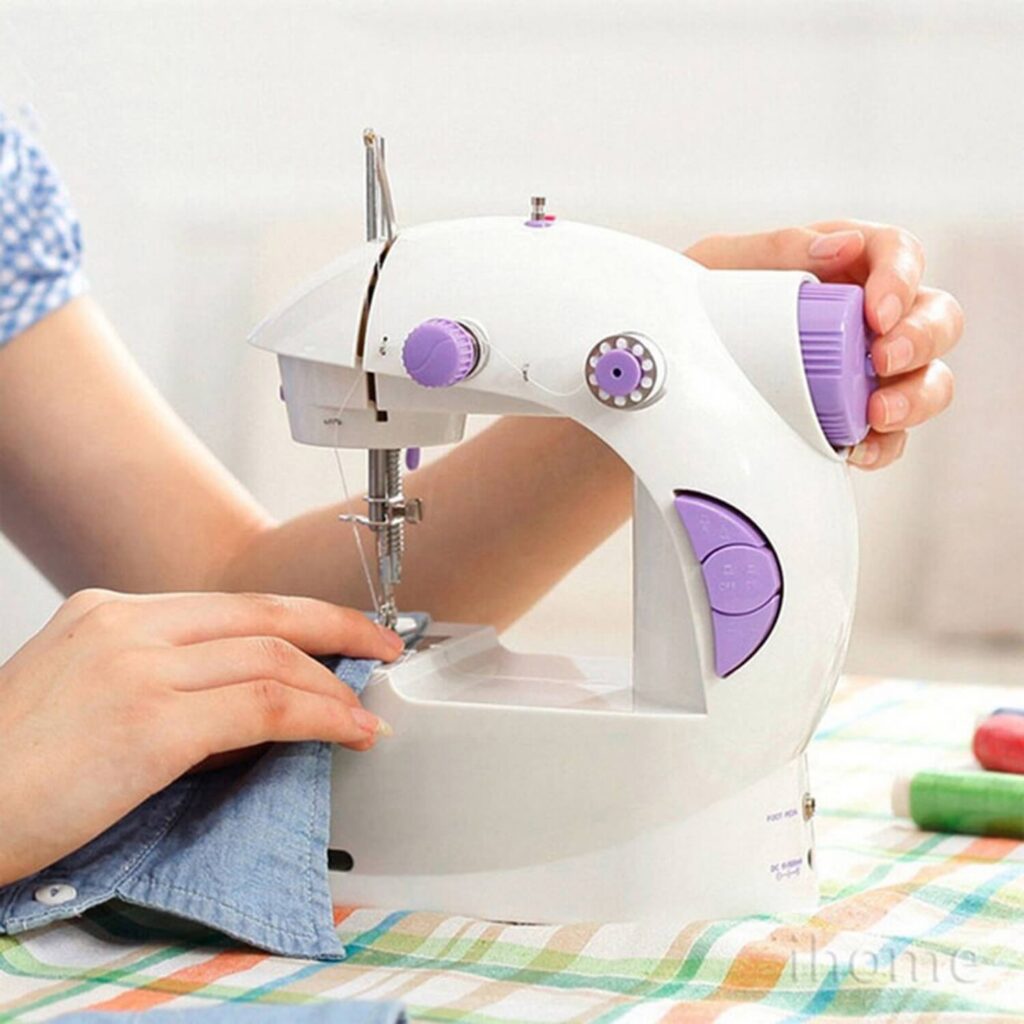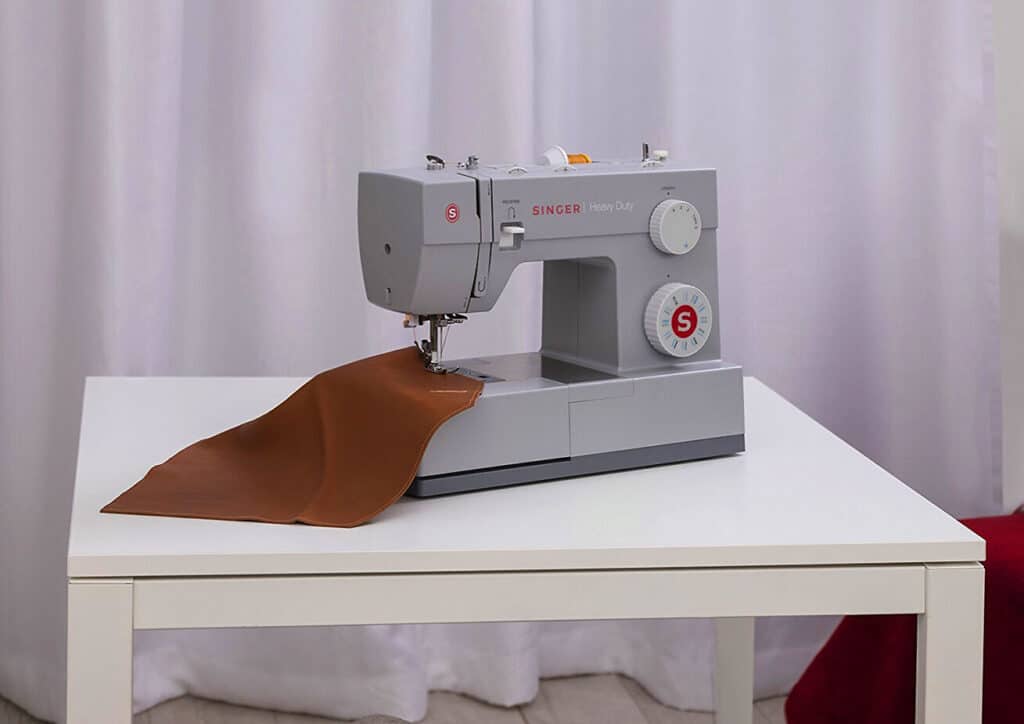


A portable sewing machine should be easy to carry or store without turning normal sewing into a compromise. That rules out most toy-like mini machines for anyone who wants to make clothes, sew seams, alter garments or take a real machine to class.
For most people, the Brother CS7000X is the best portable sewing machine. It weighs 10.5 pounds, includes a hard protective cover and wide table, and gives you speed control, an LCD, automatic needle threading, a free arm and 70 built-in stitches. Brother specifically describes the hard cover as useful for portability and class use. If you want something simpler and less feature-heavy, the Brother XM2701 is the better value. If carrying weight matters above everything else, the 5.5-pound SINGER M1000 is much easier to move—but it is a mending machine, not a full substitute for the others.
If you already know what matters most to you, these three cover the largest share of buyers.


| Machine | Weight | Built-in Stitches | Portable Advantage | Best For |
|---|---|---|---|---|
| Brother CS7000X | 10.5 lb | 70 | Hard cover + speed control + wide table | Best overall; classes; growing skills |
| Brother XM2701 | 12.6 lb | 27 | Simple controls + top drop-in bobbin | Best value; everyday sewing |
| SINGER M1500 | 10 lb | 6 (57 applications) | Compact mechanical controls | Beginners; classes; small spaces |
| Janome C30 | 11 lb | 30 | Computerized controls without much weight | Portable upgrade; garment sewing |
| SINGER M1000 | 5.5 lb | 4 (32 applications) | Extremely light and compact | Mending and repairs only |
If “portable” is only one of several requirements, use Crafty Hangouts’ free Sewing Machine Finder. It helps narrow the machine type by project, fabric, budget and skill level instead of forcing every buyer into the same recommendation.
Weight matters, but it is only the first part of portability. A machine can be light and still be awkward to move, or compact and still be too limited for the projects you actually want to sew.
Key specifications: 10.5 lb; 70 built-in stitches; 7 one-step buttonhole styles; LCD; automatic needle threader; speed control; free arm; drop feed; 10 included feet; wide table; hard protective cover.
The CS7000X wins because it is portable without feeling like a temporary starter machine. Brother lists the machine at 10.5 pounds, which is lighter than many basic mechanical models, yet it still gives you features that are genuinely useful once you move past your first straight seams.
The adjustable speed control is one of the biggest reasons I prefer it for classes and beginners. A fast maximum stitch rate is not what makes a machine beginner-friendly; being able to cap the speed while you learn curves, corners and seam allowances is much more useful. The automatic needle threader and Quick-Set top bobbin also remove two common setup frustrations.
Portability is unusually well thought out here. Brother includes a hard protective cover rather than only a dust cover, and specifically calls it convenient for class use. The detachable wide table is useful if you occasionally quilt, but you can leave it at home when you want the smallest possible travel setup.
The tradeoff is that this is still a full-featured computerized machine. If you want a simple dial, no menu, and fewer things to learn, the XM2701 or M1500 will feel more immediate.
What we like
What could be better
Best for: sewing classes, apartments, beginners who want room to grow, and sewists who need one machine for both everyday sewing and occasional quilting.
If quilting is your main use rather than an occasional one, compare it with the machines in our best sewing machines for quilting guide before buying.
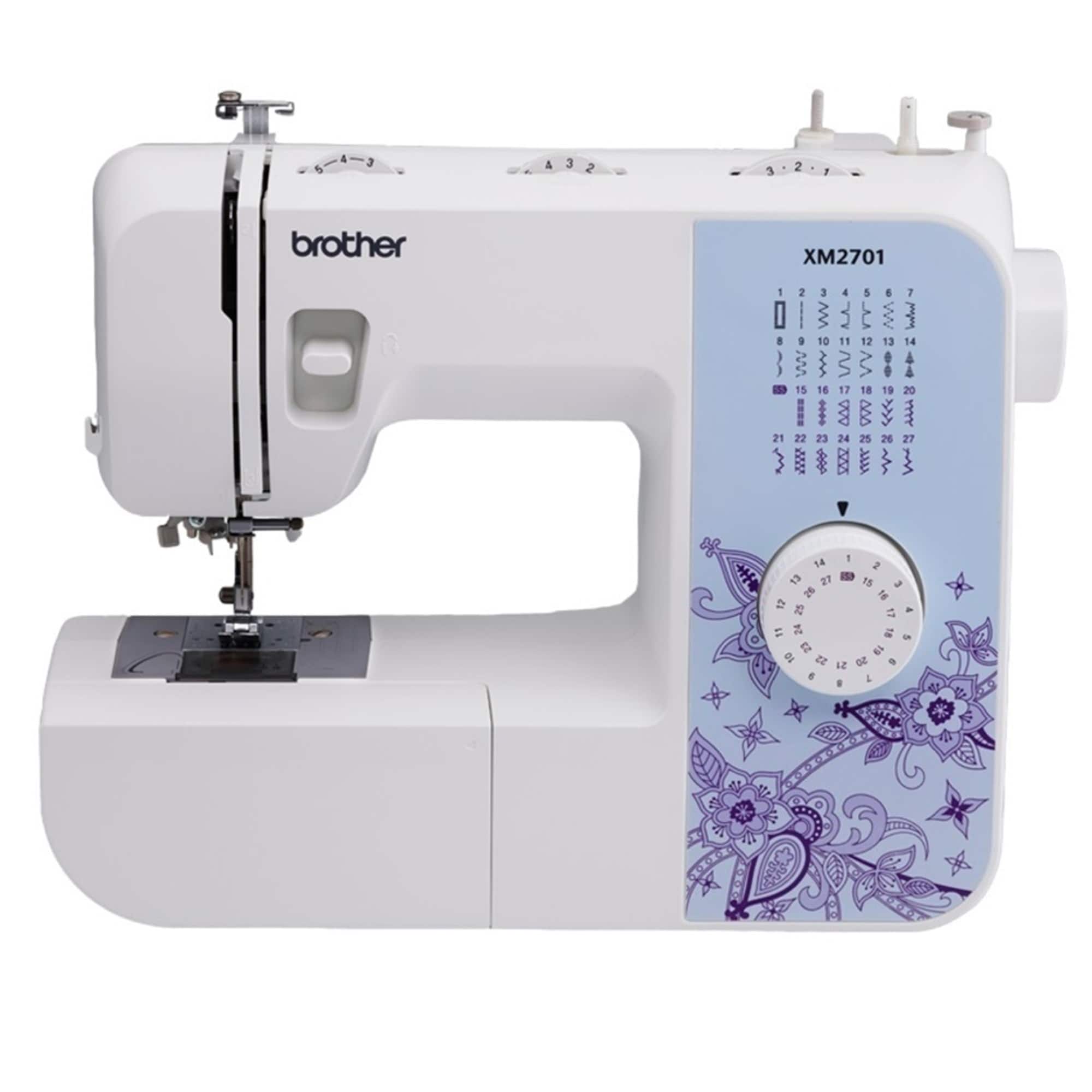
Key specifications: 12.6 lb; 27 built-in stitches; 63 stitch functions; 800 stitches per minute maximum; automatic needle threader; top drop-in bobbin; free arm; 6 included feet.
The XM2701 remains a strong portable choice because it stays on the useful side of simple. You get enough stitches for garments, stretch fabric, blind hems and basic decorative work, but you do not have to navigate an LCD or a large computerized menu every time you sit down.
At 12.6 pounds, it is heavier than the CS7000X and M1500, but still manageable for regular car trips to class or for storing in a closet between sewing sessions. The top-loading bobbin and automatic needle threader are also conveniences I would prioritize over shaving another pound from the machine.
This is the machine I would choose for someone who wants to spend less than the CS7000X while still buying a real household machine. It also makes sense in a small apartment where the sewing table doubles as a dining or work table and the machine needs to be put away after every project.
The main thing you give up is computerized speed control. Beginners can learn on the XM2701, but foot-pedal control matters more. You also do not get the CS7000X’s hard case or wide-table package.
What we like
What could be better
Best for: value-conscious beginners, general household sewing, apartments and anyone who prefers a dial-based machine.
It is also the current top recommendation in our Brother sewing machine guide, so it is worth comparing there if you already know you want the Brother ecosystem.
Key specifications: 10 lb; 6 built-in stitches / 57 stitch applications; 4-step buttonhole; preset stitch length and width; front-loading bobbin; free arm; 5.6-inch sewing space.
The M1500 is useful because it does not pretend that a beginner needs dozens of decisions. SINGER gives it six built-in stitches with preset length and width, so you select the stitch and sew. That is limiting for advanced users, but it is exactly what some first-time sewists want.
SINGER explicitly markets the M1500 as lightweight and suitable for taking to sewing class or using in smaller spaces. At 10 pounds, it is easy to move, and the 13 x 7 x 11.5-inch manufacturer dimensions make it one of the easier full household machines here to find storage space for.
There is one specification worth explaining because retailer listings often make it sound larger than it is: 57 stitch applications does not mean 57 built-in stitches. The M1500 has six built-in stitches; SINGER counts the different techniques those stitches can perform as 57 applications. That is still useful, but it is not the same as the CS7000X’s 70 selectable stitches.
The front-loading bobbin is also less convenient than the clear top-loading systems on the Brother machines and Janome C30. For a buyer who values simplicity more than convenience features, though, the M1500 remains a sensible choice.
What we like
What could be better
Best for: first sewing classes, students, simple garment projects and people who actively prefer fewer controls.
If you are deciding between the two major beginner brands, our Brother vs SINGER comparison covers the broader brand differences.
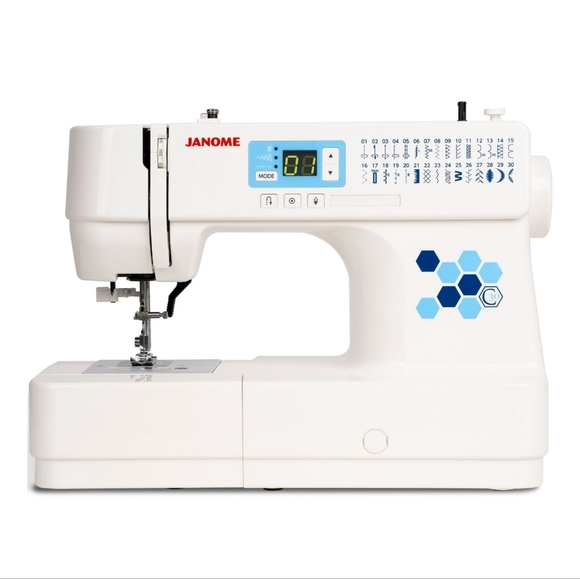
Key specifications: 11 lb; 30 built-in stitches; LCD; built-in needle threader; top-loading rotary bobbin; needle up/down; locking stitch; free arm; drop feed; 820 stitches per minute maximum; dust cover.
The C30 is the portable machine I would look at if you want computerized control but do not need the large stitch library and quilting bundle of the CS7000X. Janome lists it at only 11 pounds and explicitly describes it as easily portable.
The most useful controls are not the 30 stitches themselves. Needle up/down is excellent when pivoting at corners, topstitching or working around curves, while the locking-stitch button can finish seams without repeatedly reaching for reverse. The top-loading bobbin is also easier to monitor than the front-loader on the M1500.
The C30’s 16 x 12 x 7-inch footprint is still a normal home-machine size, so “portable” here means easy to carry and store, not mini. That is a good thing if you want to sew garments or larger projects instead of only making repairs.
The downside is value. You can often find Brother machines with more included feet or quilting accessories. The reason to choose the Janome is not the longest feature list; it is the combination of low weight, straightforward computerized controls and Janome’s familiar 5 mm low-shank accessory system.
What we like
What could be better
Best for: garment sewists and intermediate beginners who want computerized convenience in an 11-pound machine.

Key specifications: 5.5 lb; 4 built-in stitches / 32 stitch applications; top drop-in bobbin; free arm; 4.25-inch sewing space; light-to-medium fabric focus.
The M1000 is here with a warning: it is the easiest machine on this list to carry, but it is not the best first sewing machine for someone who wants to learn broad garment construction.
SINGER describes it as a portable mending machine for basic repairs on light-to-medium-weight fabrics, and even says a full-size machine is recommended for thicker fabrics and more applications. That honesty makes it easier to recommend for the right buyer.
At 5.5 pounds, the M1000 is in a different portability class from the other machines. It makes sense in an RV, a very small apartment, a repair kit, or for someone who mostly hems trousers and fixes seams. The free arm and top drop-in bobbin also make it much more useful than many tiny toy-style machines.
What you should not do is buy it because it is the lightest and then expect it to behave like a CS7000X. Its 4.25-inch sewing space is tight, it has only four built-in stitches, and SINGER’s own material guidance is light to medium weight.
What we like
What could be better
Best for: travel-by-car/RV, compact repair setups, hemming, seam repair and people whose priority is minimum carrying weight.
| Type | Typical Strength | What It Can Replace | Best Use |
|---|---|---|---|
| Portable full-size | Normal home sewing capability in a lighter body | Can be your main machine | Classes, garments, crafts, apartment storage |
| Compact mending machine | Basic seams and repairs | Can replace a full-size machine only for limited users | Hems, repairs, RV/travel kits |
| Mini tabletop | Basic lightweight sewing | Usually not a long-term main machine | Occasional crafts and very limited space |
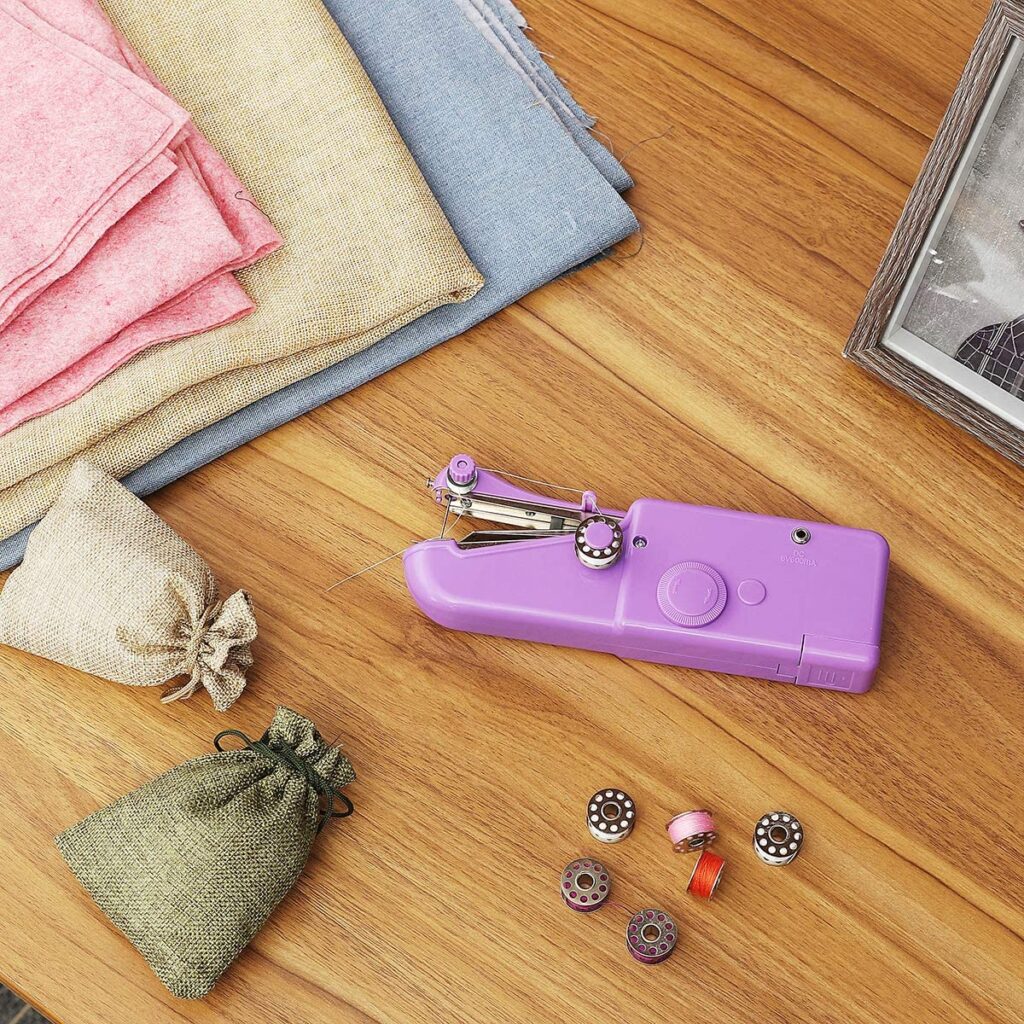
| Handheld | Fast emergency stitching | Does not replace a normal sewing machine | Quick fixes where bringing out a machine is impractical |
If you are attracted to a machine mostly because it is tiny, read our mini sewing machine comparison before deciding. A few extra pounds can buy a much more useful machine.
If the machine moves once a month from a closet to your dining table, 12 or 13 pounds is still very portable. If you take public transport to class or carry the machine up several flights of stairs every week, the difference between 10 and 13 pounds is much more meaningful.
A wide table, hard case, foot pedal, power cord, presser feet, bobbins, thread and project materials all add bulk. The CS7000X is only 10.5 pounds, but its wide table should stay home when you do not need it. A compact sewing tote can also make a heavier machine easier to carry than a lighter machine with no secure case.
A simple mechanical machine such as the M1500 is intuitive because there are few choices. A computerized machine can actually be easier in other ways because it selects or displays stitch settings and may include speed control. If you are new, do not assume mechanical automatically means easier.
A free arm makes it much easier to sew narrow tubular areas such as cuffs, sleeves and trouser hems. For a portable machine that may spend much of its life doing alterations and repairs, that is more useful than a large decorative-stitch count.
Most everyday sewing relies heavily on straight stitch, zigzag, stretch stitches, blind hem and buttonholes. A 70-stitch machine gives you creative flexibility, but it is not automatically better for someone who only wants to make simple clothes and repairs.
Lightweight does not mean “heavy duty in a smaller shell.” If your regular projects involve repeated layers of denim, canvas, leather or upholstery, portability probably should not be your first buying criterion. The M1000 in particular is explicitly intended for light-to-medium fabric. For normal cottons, garment fabrics and common household projects, the full-size machines above are much more appropriate.
A portable machine still needs a stable surface. If you are setting it up and putting it away repeatedly, our guide to the best sewing tables can help you decide whether a permanent table, folding arrangement or storage cabinet makes more sense.
| Your Situation | Best Fit | Why |
|---|---|---|
| Weekly sewing class | Brother CS7000X | 10.5 lb, hard cover and speed control |
| Small apartment / store after every use | SINGER M1500 | Compact dimensions and straightforward controls |
| Best value main machine | Brother XM2701 | Normal household capability without computerized complexity |
| Portable computerized garment sewing | Janome C30 | 11 lb plus needle up/down and lock stitch |
| RV, repair kit or occasional hems | SINGER M1000 | Only 5.5 lb, but intentionally limited to simpler jobs |
| Portable quilting setup | Brother CS7000X | Wide table, walking foot, quilting foot and drop feed included |
The machine is only part of a portable setup. A small kit prevents the frustrating situation where you carry the machine across town and discover that the correct needle or bobbin is at home.
Not sure which needle belongs with your fabric? The Crafty Hangouts sewing tools collection includes free needle, thread and presser-foot finders alongside the Sewing Machine Finder.
For most beginners, I would choose the Brother CS7000X if the budget allows because it weighs only 10.5 pounds and adds speed control, automatic threading and a hard cover. If you prefer very simple dial controls, the 10-pound SINGER M1500 is easier to understand at a glance.
For a machine that can still serve as your primary home sewing machine, roughly 10–13 pounds is a useful target. Much lighter machines can be excellent for mending, but you need to check whether sewing space, stitch selection and fabric capability have been reduced to achieve that weight.
Airline baggage and security rules vary, so check your airline and departure country’s current policies before traveling. Also verify voltage before plugging a US-market machine into power abroad; these machines should not be assumed to support every international voltage.
No. A normal household machine can be portable simply because it is lightweight and compact. Mini machines usually have a smaller sewing area and fewer capabilities. If you want one machine to learn garment sewing on, a lightweight full-size machine is generally the safer choice.
Only if your sewing needs are mostly mending and repairs. SINGER specifically positions the M1000 for simpler work on light-to-medium-weight fabrics and recommends a full-size machine for thicker fabrics and broader applications. A CS7000X, XM2701, M1500 or C30 gives a new sewist more room to grow.
No, but it is useful. A hard cover protects controls and spool pins during transport. The CS7000X includes one; several other machines in this guide ship with a dust cover or no rigid cover, so a padded sewing-machine bag may be worth adding.
Some can. The CS7000X is specifically a sewing-and-quilting machine and includes a wide table, walking foot, quilting foot and drop feed. For regular large quilts, however, throat space and table support become more important than portability, so compare dedicated quilting machines.
For most buyers, the Brother CS7000X is the best portable sewing machine. Its 10.5-pound weight is genuinely easy to move, but unlike an ultra-small machine it still gives you speed control, 70 stitches, a wide table, quilting accessories and a hard protective cover.
The Brother XM2701 is the better value if you want fewer electronics and normal household sewing capability in a 12.6-pound machine.
Choose the SINGER M1000 only when minimum weight is the priority and your jobs are mostly repairs. It is impressively portable at 5.5 pounds, but SINGER itself draws a clear line between this mending machine and a full-size machine.
We compared current manufacturer specifications, current US product availability, carrying weight, dimensions, sewing-space limitations, controls, bobbin systems, free-arm capability, included transport accessories and the type of sewing each manufacturer says the machine is designed to handle.
Primary specifications were checked against Brother’s CS7000X documentation, Brother’s current XM2701 materials, SINGER’s M1500 page, SINGER’s M1000 page, and Janome’s C30 specifications.