


The best upholstery sewing machine depends on what you mean by “upholstery.” A domestic heavy-duty machine can be a good fit for cushion covers, curtains, slipcovers and occasional vinyl. But if you regularly sew several layers of upholstery fabric, piping, webbing, leather or marine canvas, a walking-foot or compound-feed machine is a much better tool for the job.
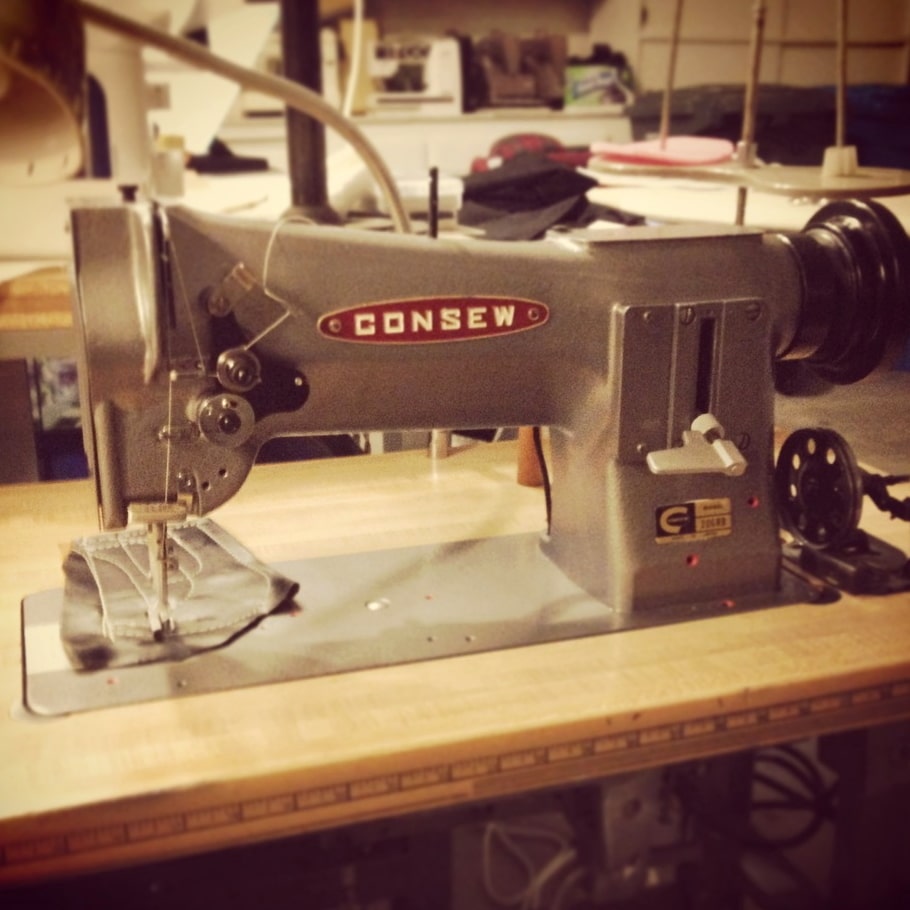
For serious furniture, automotive or marine upholstery, my overall pick is the Consew 206RB-5. Its compound feed moves the needle, feed dog and walking feet together, helping thick or slippery layers stay aligned. For home users who want a normal sewing machine that can also tackle heavier décor work, the SINGER Heavy Duty 4452 is the more practical starting point. If you need true walking-foot feeding but cannot dedicate permanent floor space to an industrial table, the Reliable Barracuda 200ZW is the portable middle ground.
These three cover the most common decisions: true professional upholstery, home upholstery, and portable walking-foot work.


| Machine | Feed System | Max Stitch / Speed | Best For | Main Limitation |
|---|---|---|---|---|
| Consew 206RB-5 | Compound / triple feed + alternating walking feet | 10 mm; up to 3,300 SPM | Professional furniture, auto, marine, leather, canvas | Industrial table machine; large and specialized |
| SINGER 4452 | Domestic feed dogs; walking foot included as accessory | Domestic stitch lengths; up to 1,100 SPM | Cushions, slipcovers, denim, vinyl, occasional leather | Not a compound-feed industrial |
| Reliable Barracuda 200ZW | Top-and-bottom walking foot | 6 mm; up to 800 RPM | Portable marine, canvas, vinyl, cushions, medium-heavy work | 7-in workspace and less refined than full industrial setups |
| Janome HD3000 Black Edition | 5-piece domestic feed; even-feed and Ultra Glide feet included | 4 mm; mechanical | Home décor, upholstery repairs, leather/vinyl with proper setup | No walking-foot feed mechanism built into machine |
| JUKI TL-2010Q | Straight-stitch feed; even-feed foot included | 6 mm; 1,500 SPM | Large straight seams, bags, covers, layered fabric and home studio work | Straight stitch only and not a true walking-foot industrial |
| Your Project | Machine Class | Starting Pick | Why |
|---|---|---|---|
| Occasional cushion covers, curtains, slipcovers | Domestic heavy-duty | SINGER 4452 | Versatile stitches, normal home-machine ergonomics, useful heavy-fabric accessories |
| Home décor plus leather/vinyl details | Premium mechanical domestic | Janome HD3000 BE | Adjustable foot pressure, extra-high lift, Ultra Glide + even-feed feet |
| Marine canvas, vinyl cushions, portable job-site work | Portable walking foot | Reliable Barracuda 200ZW | Top/bottom feed and speed reducer without a permanent industrial table |
| Large straight seams and layered bags/covers | Semi-industrial straight stitch | JUKI TL-2010Q | 1,500 SPM, 6 mm stitch, adjustable pressure, large table, knee lift |
| Professional furniture, auto or marine upholstery | Compound-feed industrial | Consew 206RB-5 | Triple feed, 14 mm foot lift, 10 mm stitch and M-class bobbin |
Not sure whether you need a home machine or something heavier?
The site’s existing Sewing Machine Finder can help narrow the general sewing-machine category. For true commercial upholstery, however, prioritize a walking-foot/compound-feed industrial even if a domestic quiz points you toward a “heavy-duty” home model.
Key specifications: single-needle lockstitch; compound/triple feed; alternating walking feet; 10 mm maximum stitch length; 14 mm presser-foot clearance; large M-style bobbin; 10 5/16-inch workspace; up to 3,300 stitches per minute.
The 206RB-5 is the machine I would choose when “upholstery” means actual furniture, automotive interiors, boat cushions, canvas covers or leather rather than merely sewing a decorative pillow from heavy fabric. Consew explicitly lists leather, vinyl, upholstery, synthetics, canvas and coated/laminated materials among its applications.
The reason is compound feed. The feed dog, needle feed and alternating walking feet work together so multiple thick or slippery layers advance more evenly. That becomes especially valuable when sewing vinyl against foam-backed material, matching piping around curves, or keeping leather layers from creeping apart.
The 14 mm presser-foot clearance and 10 mm maximum stitch are also in a different class from domestic machines. Upholstery seams often need room for folded edges, welt cord and several material layers; the ability to physically get the assembly under the foot matters as much as motor power.
A large M-class bobbin means fewer interruptions on long seams, and the safety clutch protects the hook mechanism if the machine jams. Adjustable reverse can match forward stitch length, which is useful for clean lock-offs at the ends of visible seams.
What to understand before buying: this is an industrial machine head designed to live in a table with an appropriate motor. Assembly, timing, lubrication and adjustment are more hands-on than with a boxed domestic machine. It is also straight-stitch only. For upholstery, that specialization is usually an advantage, but it is not your machine for decorative household sewing.
Pros
Cons
Best for: furniture upholstery, automotive interiors, marine upholstery, leather goods, heavy canvas and anyone earning money from repeated heavy-material sewing.
Key specifications: 32 built-in stitches / 110 stitch applications; up to 1,100 SPM; 14.6 lb; adjustable presser-foot pressure; extra-high presser-foot lift; 6.25-inch sewing space; walking foot, non-stick foot, clearance plate and heavy-duty needles included.
The SINGER 4452 is the more sensible choice when upholstery is one part of your home sewing rather than the entire job. It has a metal frame, stronger motor, adjustable presser-foot pressure and accessories that directly address common upholstery materials.
The included non-stick foot is useful for vinyl and leather-like surfaces that can drag under an ordinary presser foot. The included even-feed/walking foot helps keep layered fabrics moving together. Those accessories make the 4452 more useful for cushions and home décor than a basic domestic machine that requires you to buy everything separately.
It also retains normal domestic versatility: zigzag, stretch and decorative stitches, buttonholes and a free arm. If you want one machine for clothing, repairs, curtains and occasional upholstery, that versatility is valuable.
But the walking foot here is an attachment, not a built-in compound-feed mechanism. It cannot turn the 4452 into a Consew. Thick welted seams, dense leather stacks or repeated automotive/marine work are where the distinction becomes obvious.
Pros
Cons
Best for: cushion covers, slipcovers, curtains, denim, occasional vinyl/leather details, upholstery repairs and buyers who need one versatile home machine.
Key specifications: top-and-bottom walking foot; straight and zigzag stitches; up to 6 mm stitch length; up to 5 mm zigzag width; built-in speed reducer; 8 mm foot clearance; 7-inch workspace; 34 lb; up to 800 RPM.
The Barracuda 200ZW is the bridge between a home machine and a full industrial table. Reliable designed it for boat owners and hobbyists working with medium-to-heavy materials, and rates it for up to eight layers of Sunbrella Plus.
The built-in speed reducer is one of its most important features. Upholstery is often easier when the machine moves slowly with torque rather than racing at domestic maximum speed. Slow control helps when turning around cushion corners, following piping or climbing changes in thickness.
Unlike an even-feed attachment, the machine’s walking-foot system provides top-and-bottom feeding as part of the machine. That makes it better suited to slippery vinyl and stacked canvas than a standard domestic feed system.
The zigzag capability is useful for marine/canvas users, but it also makes the machine bulkier and less refined than a home model. The 7-inch workspace is the biggest compromise; large furniture panels may feel cramped compared with a full industrial flatbed.
Pros
Cons
Best for: boat cushions, marine canvas, vinyl, outdoor covers, portable upholstery work and sewists who need walking-foot feeding without a permanent industrial table.
Key specifications: heavy-duty aluminum frame; 18 stitches; 5-piece feed dog; 18.7 lb; adjustable presser-foot pressure; extra-high foot lift; 6.5-inch workspace; 4 mm maximum stitch length; Ultra Glide Foot and Even Feed Foot included with the Black Edition.
The HD3000 Black Edition is the home machine I would choose over the Singer when you prefer a slower, heavier mechanical feel and care more about controlled general sewing than maximum stitch speed. Janome specifically supplies an Ultra Glide Foot, leather needle set and Even Feed Foot with this edition.
Adjustable presser-foot pressure is valuable when moving between upholstery fabric, vinyl and ordinary cotton. The extra-high lift gives more room for bulky seams, while the aluminum frame and 18.7-lb weight provide a stable platform.
The main limitation is the 4 mm maximum stitch length. Upholstery often looks better with longer topstitching, and industrial walking-foot machines can reach 6–10 mm. The Janome is therefore better for home décor and repair work than for recreating professional automotive seat seams.
Pros
Cons
Best for: home décor, upholstery repairs, cushions, lighter leather/vinyl work and sewists who prefer a robust mechanical domestic machine.
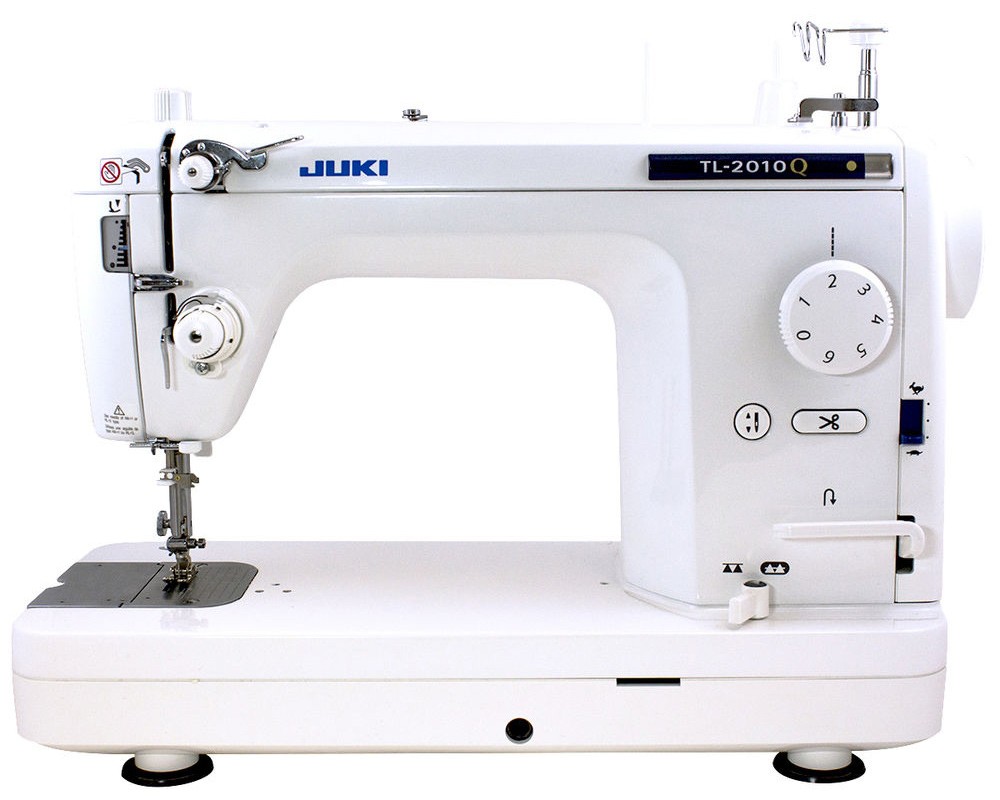
Key specifications: straight stitch only; up to 1,500 SPM; 6 mm maximum stitch length; adjustable presser-foot pressure; even-feed foot included; knee lift; 12 mm maximum knee-lift foot height; 23 × 13-inch auxiliary table; 25.4 lb.
The TL-2010Q is often described as a quilting machine, but its industrial-style straight-stitch design also makes it useful for bags, covers, layered home décor and long upholstery seams where you want more control and workspace than a typical domestic machine provides.
JUKI specifically notes that the even-feed foot can help with heavy materials such as leather, and the machine’s speed control lets you slow the 1,500-SPM head down for precise work. The knee lift is useful when both hands are supporting a bulky panel.
However, it is important not to misclassify the TL-2010Q. It is not a compound-feed walking-foot industrial. The included even-feed foot is an accessory, and very thick upholstery assemblies can still exceed what this machine feeds comfortably.
The TL-2010Q makes sense when most of your work is straight stitching and you also value a large extension table, automatic thread trimming and a refined home-studio setup. If you are routinely sewing foam-backed vinyl, thick leather or welt cord, buy the Consew instead.
Pros
Cons
Best for: bags, slipcovers, cushions, long straight upholstery seams, layered fabric and home studios that want a stronger straight-stitch machine without a full industrial table.
A normal domestic machine feeds fabric primarily from underneath with the feed dogs. Thick or slippery layers can shift because the top layer is not being driven at exactly the same rate.
If the project includes piping, foam-backed vinyl, leather or repeated transitions from two layers to five or six, feed control matters more than decorative stitch count.
| Material / Assembly | Domestic Heavy Duty | Portable Walking Foot | Compound-Feed Industrial |
|---|---|---|---|
| Cotton upholstery fabric | Excellent | Excellent | Excellent |
| Slipcover canvas | Good to excellent | Excellent | Excellent |
| Vinyl cushion covers | Good with non-stick/walking foot | Excellent | Excellent |
| Marine canvas / Sunbrella | Okay for modest layers | Excellent | Excellent |
| Leather | Light/medium projects only; test first | Good with correct foot/needle/thread | Excellent within machine/thread limits |
| Foam-backed auto upholstery | Often frustrating at bulky seams | Good | Best choice |
| Thick welt/piping intersections | Limited by foot clearance/feed | Good | Best choice |
A cushion panel may be only two layers until you reach a zipper, folded seam allowance or welt cord. Test your expected assembly, not a single fabric swatch.
For genuine upholstery, feed mechanism usually matters more than motor marketing. A walking or compound feed helps slippery vinyl, canvas and leather layers stay aligned.
You cannot sew an assembly that will not physically fit under the foot. The Consew’s 14 mm clearance is one reason it behaves differently from domestic machines.
Longer stitches are common in upholstery topstitching. Domestic machines often top out around 4 mm; the JUKI TL-2010Q reaches 6 mm, Barracuda 6 mm, and Consew 10 mm.
Heavy upholstery thread can exceed the tension system, needle eye and hook clearance of a domestic machine. Industrial machines are designed around larger needle/thread systems and are easier to tune for that work.
Furniture upholstery is largely straight-stitch work. Marine users may value zigzag for sail/canvas applications, which is why the Barracuda 200ZW is distinct from straight-stitch-only Consew/JUKI options.
A compound-feed industrial is not a machine you tuck into a closet after every seam. Plan for the table, motor and material support. Our best sewing table guide is more relevant to domestic/semi-industrial machines; full industrial heads normally use purpose-built stands.
Yes—within limits. The SINGER 4452 and Janome HD3000 can be very effective for dining-chair covers, cushions, curtains, slipcovers and modest vinyl/leather details. Good needles, correct thread, presser-foot pressure and a walking/non-stick foot matter.
They become the wrong tool when the project repeatedly combines dense layers, heavy thread, welt cord, webbing or foam-backed material. For that work, the cost of a walking-foot industrial can be easier to justify than fighting skipped stitches, uneven feeding and broken needles.
If your projects overlap with handbags, belts or leather accessories, see our sewing machine for leather guide. For jeans/canvas and general heavy home sewing, compare the broader heavy-duty sewing machine guide.
For serious repeated upholstery work, the Consew 206RB-5 is the strongest choice in this guide because it is a purpose-built compound-feed walking-foot industrial machine. For occasional home upholstery, the SINGER 4452 is much easier and cheaper to live with.
Not for every cushion or slipcover, but it becomes increasingly valuable as material gets thicker, slicker or more layered. Professional furniture, automotive and marine work strongly favors walking-foot or compound-feed machines.
Yes for many home upholstery projects. Singer includes a walking foot, non-stick foot, clearance plate and heavy-duty needles, and specifically markets the machine for canvas, leather and vinyl. It is still a domestic machine and should not be treated as a substitute for an industrial compound-feed machine.
“Industrial” describes the machine class, but not every industrial machine is ideal for upholstery. A high-speed garment lockstitch machine can be industrial yet still lack the walking/compound feed needed for thick layered upholstery. Look for the feed mechanism and material application, not only the word industrial.
It is better described as a high-speed straight-stitch home/semi-industrial machine. It can sew many heavy fabrics and includes an even-feed foot, but it is not a compound-feed walking-foot machine. It is best when your upholstery work is mostly long straight seams rather than dense professional assemblies.
It depends on the material and thread, but upholstery often benefits from longer stitches than garment sewing. That is one reason machines offering 6–10 mm maximum stitch lengths are attractive. Always test because overly long stitches can weaken some materials or look coarse on small pieces.
Light-to-moderate leather projects may work with the correct needle, foot and thread, but thick leather upholstery, multiple folded edges and heavy topstitching are better suited to a walking-foot industrial. Test scraps before risking expensive leather.
A compound-feed walking-foot industrial such as the Consew 206RB-5 is the appropriate class for repeated automotive work because it handles vinyl/leather, foam-backed assemblies, piping and long visible seams more consistently than a domestic heavy-duty machine.
We compared current manufacturer specifications and current product positioning, focusing on feed mechanism, foot clearance, stitch length, thread/bobbin system, speed control, workspace, useful upholstery feet/accessories, portability and whether the machine is honestly suited to repeated heavy assemblies.
The recommendations here are based on documented machine capabilities and the project type each model is built to handle.
The simplest rule is: if the upholstery project is occasional, buy a good domestic heavy-duty machine; if upholstery is the work, buy the feed system designed for upholstery.



Hi! i am wondering, can you use a normal sewing machine for upholstery?
Hi Tiana! Sewing upholstery is actually no different from sewing regular fabrics. You can’t use a heavy duty thread and an industrial grade needle on a regular household sewing machine. Make sure and use the right machine for your needs-otherwise you might end up damaging it.
is a walking foot really that necessary? can i use something else instead of it?
You can avoid using a walking foot if you use a darning or hopping foot, which needs you to drop your sewing machine’s feed dogs. Then it is up to you to push the quilt sandwich through as it lays on the sewing bed.
is brother ST371HD a quiet sewing machine? i live in a condo and don’t want to bother my neighbors
Yep, it’s pretty quiet, don’t worry about the neighbors
Hey, what’s the difference between Juki 8700 and 8700h? Does anyone know?
JUKI DDL-8700 is a standard high-speed lockstitch sewing machine whereas Juki DDL8700 H is a heavy-duty version. With a longer needle bar stroke, higher footlift (13mm) & heavier feed system, this machine is more comfortable to use (13mm).
I saw a good deal on a Seiko sewing machine the other day. I’m not sure if it’s worth taking up this offer since my girlfriend thinks we can get away with buying a cheaper-quality machine. I do regular upholstery, but would also love to get into automotive, marine & leather work. What machines have you used that are reliable?
Many machines can sew leather and some sales material might say that. From my experience, the results vary. I don’t have specific recommendations about machines, but we sell a lot of leather and have buyers come back saying they bought the wrong material– It’s too thick for their sewing machine. Where it starts to get tricky is when you have to tuck in seams or tufts, where you might have to sew through 3-4 layers of leather. Sometimes, the machine can do that but it will take quite a long time and be somewhat difficult for it.
A household machine can’t sew heavy-duty items and you’ll need to get a more expensive model if you want this ability. If you’re looking for something smaller, then a 2-ounce leather strap could be made into what’s called luggage, though. I haven’t had any experience with multipurpose machines but I know that there are leather-specific machines like Tippmann, Consew, Cowboy, and certain Landis, Adler, and Singer models!
I recently got a Pfaff 1425 and it’s great. I use it for lighter materials like leather and canvas, but do most of the heavy stuff by hand. It’s impossible to pick one machine that can do everything. My experience is limited to flatbed upholstery machines, but I believe Seiko’s 138 thread would fit you well. Most upholstery machines come with a clutch motor, but these motors aren’t great for fast-paced production. If you want to do that kind of work then opt for the better servo motors instead, which can handle different types of work and sewing speeds just as well. A speed reducer would be a good option as well, as it would provide more torque to slow sewing and allow you to maintain a lower speed. To sew exposed leather seams, make sure the foot has smooth feet