

JUKI has enough overlapping home sergers that the model numbers can make the buying decision harder than it needs to be. The useful question is not simply “which JUKI is newest?” It is whether you need a reliable 4-thread overlocker, easier air threading, a true serger/coverstitch combination, or premium automation that saves setup time every time you change threads.
For most home garment sewists, the JUKI MO-654DE is still the best-balanced choice. It gives you 2/3/4-thread overlocking, differential feed, rolled hemming, a strong knife system and 1,500-SPM speed without making you pay for air threading or a coverstitch system you may never use. If threading is the part of serging you dislike most, move to the MO-1000. If you want one machine to overlock seams and create cover hems, the MO-735 is the genuinely different option.
These three cover the decisions most buyers are actually making: best all-round value, easiest threading, or one machine that also handles coverstitch hems.
| Model | Threads | Max Speed | Threading | Coverstitch? | Best For |
|---|---|---|---|---|---|
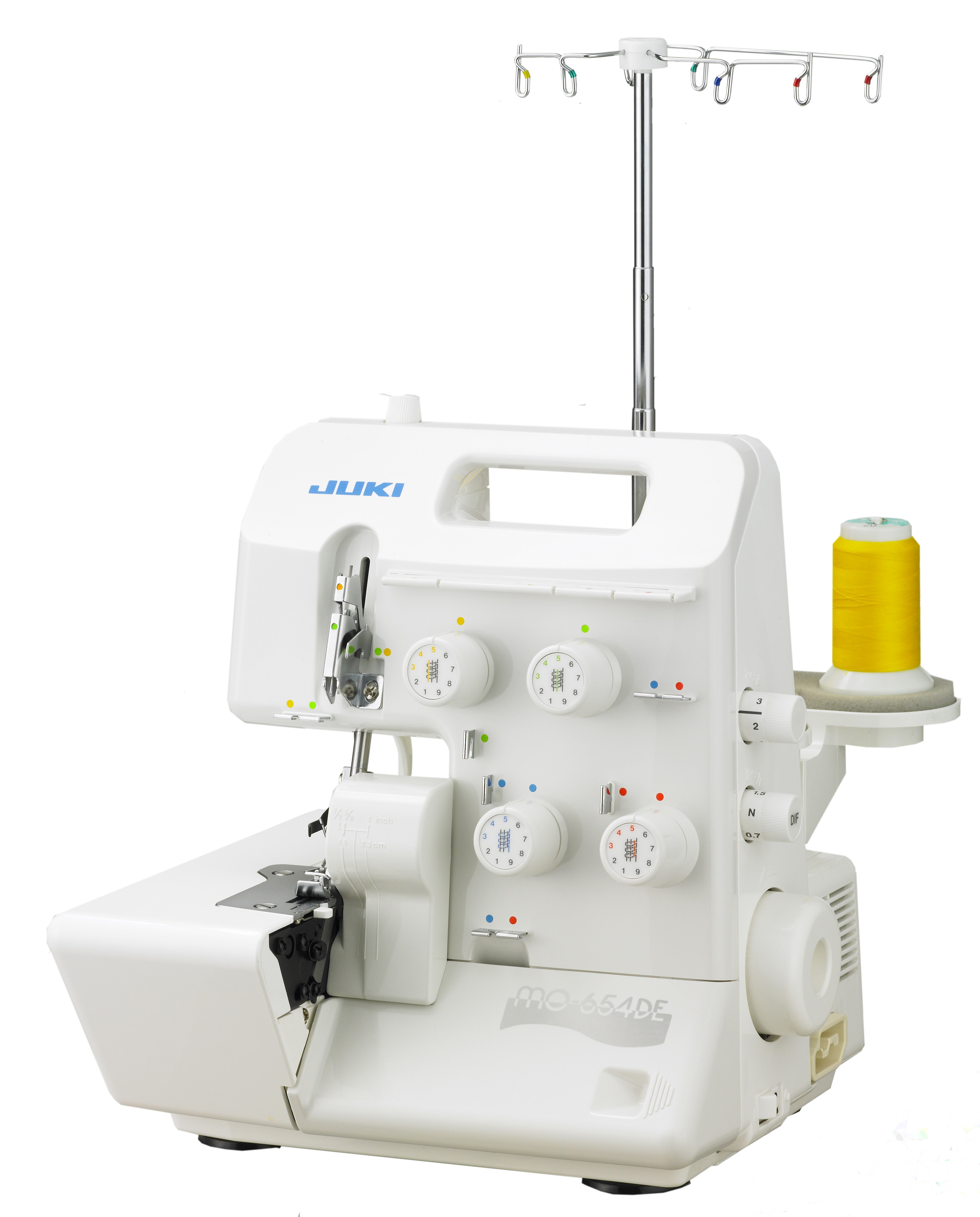
| MO-654DE | 2/3/4 | 1,500 SPM | Color-coded manual paths + lower-looper aid | No | Best overall value / regular garment sewing |
| MO-114D | 2/3/4 | 1,500 SPM | Lay-in tension paths + lower-looper threader | No | Beginners who prefer simpler front controls |
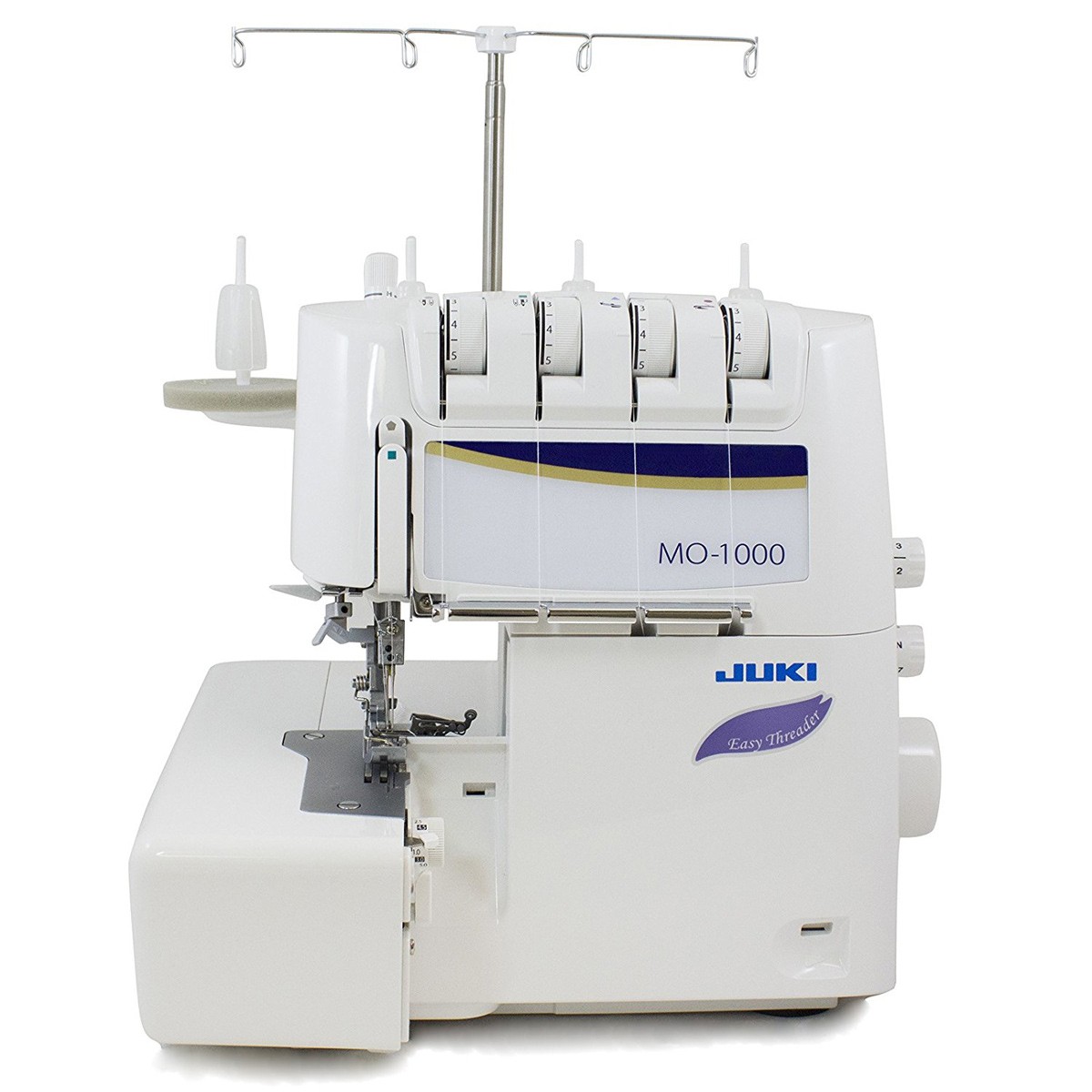
| MO-1000 | 2/3/4 | 1,500 SPM | Air-threaded loopers + automatic needle threader | No | Easy setup / frequent thread changes |
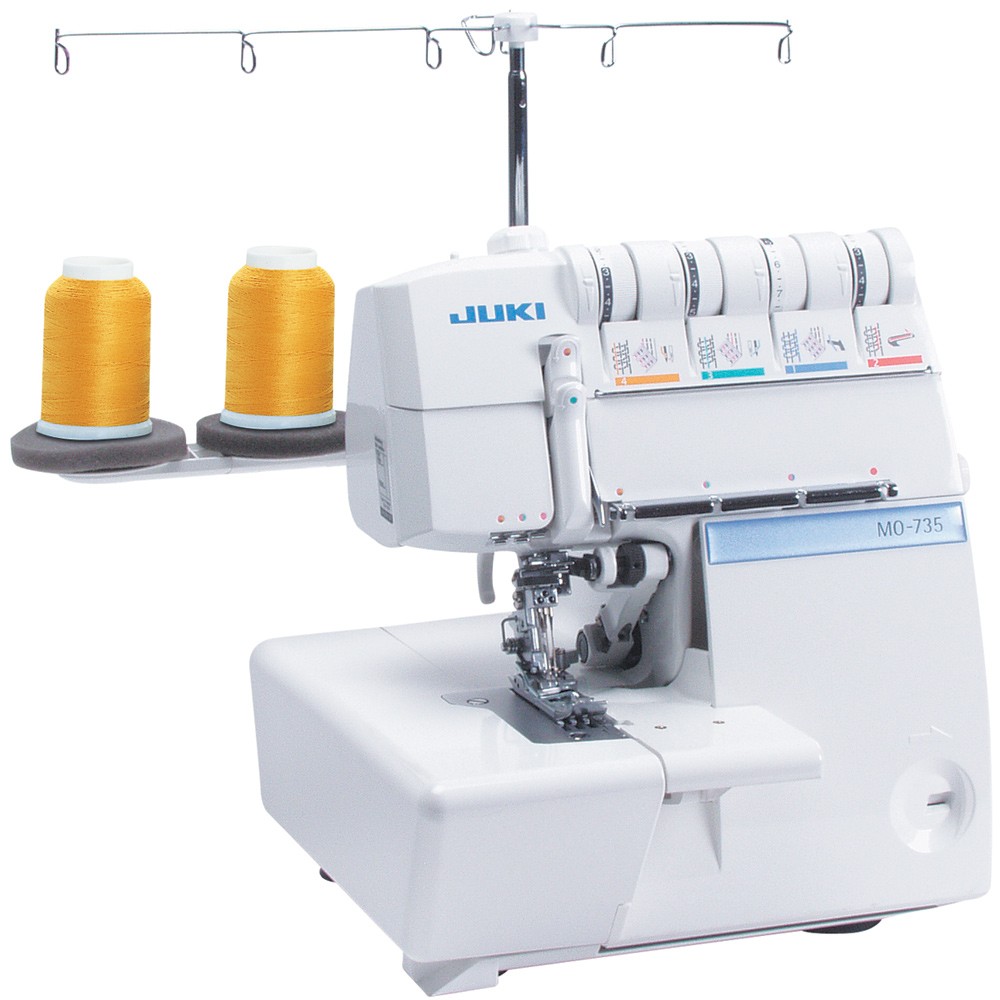
| MO-735 | 2/3/4/5 | 1,500 SPM | Color-coded lay-in + looper threading aids | Yes | All-in-one overlock + coverstitch work |
| Akane MO-3000QVP | 2/3/4 | 1,500 SPM | Air loopers + automatic needle threader + automatic thread supply | No | Premium garment sewing / maximum convenience |
| If This Sounds Like You… | Start With | Why |
|---|---|---|
| I want a durable 4-thread serger without paying for automation | MO-654DE | Strong core overlock features, heavy-duty knife, differential feed and simple mechanical controls |
| This is my first serger and I want straightforward controls | MO-114D | Lay-in tension slots, lower-looper threading aid and familiar external adjustments |
| I hate threading loopers or change thread colors constantly | MO-1000 | Push-button air threading is the feature you will notice on every setup |
| I make T-shirts/activewear and want store-style cover hems too | MO-735 | It adds chainstitch, 5-thread safety stitch and 2-/3-needle coverstitch capability |
| I want JUKI’s premium home overlock convenience | MO-3000QVP | Air threading, automatic thread supply, LCD, chain-off cutter, knee lift and micro-lifter |
Not sure whether a serger is even the right second machine? Use the site’s Serger vs Sewing Machine Tool first. It helps separate overlock/edge-finishing needs from jobs that still belong on a regular sewing machine or coverstitch machine.
Key specifications: 2/3/4 threads; 1,500 SPM; up to 4 mm stitch length; 0.7–2.0 differential feed; up to 6 mm overlock width; 5 mm presser-foot lift; approximately 15.5 lb.
The MO-654DE is the JUKI I would buy if I wanted a serger for regular garment construction but did not want to pay a large premium for automation. It covers the stitches most home sewists actually use—4-thread construction seams, 3-thread finishing, flatlock variations and rolled hems—and gives you mechanical controls that remain visible and easy to adjust.
Its biggest strength is that the money goes into the core serging hardware. JUKI gives it a dedicated-drive knife system, adjustable differential feed, adjustable cutting width, stitch-length control and a multi-function foot. That makes it useful for everything from slippery lightweight fabric to knit garments and heavier home-sewing materials.
Threading is conventional rather than air-assisted, but the paths are color coded and the lower looper disengages for easier access. If you only rethread occasionally, I would rather save the money and learn the path. If you change four cones several times a day, the MO-1000 starts making more sense.
The MO-654DE is also compact for a machine with this level of performance. That matters in a home sewing room because a serger usually sits beside—not instead of—your normal sewing machine.
What we like
What could be better
Best for: garment sewists, knit projects, regular seam finishing and buyers who value JUKI’s core serging performance more than automated threading.
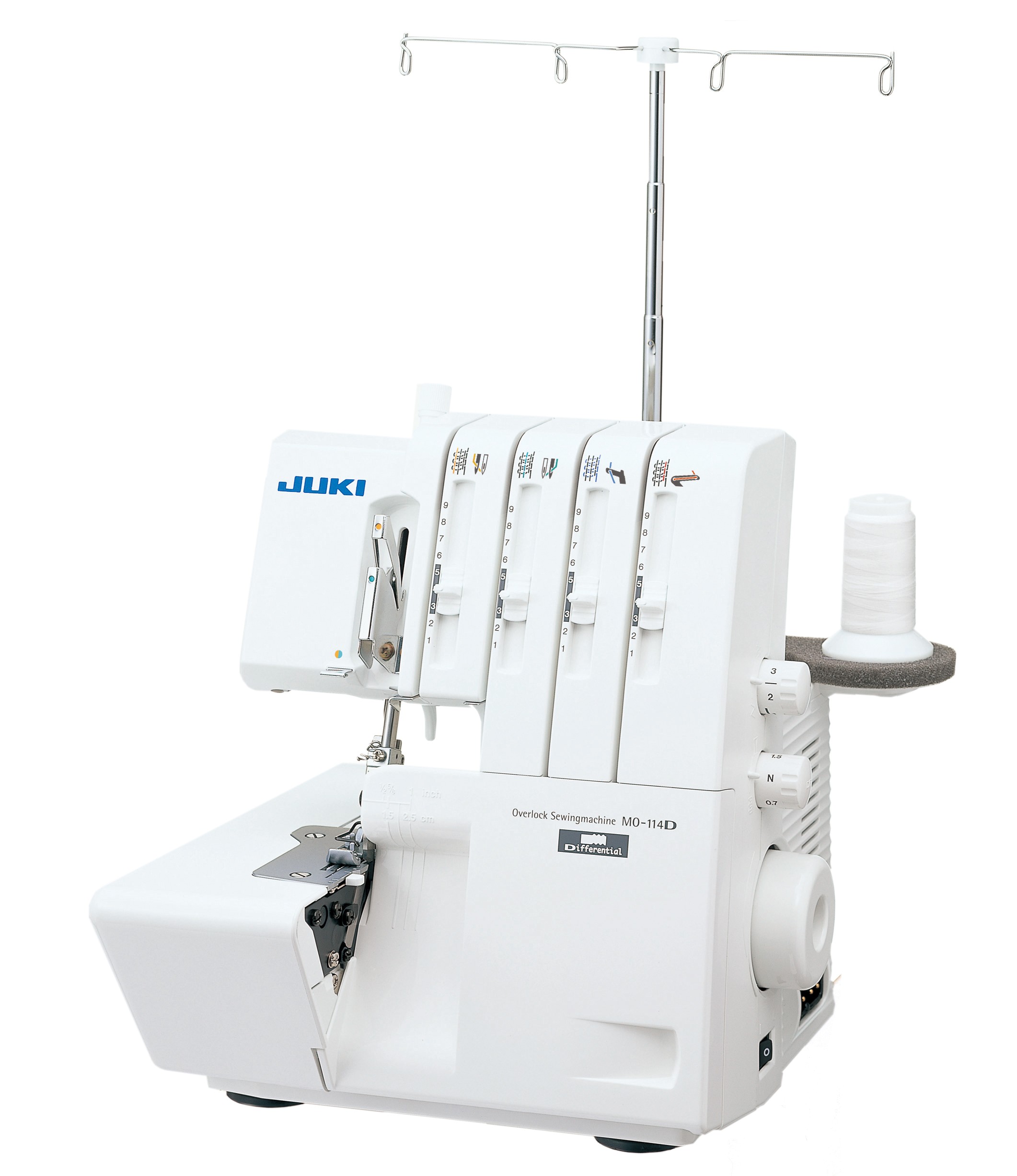
Key specifications: 2/3/4 threads; 1,500 SPM; 1–4 mm stitch length; up to 7 mm overlock width; 0.7–2.0 differential feed; adjustable presser-foot pressure; approximately 20.4 lb.
The MO-114D is the better starting point for someone who wants JUKI quality but prefers a simpler, more conventional control layout than an expensive automated model. Its lay-in tension slots and color-coded thread paths make the threading sequence easier to understand, while the lower-looper threader improves access to the part beginners usually find most intimidating.
For normal garment work, the fundamentals are strong: 4-thread overlock for construction, 3-thread narrow and rolled hems, differential feed for stretch fabrics, adjustable cutting width and manual foot-pressure adjustment.
Do not buy it because an older product description makes it sound like a coverstitch machine. It is a 2/3/4-thread overlocker. If T-shirt-style twin-needle cover hems are part of the purchase requirement, the MO-735 is the JUKI model in this guide designed for that job.
The tradeoff versus the MO-654DE is mostly about interface and positioning in JUKI’s range, not raw speed. Both reach 1,500 SPM. I prefer the MO-654DE as the all-round value pick; I prefer the MO-114D for a beginner who finds its lay-in threading layout easier to learn.
What we like
What could be better
Best for: first-time serger owners who want a durable JUKI with understandable mechanical controls and do not need automated air threading.
If this is your first overlocker, also compare our best sergers for beginners rather than assuming JUKI is automatically the right brand for every budget.
Key specifications: 2/3/4 threads; 1,500 SPM; push-button looper air threading; automatic needle threader; up to 4 mm stitch length; up to 9 mm overlock width; 8 mm maximum manual presser-foot lift; approximately 20 lb.
The MO-1000 solves the part of serging that stops many people from using their machine: rethreading. Instead of manually guiding thread through the upper and lower loopers, you place the thread into the threading port and use the powered air system to send it through.
That convenience matters most when you change thread colors often. If you tend to leave four neutral cones on the machine for months, air threading is pleasant but not essential. If garment sewing means matching every project, it can turn a tedious setup step into something you barely think about.
The machine also adds an automatic needle threader and a tall 72.4 mm throat area, plus adjustable differential feed, automatic rolled hemming, adjustable foot pressure and the ability to deactivate the upper knife.
It is still a 2/3/4-thread overlocker. Air threading does not add coverstitch, chainstitch or a 5-thread safety seam. This is an important distinction because an expensive easy-threading serger and a combination serger/coverstitch machine solve different problems.
What we like
What could be better
Best for: frequent garment sewing, sewists who change thread colors regularly, and anyone willing to pay more specifically to eliminate manual looper threading.
Key specifications: 2/3/4/5 threads; 1,500 SPM; 24 stitch configurations; chainstitch; 5-thread safety stitch; 2-needle narrow/wide and 3-needle coverstitch; 0.7–2.0 differential feed; approximately 20 lb.
The MO-735 is the one to buy when the word coverstitch is actually on your requirement list. Unlike a normal serger, it can switch into cover-hem and chainstitch configurations, including 2-needle narrow, 2-needle wide and 3-needle cover hems.
That matters for knit garments. A standard 4-thread overlock is excellent for constructing a T-shirt’s side seams and attaching some bands, but the familiar parallel rows of stitching on a ready-to-wear T-shirt hem are a coverstitch operation. The MO-735 can do both jobs.
It can also create a 5-thread safety seam, combining chainstitch strength with overcast edge finishing. That gives it a meaningful versatility advantage over the 2/3/4-thread models rather than just adding another convenience feature.
The downside of a combo machine is conversion. You save table space and the cost of a second machine, but changing between overlock and coverstitch modes involves rethreading/reconfiguring. People who switch back and forth constantly often prefer two dedicated machines. Our coverstitch vs serger guide explains that tradeoff in more detail.
What we like
What could be better
Best for: knit garment makers, small sewing rooms and buyers who want professional overlock construction plus T-shirt-style cover hems without buying a separate coverstitch machine.
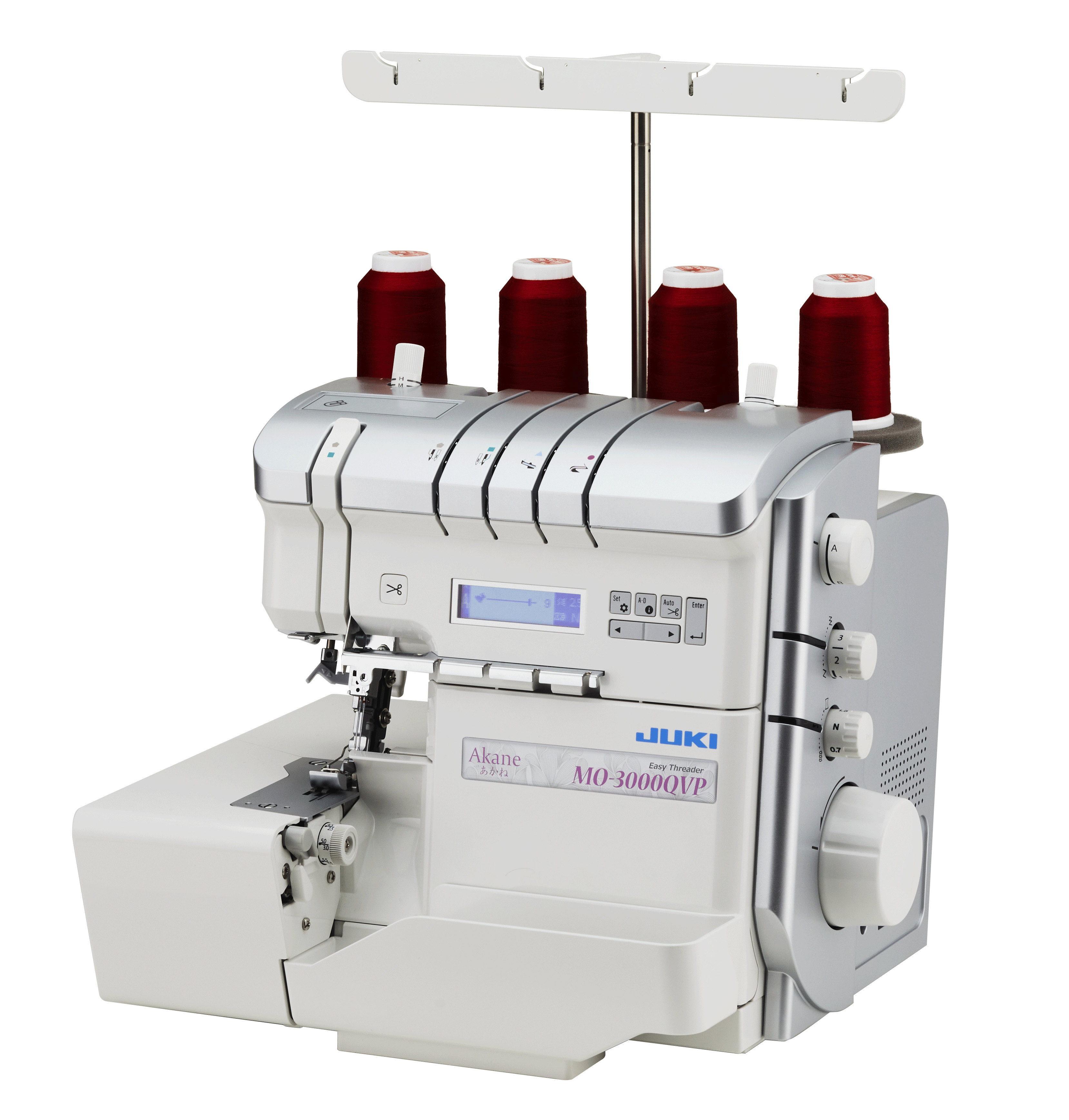
Key specifications: 2/3/4 threads; 1,500 SPM; air looper threading; automatic needle threader; automatic thread-supply system; chain-off thread cutter; LCD; micro-lifter; knee lift; 0.7–2.0 differential feed; 6–8 mm lever foot lift; approximately 25 lb.
The MO-3000QVP is JUKI’s premium answer for someone who spends enough time at a serger that small setup and handling improvements are worth paying for. It combines air threading with an automatic needle threader, then goes further with an automatic thread-supply system that reduces the traditional tension-dial workflow.
The chain-off thread cutter is another feature you notice in repeated garment work. It can cut the chain manually from a button/foot-switch command or be configured for automatic cutting. A micro-lifter lets you work with the presser foot slightly raised for bulkier sections, and the knee lift keeps both hands on the fabric.
The LCD is not there to turn the serger into a computerized sewing machine. It shows the selected stitch and supports settings such as maximum speed, chain-off cutter behavior, LED color temperature and foot-switch functions.
Most buyers do not need this machine. An MO-654DE can create excellent overlocked seams for much less. The MO-3000QVP makes sense when you serge frequently enough that threading, tension setup, chain management and hands-free control are repeated productivity issues.
What we like
What could be better
Best for: serious garment sewists, small apparel businesses and buyers who want the most automated/convenient JUKI home overlock experience rather than the lowest cost.
The MO-2800 is absolutely worth considering if you are buying through an authorized JUKI dealer. It sits between the simpler MO-1000 and the more automated MO-3000QVP: 2/3/4-thread overlock, air looper threading, automatic needle threading, knee lift, 1,500-SPM speed and JUKI’s Tweak Width Adjustment (TWA), which helps correct excess thread or fabric curling during overcasting.
I did not force it into the ranked five because its job overlaps heavily with the MO-1000/MO-3000 tier and I could not verify a stable current U.S. Amazon ASIN to support the affiliate format of this particular buyer guide. If your local dealer has an MO-2800 available, it is one of the first alternatives I would test-drive.
Both reach 1,500 SPM and handle the core 2/3/4-thread garment jobs. I would choose the MO-654DE for its compact Pearl-line design, strong knife system and overall value. I would choose the MO-114D if its lay-in tension layout and lower-looper threading system feel more intuitive when you try the machines in person.
Neither is “self-threading.” If threading is the main issue you are trying to solve, skip the small differences between these two and move directly to the MO-1000/MO-2800 air-threading class.
| Factor | Conventional JUKI (MO-654DE / MO-114D) | Air-Threading JUKI (MO-1000 / MO-3000QVP) |
|---|---|---|
| Looper setup | Follow color-coded/manual paths and threading aids | Insert thread into the port and use powered air to send it through the loopers |
| Best advantage | Lower machine cost; simple mechanical system | Much faster, less frustrating thread changes |
| Who notices most | Sewists who rarely change cone colors | Garment sewists changing thread for every project |
| Stitch quality | Can be excellent | Can be excellent |
| Does air threading add coverstitch? | No | No |
Air threading is a convenience feature, not a higher-quality-stitch guarantee. Once correctly threaded and adjusted, a conventional MO-654DE can create the same category of professional overlocked garment seam that an air-threading machine can.
More threads do not automatically mean “better.” Buy the stitch type your garments require. A good 4-thread overlocker is a much better purchase than a 5-thread machine whose extra modes you never set up.
If you mainly want to finish seam allowances and sew knit construction seams, no. A standard JUKI overlocker is enough.
If you want the parallel top rows and looper formation used on many ready-to-wear T-shirt hems, then yes—you need coverstitch capability. The MO-735 combines that with overlocking. Another option is to keep the serger simpler and add a dedicated coverstitch machine later, which avoids mode conversion when production volume rises.
No. A serger is excellent at trimming, overlocking, stretchy construction seams and edge finishing, but it does not replace a regular sewing machine for jobs such as buttonholes, zipper installation, precise topstitching, many hems and seams that need to start/stop away from an edge.
If you are buying your first machine, read the Serger vs Sewing Machine guide/tool before spending money. For most beginners, the standard sewing machine comes first and the serger becomes the second machine that makes garment construction faster and cleaner.
A home JUKI serger sits on a normal table, uses a portable foot-control setup and is designed to switch between several home-sewing techniques. An industrial overlocker is generally installed into a dedicated table with an external motor and is optimized for a narrower set of high-speed production operations.
If you are sewing garments at home, a MO-series portable serger is normally the correct category. If you are building a production line and want thousands of stitches per minute from a table-mounted machine, compare the best industrial sergers instead.
The MO-654DE is my default pick because it combines the core features most garment sewists need—2/3/4-thread overlocking, differential feed, rolled hemming, 1,500-SPM speed and JUKI’s strong knife system—without charging for premium automation.
The MO-1000 is the easiest mainstream choice in this guide because it uses powered air to thread the loopers and also includes an automatic needle threader. The MO-3000QVP adds that same general convenience tier plus more automation and controls.
I would choose between the MO-114D and MO-654DE. The MO-114D has a particularly approachable lay-in tension/threading layout; the MO-654DE is my better all-around value. A beginner with a larger budget who strongly dislikes threading may actually learn faster on the MO-1000.
The MO-735 in this guide is a true combination model. It supports overlock stitches plus chainstitch and 2- or 3-needle cover hems. The MO-654DE, MO-114D, MO-1000, MO-2800 and MO-3000QVP are overlock sergers, not coverstitch machines.
It has far more convenience features, but that does not make it the better purchase for everyone. The MO-3000QVP is easier to thread and offers automatic thread supply, LCD controls, chain-off cutting, knee lift and a micro-lifter. The MO-654DE gives you the core professional-looking overlock seams for much less complexity and cost.
Yes. Its adjustable differential feed is specifically useful for controlling stretch fabrics, while its 4-thread overlock is a common construction choice for knit garments. Always test differential feed, stitch length and tension on a scrap of the actual fabric before sewing the garment.
It depends on the model. For example, JUKI specifies household HAx1 #11–14 needles for the MO-654DE and household size 11 or 14 for the MO-1000, while the MO-114D specifies SCHMETZ 130R/705H sizes. Follow the manual for your exact model rather than assuming every JUKI serger uses the same needle system.
Buy the MO-654DE if you want the best balance of price, durability and core serging capability. It is the machine I would recommend to the largest number of home garment sewists.
Buy the MO-1000 if threading is the reason you hesitate to use a serger. Its air-threaded loopers materially change setup without forcing you all the way into JUKI’s most expensive premium tier.
Buy the MO-735 if you specifically need coverstitch as well as overlock. That is a functional difference, not just a convenience upgrade.
Buy the MO-3000QVP only when the time-saving premium features matter to your actual sewing volume. It is a very capable premium overlocker, but most hobbyists do not need its automation to get an excellent seam.