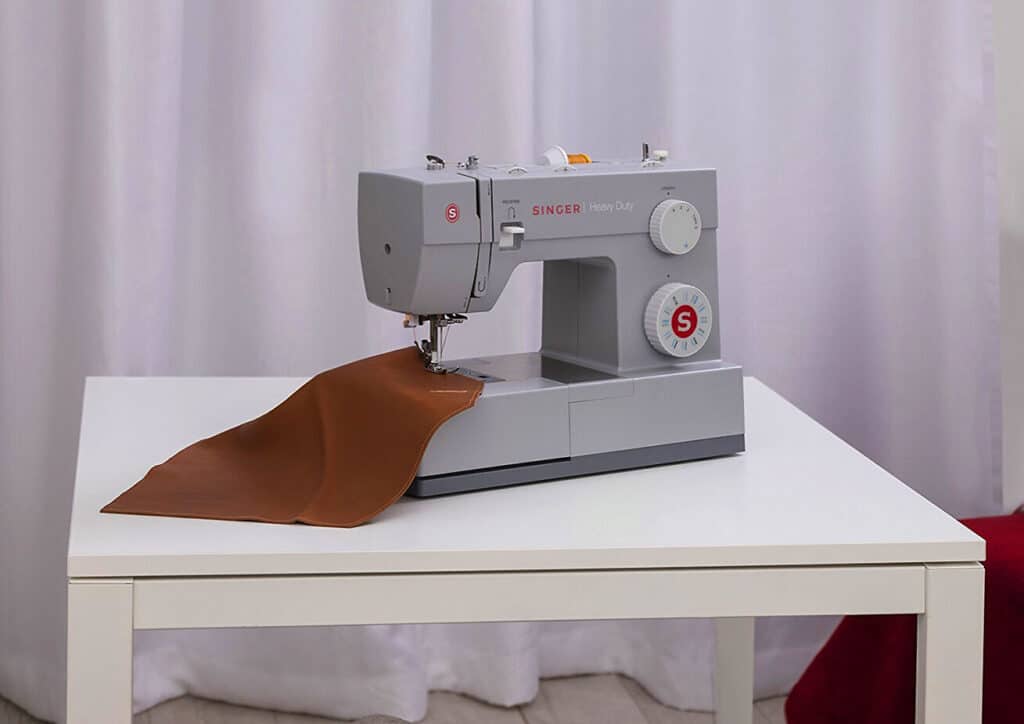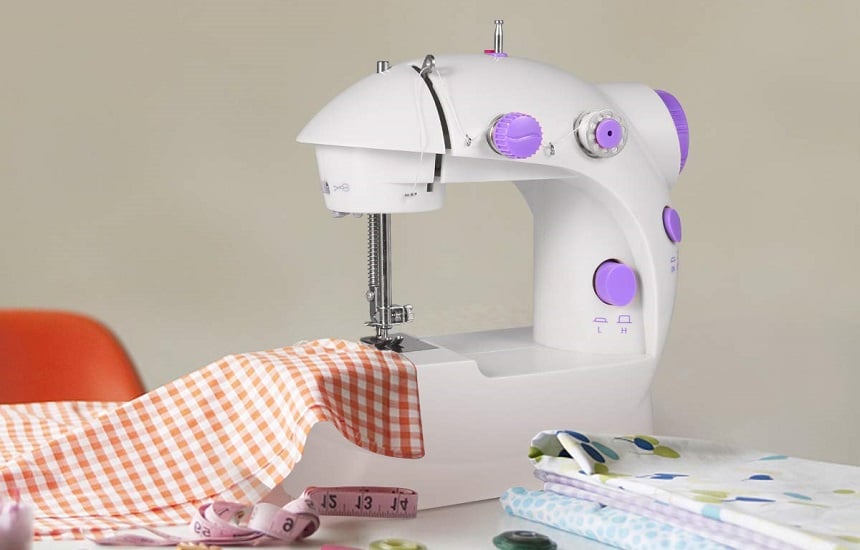

If you are searching for the best mini sewing machine, the first thing to decide is what you mean by “mini.” Some machines are genuinely tiny, lightweight mending machines made for hems and simple repairs. Others are compact full-size sewing machines that take up more room but give you a real buttonhole, multiple presser feet, more working space and much better room to grow.
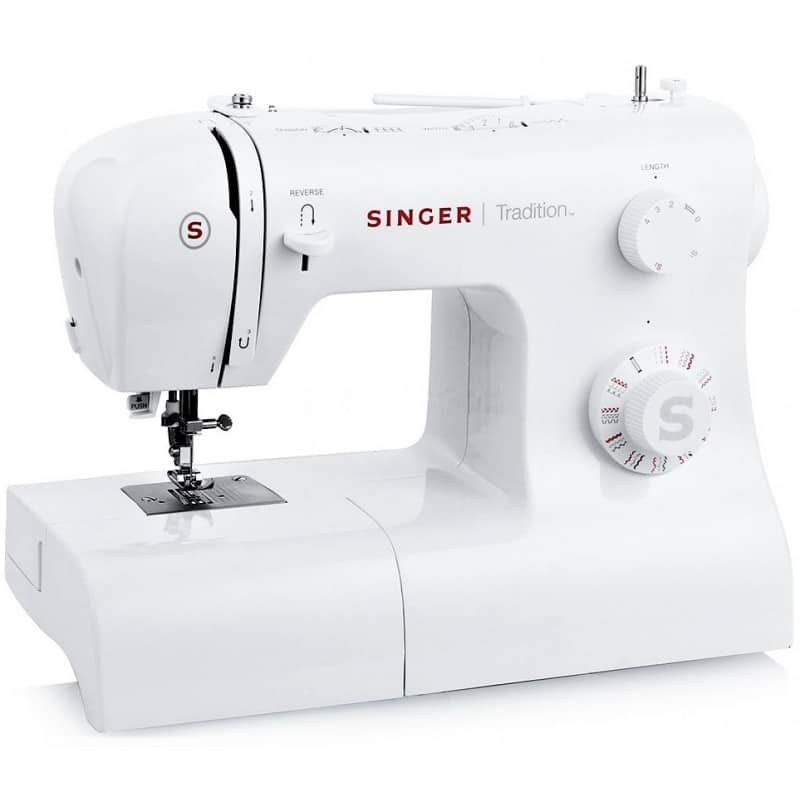
For a true mini, my first choice is the SINGER M1000. It weighs only 5.5 lb, has four actual built-in stitches, a top-loading bobbin and a free arm, and SINGER is unusually clear about its limits: it is intended for simpler repairs on light-to-medium fabrics. If you want to learn garment sewing rather than just mend clothes, I would step up to a compact full-size machine such as the Brother LX3817 or SINGER M1500.
These three cover the most common reasons people search for a mini machine: the smallest useful mending machine, the lowest-cost true mini, and the simplest compact full-size step-up.


| Machine | Type | Weight | Stitches / Key Feature | Best For |
|---|---|---|---|---|
| SINGER M1000 | True mini / mending | 5.5 lb | 4 built-in stitches; 32 stitch applications | Hems, seam repairs, light-to-medium fabric |
| Brother LX3817 | Compact full-size | 10.36 lb | 17 stitches; 4-step buttonhole; 850 SPM | Best value for learning everyday sewing |
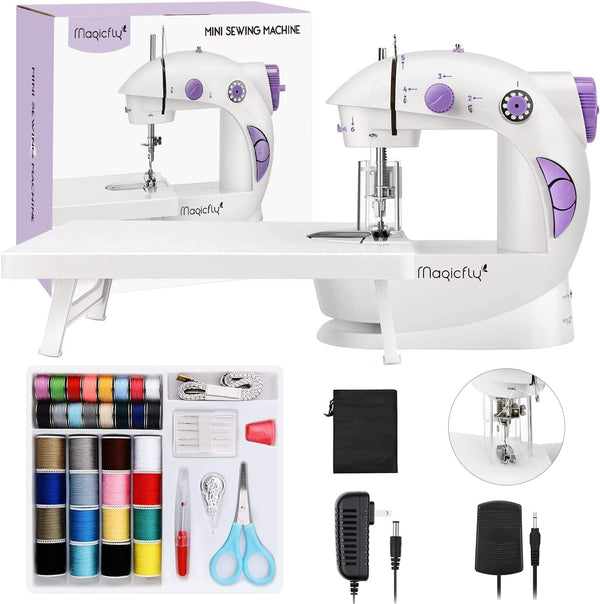
| Magicfly MF600 | True mini | About 2.2 lb | One stitch type; two speeds; AC/battery power | Very basic repairs and ultra-small storage |
| Janome Arctic Crystal | Compact full-size | 13 lb | 15 stitches; 4-step buttonhole; 800 SPM | Beginner who wants a mechanical machine to grow into |
| SINGER M1500 | Compact full-size | 10 lb | 6 built-in stitches; 57 stitch applications; 4-step buttonhole | Simple garment sewing, crafts and classes |
Use the site’s existing Sewing Machine Finder to match your projects, fabric, budget and skill level to the right type of machine. The tool below is rendered by the Crafty Hangouts plugin; this article does not add custom calculator or finder code.
| Question | True Mini | Compact Full-Size |
|---|---|---|
| Main job | Mending, hems, quick repairs | Learning sewing, garments, crafts, repairs |
| Typical weight | Roughly 2–6 lb | Roughly 10–13 lb in this guide |
| Buttonholes | Often absent | Common |
| Presser-foot options | Usually limited | Much broader |
| Working space | Small | Better for garments and larger pieces |
| Thicker fabric | Usually not the right tool | Better, but still not industrial/heavy-duty upholstery equipment |
| Best reason to buy | Tiny storage footprint and simple repairs | A real first sewing machine that is still easy to store |
If portability for classes and travel matters more than the smallest possible footprint, compare these machines with our best portable sewing machine guide. That article focuses on machines you can carry easily without giving up the capabilities of a normal sewing machine.
Key specifications: 5.5 lb; four built-in stitches; 32 stitch applications; top drop-in Class 15 bobbin; free arm; adjustable tension; reverse lever; extra-high presser-foot lift; 4.25-inch sewing space from needle to tower.
The M1000 is the best fit for the word mini in this guide. At 5.5 lb, it is far lighter than a normal mechanical sewing machine, but it still gives you useful functions that many toy-style minis skip: zigzag, multi-step zigzag and blind-hem options alongside straight stitching, plus reverse and a free arm.
SINGER’s own positioning is important here. The company calls the M1000 a mending machine and recommends it for simpler sewing tasks on light-to-medium-weight fabrics. SINGER explicitly recommends a full-size machine for thicker fabrics and more applications. That honesty is why I prefer it to generic mini machines that make much broader claims than their hardware can support.
The top drop-in bobbin is also friendlier than the front-loading system found on many basic full-size machines. You can see the remaining bobbin thread through the clear cover, and the free arm helps with trouser hems and sleeve cuffs—the exact jobs a compact mending machine is likely to handle.
Do not confuse SINGER’s “32 stitch applications” with 32 built-in stitches. The M1000 has four actual built-in stitches; the larger number describes different sewing techniques/settings you can perform with those stitches.
Who should skip it: anyone planning to learn full garment construction, make lots of buttonholes, sew bags with thick seams, quilt larger pieces or work regularly with denim/canvas stacks. A compact full-size machine gives you much more headroom.
Pros
Cons
Best for: apartment/dorm storage, trouser hems, seam repairs, cuffs and a lightweight backup machine.
Key specifications: 10.36 lb; 17 built-in stitches; one four-step auto-size buttonhole; 850 stitches per minute; four included feet; LED work area; free arm; quick-set top drop-in bobbin; 12.13 × 5.75 × 15.43-inch listed dimensions.
The LX3817 is not a true mini—and that is exactly why it may be the smarter purchase. It is still light enough to move and easy to store, but Brother gives it the basics of a real beginner sewing machine: 17 stitches, a buttonhole, zipper/buttonhole/button-sewing feet and an 850-SPM maximum speed.
For someone who searches “mini sewing machine” because they live in a small apartment or do not have a dedicated sewing room, this is the type of compromise I prefer. You can put it away when you are done, but you are not trapped with a one-stitch machine after your first few repairs.
The drop-in bobbin is another beginner-friendly advantage, and Brother’s free arm makes cuffs and trouser legs easier. The machine does use manual needle threading and lacks computerized speed control, needle up/down and automatic thread cutting, which is appropriate at this basic mechanical level.
The Amazon link here points to a current LX3817 listing/bundle identified by the exact model. Bundle contents and sellers can change, so confirm the listing still names Brother LX3817 before ordering.
Who should skip it: anyone whose only goal is the smallest possible repair machine. At more than 10 lb it is portable, but it is not “mini” in the M1000/Magicfly sense. It is also not the machine for upholstery or repeated heavy denim layers; see our upholstery sewing machine guide for those jobs.
Pros
Cons
Best for: budget-conscious beginners who want the smallest/lightest machine they can buy without giving up normal sewing-machine capability.
Key specifications: one stitch type; high/low speed; foot pedal; extension table; built-in light; AC/DC or battery power; accessory kit; approximately 2.2 lb in current product-catalog data.
The Magicfly MF600 is closer to what many shoppers picture when they hear “mini sewing machine”: tiny, very light, inexpensive and simple. Magicfly’s current product page says it uses one stitching type, offers high/low speed control, can run from a power supply or batteries, and includes a foot pedal and extension table.
That makes it convenient for quick straight-seam jobs when storage is the overriding priority. The extension table helps support fabric better than the bare machine body alone, and battery operation gives it a level of portability that cord-only full-size machines cannot match.
The tradeoff is capability. One stitch type is enough for basic practice and simple repairs, but it does not give you the versatility of zigzag, blind hem or a buttonhole. If you already know you want to sew clothing rather than simply experiment with sewing, spending more on the Brother LX3817 or SINGER M1500 is usually the better decision.
Magicfly markets the model to beginners and includes a finger guard, but the manufacturer’s FAQ still says children should use it under adult guidance. A powered needle is not a toy simply because the machine is small.
Who should skip it: learners who want a machine they can keep for years as their projects become more ambitious. Its appeal is size, simplicity and low entry cost—not long-term versatility.
Pros
Cons
Best for: occasional basic straight-stitch repairs, tiny storage spaces and buyers who want the lowest-commitment way to try powered sewing.
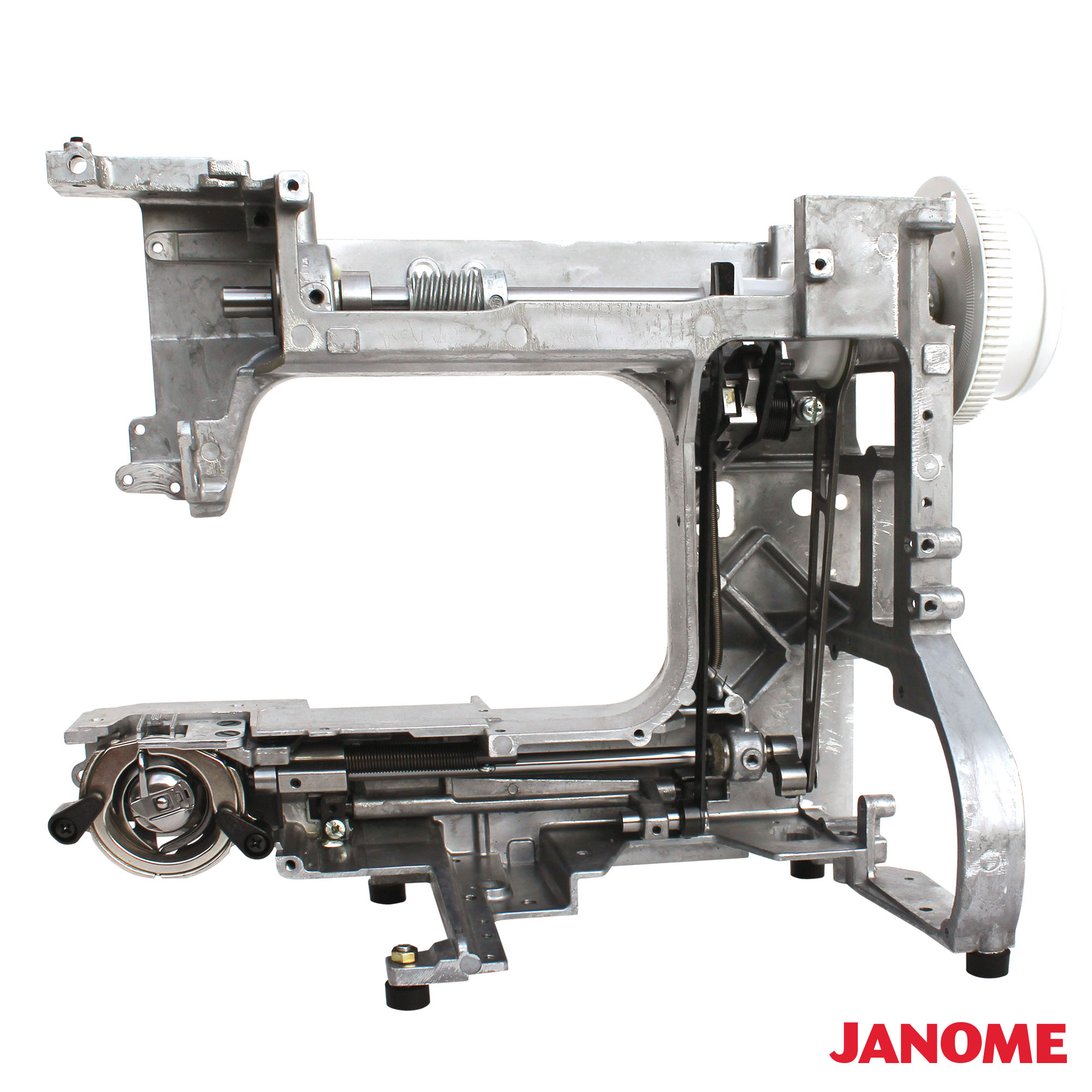
Key specifications: 13 lb; 15 built-in stitches; one four-step buttonhole; 800 stitches per minute; 15 needle positions; free arm; 3-piece feed dog; extra-high presser-foot lift; 15.2 × 11.6 × 6-inch listed footprint; 6.5 × 4.7-inch workspace.
The Arctic Crystal is the heaviest machine in this guide, so it should not be sold as a tiny mini. Janome’s own specifications make the distinction clear: this is a full-size entry-level machine with a relatively narrow 6-inch depth and a 13-lb weight.
Why include it? Because some shoppers use “mini” to mean easy to store and beginner-friendly. For that buyer, the Arctic Crystal gives you more room to grow than a true mini without jumping to a computerized machine. Fifteen stitches, a four-step buttonhole, adjustable stitch width/length and 15 needle positions are useful when you move from repairs into garments, crafts and simple home décor.
The extra-high presser-foot lift can make it easier to position bulkier seams under the foot, but that does not turn the machine into heavy-duty upholstery equipment. It is still a domestic beginner machine.
The front-loading bobbin is more traditional than the top-loading systems on the SINGER M1000 and Brother LX3817, and there is no built-in needle threader. Some beginners prefer the simpler all-mechanical layout; others will find a top-drop bobbin easier.
Who should skip it: anyone whose top requirement is carrying the machine frequently. At 13 lb, it is transportable, but the M1000, Brother and M1500 are notably lighter.
Pros
Cons
Best for: beginners who want a colorful mechanical machine for real sewing projects and can accept a little more size and weight.
Key specifications: 10 lb; six built-in stitches; 57 stitch applications; four-step buttonhole; front-loading Class 15 bobbin; free arm; LED light; 5.6-inch sewing space; 13 × 7 × 11.5-inch machine size.
The M1500 is the model I would choose when a shopper likes the simplicity of the M1000 but already knows they want to make more than repairs. At 10 lb it remains easy to put in a closet or carry to a class, yet it gives you a four-step buttonhole, zipper foot, buttonhole foot and substantially more sewing space.
Like the M1000, SINGER uses “stitch applications” as a marketing count. The M1500 has six built-in stitches, not 57 separate stitches. The 57 figure describes techniques and variations that use those six stitches. For a beginner, six core stitches can be enough because most everyday sewing relies heavily on straight and zigzag stitches anyway.
Preset stitch length and width reduce decisions when you are learning. That simplicity is a strength for basic projects, but it also limits fine control compared with a machine that lets you adjust more stitch parameters manually.
Compared with the Brother LX3817, the M1500 offers fewer actual stitches but a similarly compact/lightweight full-size concept. I would choose between them based on the control layout you prefer and the accessories/stitches your projects need rather than brand loyalty. Our Brother vs Singer comparison goes deeper on those ecosystems.
Who should skip it: anyone who wants computerized speed control, lots of decorative stitches or a top drop-in bobbin. For a more feature-rich portable full-size machine, see our portable sewing machine guide.
Pros
Cons
Best for: beginners who want a simple real sewing machine that is easy to store and carry but more capable than a mending-only mini.
A good mini machine can be genuinely useful when the job matches the hardware. The problem comes when marketing makes a tiny machine sound like a scaled-down version of a full sewing studio.
Good jobs for a true mini:
Jobs where I would choose a full-size machine instead:
If your budget is the main reason you are considering a mini, also compare the current options in our sewing machines under $100 and sewing machines under $200 guides. A discounted full-size model can be a better long-term buy than a very small machine.
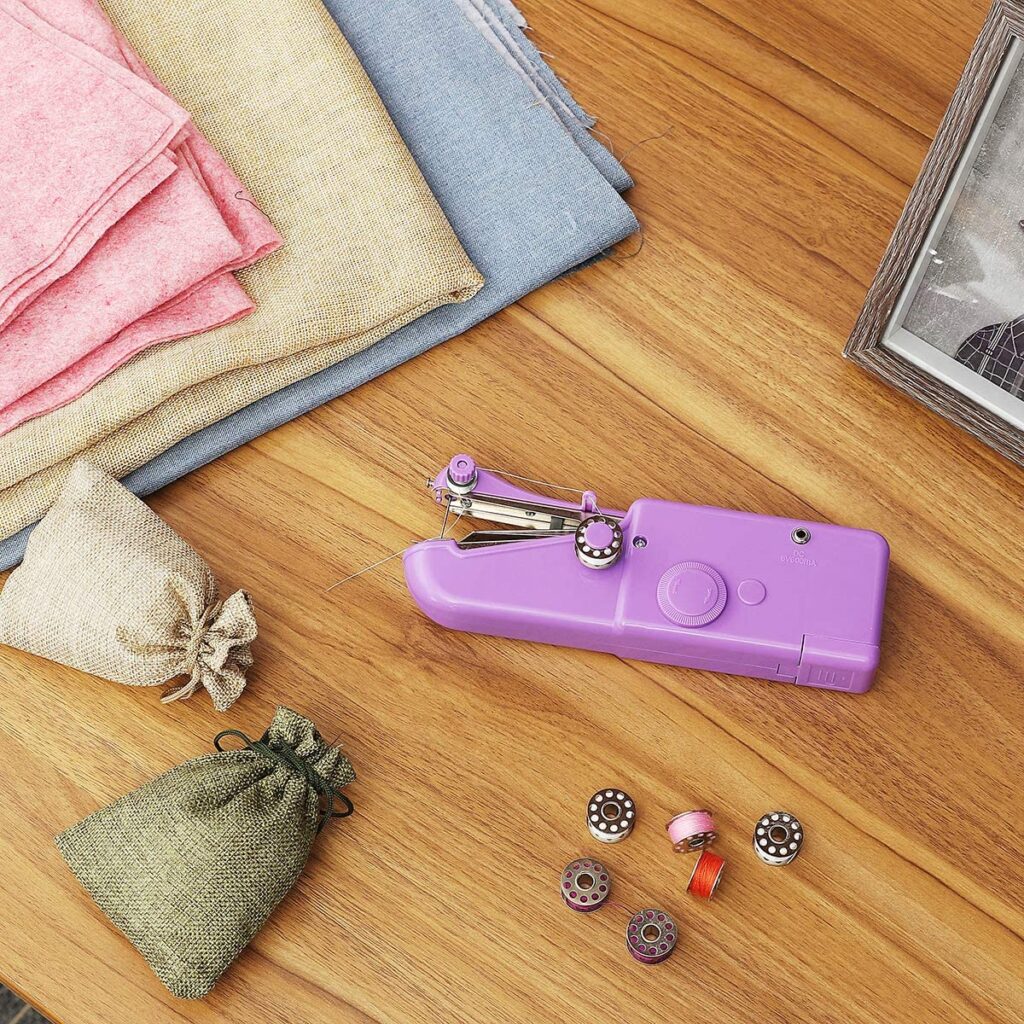
Usually not as your first or only sewing machine. Handheld machines can be useful for a quick temporary repair when you cannot easily place the item under a tabletop machine, but many use a simple chain-stitch mechanism and offer very little control over fabric feeding or stitch selection.
For the type of repairs most people mean when they search for a mini sewing machine, I would rather store a SINGER M1000 or Magicfly MF600 than depend on a handheld as the main machine.
If you only repair hems and seams, a 2–6 lb true mini can make sense. If you want to learn to sew clothes, start with a compact full-size machine even if it weighs twice as much. Ten pounds is still easy to move; outgrowing a one-stitch mini after three projects is less convenient.
SINGER correctly defines a stitch application as a technique you can perform with a stitch. That number is useful, but it is not the same as the number of built-in stitch patterns. In this guide, the M1000 has four actual stitches and the M1500 has six.
Reverse stitching lets you secure the beginning and end of a seam. It is a small feature on a full-size machine but worth checking carefully on very basic minis.
If you want to make garments, a buttonhole function is one of the clearest reasons to step up from a true mini. Brother LX3817, Janome Arctic Crystal and SINGER M1500 all provide four-step buttonholes.
A top drop-in bobbin is easy to see and tends to be friendlier for beginners. Traditional front-loading systems work perfectly well, but they require removing/inserting a separate bobbin case.
“Extra-high presser-foot lift” describes clearance, not motor/feed performance. A machine can physically fit a thick seam under the foot and still struggle to feed or penetrate it consistently. For repeated thick work, buy a machine designed for that job rather than forcing a mini through it.
If you want a genuinely small machine primarily for mending, I would start with the SINGER M1000. If “beginner” means you want to learn garment sewing and develop real sewing skills, I would buy the Brother LX3817 or SINGER M1500 instead even though they are compact full-size machines.
A true mini may sew a single light denim layer, but that does not mean it is a good tool for shortening jeans where the side seams create many stacked layers. SINGER itself recommends moving from the M1000 to a full-size machine for thicker fabrics and broader applications.
No. SINGER’s current M1000 FAQ describes it as a corded machine. The Magicfly MF600 is the battery-capable option in this guide.
No. It has four built-in stitches. SINGER’s “32 stitch applications” figure refers to different techniques/settings you can accomplish with those stitches.
It is a powered tabletop sewing machine with a bobbin, foot pedal, two speeds and one stitch type, but it is far more limited than a standard domestic sewing machine. It is best treated as a basic mini for simple straight-stitch work.
I would generally stop optimizing for the smallest size and choose a compact full-size machine. A Brother LX3817 or SINGER M1500 is still easy to store, but gives you buttonholes, multiple feet and enough sewing space for learning garment construction.
Small does not mean toy-safe. Magicfly’s own FAQ says children should use the MF600 under adult guidance. Any powered sewing machine has a moving needle and should be used with age-appropriate supervision and instruction.
Choose a mini if storage footprint and very light weight matter more than project range. Choose a portable full-size machine if you plan to take classes, sew garments, quilt or keep improving. See our portable sewing machine comparison for that second category.
Buy the SINGER M1000 if you truly want a mini. It is small enough to justify the label, useful for the repair jobs minis are good at, and SINGER clearly states what it is—and is not—designed to do.
Buy the Brother LX3817 or SINGER M1500 if you actually want to learn sewing. Both are still light and easy to store, but their buttonhole functions, presser feet and larger working areas give you much more room to progress.
Choose the Magicfly only when minimum size/cost is the priority, and choose the Janome Arctic Crystal when you are willing to carry a little more weight for a stronger grow-with-you mechanical setup.