


The biggest mistake when choosing a vinyl cutter is assuming that the machine with the highest force number or the widest advertised material size must be the best. A person cutting small HTV names for shirts needs a very different machine from someone feeding 24-inch sign vinyl through a cutter every day.
For vinyl-first craft and apparel work, my overall pick is the Siser Juliet. It is built around HTV and adhesive vinyl, can cut from a roll, has a built-in registration camera for print-and-cut work, and comes with Siser-specific presets. For most beginners, I would buy the Cricut Explore 5 instead because it makes the software and setup easier. If you care more about desktop design control and long roll-fed work, the Silhouette CAMEO 5 Alpha is the stronger alternative.
These three cover the most common decisions without making you compare every machine on the market.


| Vinyl Cutter | Working Width / Length | Print & Cut | Software / Standalone | Best For |
|---|---|---|---|---|
| Siser Juliet | 13-in max material width; 5+ yd with roll holder | Built-in registration camera | Leonardo Design Studio; Windows/Mac; Wi-Fi/USB | Vinyl-first users, HTV, fine detail, side hustles |
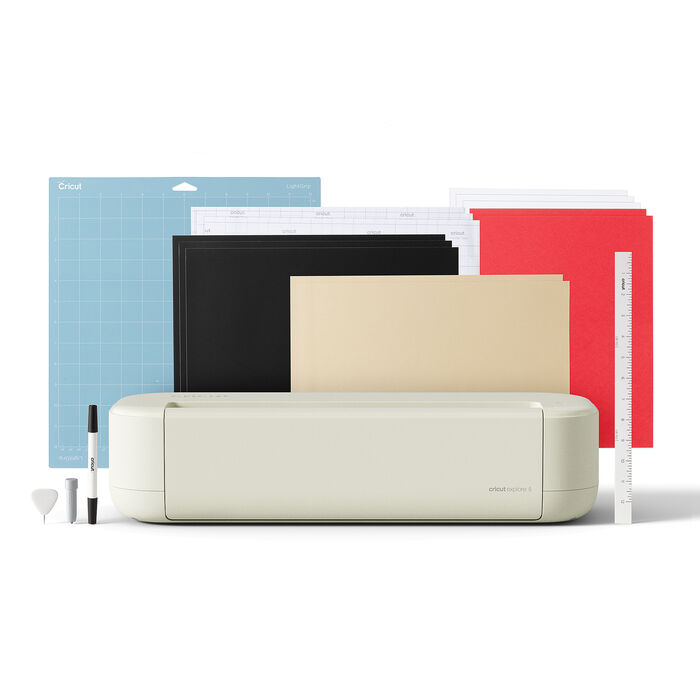
| Cricut Explore 5 | 11.5 × 23.5 in on large mat; up to 12 ft with compatible Smart Materials | Yes, with home printer | Design Space; Windows/Mac/iOS/Android | Beginners and mixed home crafts |
| Silhouette CAMEO 5 Alpha | 12 × 24 in on mat; 11.6 in × 16 ft lined material | Four-point registration | Silhouette Studio 5; Windows/Mac | Design-heavy users, stickers, long vinyl |
| Brother ScanNCut DX SDX125E | 11.7-in scanning/cutting class; 12-in mats | Built-in 600-dpi scanner | 5-in touchscreen + CanvasWorkspace; can work standalone | Scanning artwork, labels, fabric and no-computer workflows |
| Silhouette CAMEO PRO MK-II | 23.2 × 24 in on mat; 23.6 in × 16 ft lined material; longer jobs supported | Registration mark reading | Silhouette Studio; Windows/Mac | 24-in designs, larger signage, batch layouts |
Note: maximum size figures depend on the exact material, mat, roll setup and tracking conditions. Treat them as workflow limits, not a promise that every material will cut reliably at the maximum advertised length.
| Your Main Job | Machine Type to Start With | Best Starting Pick | Why |
|---|---|---|---|
| HTV names, logos and shirt graphics | 12-in vinyl-focused craft cutter | Siser Juliet | Roll handling, Siser presets, registration camera and fine-detail focus |
| First craft machine for vinyl + cards + stickers | General-purpose smart cutter | Cricut Explore 5 | Simpler guided workflow and broad material ecosystem |
| Stickers, custom SVG work and long vinyl | Design-focused craft cutter | CAMEO 5 Alpha | Silhouette Studio, four-point registration and 16-ft lined-material capability |
| Scan handwriting, stamped art or printed shapes | Scanner-equipped craft cutter | Brother SDX125E | Built-in scanner and on-machine editing |
| 24-in signs or large HTV layouts | Wide-format craft/small-business cutter | CAMEO PRO MK-II | 24-in-class working width without leaving the Silhouette ecosystem |
| Daily sign-shop production and long-roll tracking | Professional servo plotter | Graphtec CE8000-class | Commercial media handling, ARMS registration and production-oriented tracking |
Key specifications: 13-inch maximum material width; 5+ yard cut length with optional roll holder; Wi-Fi and USB; built-in registration camera; 0.01 mm stated precision; up to 24 inches/second cutting speed; 1 mm maximum material height; Leonardo Design Studio included.
Juliet is the machine I would start with when the question is specifically vinyl cutting, rather than “which craft machine can also cut vinyl?” Siser designed it around heat-transfer vinyl and EasyPSV adhesive vinyl, and the machine includes preset cut settings for Siser materials. That does not lock you into one brand—the cutter also handles paper, cardstock, stickers, felt and other compatible materials—but the vinyl-first design philosophy is obvious.
The most useful difference is material handling. Juliet can cut without a mat, has adjustable pinch rollers, and can work with longer rolls when paired with the Juliet roll holder. For a shirt side hustle, that is more useful than a long list of novelty tools. You can line up several names, numbers or logos and keep feeding vinyl instead of loading individual mats for every job.
Print-and-cut is also taken seriously. The registration camera is built into the cutter head, so it can read marks around a printed sheet and contour-cut full-color designs. If you make printable HTV, stickers or Siser EasyColor DTV projects, that feature has a direct effect on the workflow.
Siser also publishes a precision figure of 0.01 mm and markets Juliet around intricate detail. I would not interpret that as a guarantee that every tiny vinyl detail will weed perfectly—the material, blade exposure, speed and artwork still matter—but the machine’s focus on fine detail is a stronger reason to buy it than a headline force number.
Leonardo Design Studio is included with the machine and works over Wi-Fi or USB. The free-with-Juliet version gives you a real design workspace rather than requiring a separate cutting utility simply to start. If you already design in Illustrator, Affinity Designer or another vector app, you can still treat Leonardo primarily as the cutter-control layer.
Who should skip it: a casual beginner who mostly wants cards, occasional labels and a highly guided app experience. The Cricut Explore 5 is easier to recommend for that person. Juliet also has a 12-inch-class working format; buyers who routinely need 15- or 24-inch graphics should move wider rather than trying to tile every project.
Pros
Cons
Best for: HTV shirts, adhesive decals, detailed vinyl graphics, print-and-cut work and small vinyl businesses that do not yet need a 24-inch production cutter.
Key specifications: cuts 100+ compatible materials; 11.5 × 23.5-inch maximum on a large mat; up to 12 feet with compatible Smart Materials; 14.1 inches/second maximum cut speed; 10 lb; works with six tools; Design Space on major desktop/mobile platforms.
The Explore 5 is the machine I would recommend to a first-time buyer who says “I want to make vinyl decals and shirts” but is not yet sure how far the hobby will go. It can cut permanent and removable adhesive vinyl, HTV, printable sticker paper, cardstock and many other common craft materials without asking you to learn a sign-shop workflow first.
Cricut’s biggest advantage here is not raw cutting hardware—it is friction reduction. Design Space is built around guided operations. You choose a material, the app walks you through loading and mirroring where relevant, and there is a huge amount of beginner documentation. If you are making your first HTV shirt, that matters more than having the deepest vector editor.
The current Explore 5 can cut compatible Smart Vinyl and Smart Iron-On without a mat for jobs up to 12 feet long. That gives it a much more useful vinyl workflow than older mat-only beginner cutters. It is still not the same thing as a professional roll plotter: long cuts depend on Cricut’s compatible Smart Materials, whereas Siser/Silhouette-style roll workflows give you different material-handling options.
Another old misconception worth removing is the idea that Cricut forces a subscription. It does not. Design Space is free, Cricut says the machine does not require Cricut Access, and you can upload your own SVG/DXF artwork. Some library content and advanced software features are subscription-based, but basic ownership and cutting your own uploaded designs are not.
Explore 5 is also the better choice than a Maker-class machine when vinyl is the main job. Paying extra for rotary, engraving and knife-blade capabilities makes sense only if those other materials are genuinely part of your plan. For a shirt-and-decal workflow, spend the difference on vinyl, blades and a good heat press.
Who should skip it: design-heavy users who want deeper desktop vector controls, or businesses that want to load generic rolls and optimize long vinyl production. Those buyers should look at Juliet or CAMEO 5 Alpha.
Pros
Cons
Best for: first-time vinyl cutter buyers, hobbyists, Cricut-friendly craft rooms and anyone who wants a simple path into decals and shirts.
If your choice is specifically between Cricut and Silhouette, our updated Cricut vs Silhouette comparison goes deeper on software, stickers and the two ecosystems. If you want Cricut but are unsure which model, see our Cricut machine guide for beginners.
Key specifications: 12 × 24-inch guaranteed mat area; 11.6-inch-wide lined material up to 16 feet; 3 mm maximum material thickness; 300 mm/s maximum cutting speed; four-point registration; two tool positions; USB/Bluetooth; Silhouette Studio 5.
CAMEO 5 Alpha is the better 12-inch-class choice when you want the software to do more of the design work. Silhouette Studio is a deeper desktop environment than Cricut Design Space, with stronger layout and editing tools for users who create their own decals rather than mostly importing ready-made designs.
That flexibility is especially useful for vinyl because sign-style work often means handling text, offsets, nesting, alignment and repeated copies. If you routinely build window decals, layered logos or custom names from scratch, the software difference can affect every project.
The Alpha version also improves Print & Cut registration. Silhouette uses a four-point registration system rather than the older three-point approach, with the goal of better vertical and horizontal alignment when a printed sheet is slightly distorted. For a sticker-heavy user, that is a much more practical feature than simply comparing maximum blade force.
Material handling is another reason to choose it. Silhouette lists 11.6-inch-wide lined material cuts up to 16 feet, includes a roll feeder, and gives you a front automatic crosscut function. That makes it attractive for long vinyl graphics without stepping all the way into a 24-inch machine.
The caveat is software packaging. Silhouette Studio Basic is free, but some advanced file/import features require a paid one-time software edition upgrade. If you buy third-party SVG designs constantly, factor the edition you need into the real cost rather than comparing only machine prices.
Who should skip it: the person who wants the simplest possible beginner interface and does not care about deeper design controls. Explore 5 is easier to teach from scratch. Also skip it if your actual jobs are 18–24 inches wide—buy the correct width instead of tiling large sign graphics.
Pros
Cons
Best for: custom decal designers, sticker sellers, long vinyl graphics and users who prefer desktop design control over a guided app.

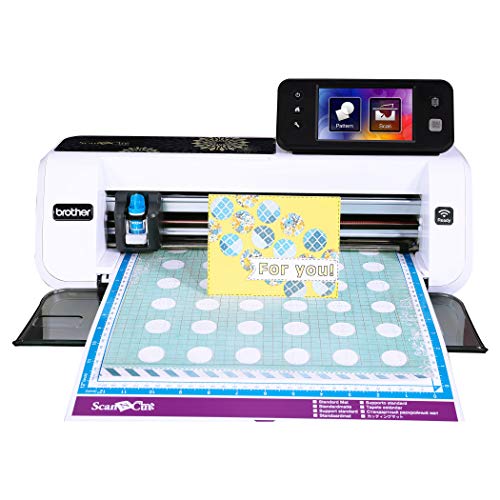
Key specifications: built-in 600-dpi scanner; 5-inch LCD touchscreen; Auto Blade material sensing; cuts compatible materials up to 3 mm; 682 built-in designs, including 100 quilt patterns; 9 fonts; wireless; FCM/SVG support; approximately 12.8 lb.
The SDX125E earns a place here for a reason none of the other machines can copy cleanly: you can scan physical artwork directly into the cutter. If you draw by hand, use stamped images, work with fabric patterns or want to place cuts around an existing printed shape, the scanner changes the workflow.
Brother lets you scan the material on the mat and see it on the machine’s 5-inch screen. That means you can position a cut around a scrap, handwriting or printed design without measuring everything manually. The machine can also turn scanned artwork into cut data, which is useful for crafters who are more comfortable drawing on paper than building vector files on a computer.
The Auto Blade is another practical difference. It detects material thickness and adjusts cutting parameters, reducing the number of manual blade-depth decisions a beginner has to make. Brother rates compatible material thickness up to 3 mm, although the exact material still needs a test cut.
It can also operate surprisingly independently. With built-in patterns and on-screen editing, you can make many projects without keeping a laptop beside the machine. CanvasWorkspace and wireless transfer are there when you want to bring in your own designs.
For pure roll-fed vinyl production, however, this is not my first choice. The scanner and standalone controls are what justify the purchase. If you will never scan anything and you mainly cut repeated HTV names from rolls, Juliet or CAMEO will make more sense.
Who should skip it: buyers who want the best long-roll vinyl workflow per dollar. You are paying for scanning, on-machine editing and mixed-material flexibility.
Pros
Cons
Best for: hand-drawn artwork, stamped designs, fabric/pattern work, scan-and-cut projects and users who value standalone operation.
For a direct ecosystem comparison, see our ScanNCut vs Cricut guide. Mac users should also check the dedicated vinyl cutter for Mac guide before buying software-heavy sign equipment.
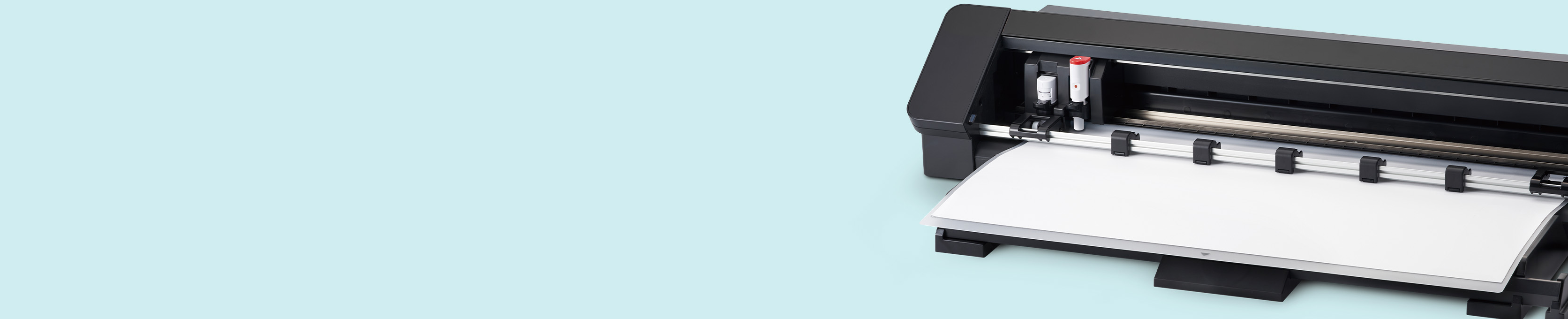
Key specifications: 23.2 × 24-inch cutting area on mat; 23.6-inch-wide lined material up to 16 feet in the guaranteed roll-fed area; maximum cutting length up to 60 feet under supported conditions; 3 mm material thickness; 300 mm/s max cutting speed; dual tool positions; roll feeder; USB/Bluetooth; approximately 19.8 lb.
The CAMEO PRO MK-II is where the guide moves from desktop craft width into genuinely useful large-format territory. A 24-inch-class cutter changes what you can make in one piece: larger wall decals, storefront graphics, vehicle lettering, oversized HTV and multiple shirt logos nested across a wide roll.
That width is also a productivity feature. Even when the individual design is small, a wider roll lets you arrange more copies across the material. For a small apparel shop, that can reduce loading and make better use of a large heat-press workflow.
The MK-II improves on the original CAMEO Pro with a second powered carriage, auxiliary rollers for stability, quieter operation and an emergency-stop function. Silhouette also includes a roll feeder and 24-inch mat. It remains part of the Silhouette Studio ecosystem, so someone already comfortable with a CAMEO can move wider without learning an entirely different software stack.
The most important limitation is that wide does not automatically mean industrial. A CAMEO PRO MK-II is a strong bridge between craft and small-business work, but a sign shop that feeds long rolls all day eventually cares more about tracking, media baskets, servo drive, registration systems, network workflow and repeatability over many feet. That is where Graphtec/Roland-class equipment starts earning its higher cost.
Who should skip it: home crafters whose projects fit comfortably inside 12 inches. The machine is 34.5 inches wide and needs working clearance, so buying it “just in case” creates a large footprint without improving ordinary shirt logos.
Pros
Cons
Best for: growing craft businesses, 24-inch vinyl, large signs, large HTV designs and users who want to stay inside the Silhouette ecosystem.
Width alone does not turn a craft cutter into a production sign plotter. The real differences show up when jobs get longer, more repetitive and more expensive to waste.
| Priority | Craft / Small-Business Cutter | Professional Sign Cutter |
|---|---|---|
| Typical focus | Craft vinyl, HTV, stickers, paper, mixed materials | Sign vinyl, long graphics, print-and-cut production |
| Software | Design Space, Silhouette Studio, Leonardo, CanvasWorkspace | Production design/cut software and Illustrator/Corel plug-ins |
| Long-roll tracking | Good for hobby/small-business lengths; depends heavily on setup | Core design priority with commercial media handling |
| Registration | Camera/optical Print & Cut systems | Commercial optical registration such as Graphtec ARMS |
| Best reason to buy | Versatility and accessible workflow | Repeatability, tracking and production efficiency |
If vinyl is already a real business rather than a hobby you hope to monetize, the Graphtec CE8000-60 is the kind of machine I would compare against the CAMEO PRO MK-II. Graphtec specifies a 24-inch maximum cutting area, 36-inch/second maximum speed at 45 degrees, 450 gf cutting force, Ethernet/USB with optional Wi-Fi, and ARMS 8.0 optical registration with four-point axis alignment.
The reason to pay for that class of machine is not the 450-gf number; many craft cutters advertise higher force. The value is the servo-driven tracking, registration, media handling and repeatability around sign vinyl. If a tracking error destroys several feet of expensive printed media, production reliability becomes more valuable than a longer list of craft tools.
That is also why I would not rank Graphtec “#1” above a Cricut for every reader. It solves a different job. A beginner making five shirts a month would pay more for a harder workflow they do not need.
Vinyl is thin. Once a machine has enough usable force to cut the film cleanly without driving the blade deep into the liner, more force does not automatically improve a decal.
For normal adhesive vinyl and HTV, I would prioritize:
High force becomes more relevant when you move into thicker specialty media. Even then, maximum material clearance, blade geometry and supported tools matter alongside force.
If budget is the main limitation, compare these current picks with our best vinyl cutters under $300. If software compatibility is your biggest concern, our vinyl cutter software guide is the better next read.
For a shirt-first business, I would choose between Siser Juliet and Cricut Explore 5 based on volume and workflow.
The cutter is only half the apparel workflow. Our Cricut for shirts guide covers the design/cutting side, while our best heat press guide and heat press temperature chart cover application.
If “stickers” means printed full-color stickers rather than single-color adhesive vinyl, registration matters more than roll length. CAMEO 5 Alpha’s four-point Print & Cut system makes it my strongest sticker-focused pick here, while Juliet’s built-in camera is attractive if you also do substantial HTV and adhesive vinyl work.
Remember that the cutter does not print the sticker. You still need a compatible printer and printable media. If your projects blend printed transfers and apparel, see our printer for heat transfers guide and heat transfer paper guide so you do not mix printer/cutter workflows that use different media.
Best for the beginner who wants guided steps. The base software is free, the machine does not require a subscription, and Cricut supports your own SVG/DXF uploads. Cricut Access adds library content and certain advanced features rather than functioning as a mandatory machine license.
Better for users who want to design more inside the cutter software. It is deeper than Design Space, but make sure the software edition you plan to use supports the file/import features you need. This is especially relevant if your business buys SVG artwork from many external sources.
Leonardo is included with Juliet and is closely tied to Siser material settings. That is convenient for an HTV/PSV workflow because material information and cutter control live in the same ecosystem.
Brother is the outlier because you can do meaningful work on the cutter itself. The scanner, touchscreen and built-in designs let you create or position jobs without a computer, while CanvasWorkspace handles imported/custom designs when you need it.
The machine does not turn a roll of vinyl into a finished product by itself. Depending on what you make, plan for:
Do not set a blade by “more is safer.” Exposing too much blade can cut through the carrier, damage mats and make tiny details worse. Start from the manufacturer’s material preset or blade guidance and test before a large production run.
I would buy the Cricut Explore 5 for most beginners. It handles the common vinyl, HTV, sticker and paper projects, has a guided software workflow and can make long matless cuts with compatible Smart Materials. If the beginner already knows that HTV/adhesive vinyl will be the main business rather than a general craft hobby, the Siser Juliet is a stronger vinyl-first investment.
For a small apparel/decal business that still works mainly in 12-inch media, Siser Juliet is my pick. For wide signs or large HTV work, CAMEO PRO MK-II gives you a 24-inch-class workflow. When long-roll tracking and production uptime are already business-critical, look at professional Graphtec/Roland-class cutters.
Cricut is easier for most beginners; Silhouette gives design-heavy users more desktop control and longer lined-material options in the current CAMEO lineup. Our Cricut vs Silhouette guide covers the tradeoffs in detail.
Not for normal adhesive vinyl and HTV. Once the cutter can cleanly cut the film, tracking, blade exposure, detail accuracy, registration and material handling usually matter more than maximum force. Higher force becomes more relevant for thick specialty media, but it should not be your main shortcut for ranking vinyl cutters.
No. A cutter only cuts. For full-color stickers, you print the design on compatible printable media with a printer, then use a cutter’s Print & Cut/registration system to cut the outline. Juliet, CAMEO 5 Alpha, Cricut Explore 5 and ScanNCut can all participate in print-and-cut workflows in different ways.
Yes on machines/materials that support matless cutting. Juliet supports matless cutting and longer roll work, CAMEO 5 Alpha supports lined roll material, and Explore 5 can cut compatible Smart Materials without a mat. Do not assume every generic sheet/roll can be loaded matless on every machine.
A 12-inch-class cutter is enough for most adult chest and back graphics, names and numbers. A 24-inch cutter is useful when you make oversized graphics or want to nest many smaller shirt designs across a wider roll for batch production.
No. Cricut states that the machine does not require a subscription. Design Space is free and supports uploading your own designs; Cricut Access is optional for additional library content and subscriber features.
Yes, especially when you need to scan artwork, handwriting, stamps or an existing print and place a cut around it. If you never need the scanner and mainly feed rolls of HTV, a vinyl-focused machine such as Juliet is a better use of the budget.
This update replaces the old 2023 model list and removes unsupported popularity/reputation scoring. Specifications and current capabilities were checked against manufacturer documentation in August 2026. Key sources include:
Buy the Siser Juliet if vinyl itself is the priority. Its roll handling, camera registration, Siser presets and fine-detail focus make it the best-balanced machine here for someone who expects to cut HTV and adhesive vinyl week after week.
Buy the Cricut Explore 5 if you are starting from zero. It removes more software/setup friction and still gives you enough width and long-cut capability for the projects most home users actually make.
Move to CAMEO 5 Alpha when design control matters, ScanNCut when scanning matters, and CAMEO PRO MK-II when width matters. Those are real reasons to change machines. A higher force number by itself is not.



What are the differences between vinyl cutters and Cricuts?
If you’re thinking that a vinyl cutter and a Cricut are the same thing, think again. A vinyl cutter cuts printed letters and designs from vinyl to create stencils. A Cricut blades fabric to create patterns.
What are some reasons why my vinyl cutter may not be cutting?
There are a number of reasons why your vinyl cutter may not be cutting through the material. One example is that the blade might be too dull or damaged, which will make it difficult to cut through properly.
If the blade is damaged, it will have a hard time cutting down materials accurately. This can be due to the blade being dull or broken. The cut may not be even or accurate because of this.