

As an Amazon Associate I earn from qualifying purchases.
For most stained glass beginners, the Inland WizCG is the clearest starting point: it includes both a standard 3/4-inch bit and a small 1/4-inch bit for tighter curves. Pick the Inland WizlingCG for simpler occasional edge cleanup, or Techniglass THE GRINDER for a large, well-equipped studio station. The right choice depends on the size of your glass, the curves in your pattern, and how you want to keep the bit wet.
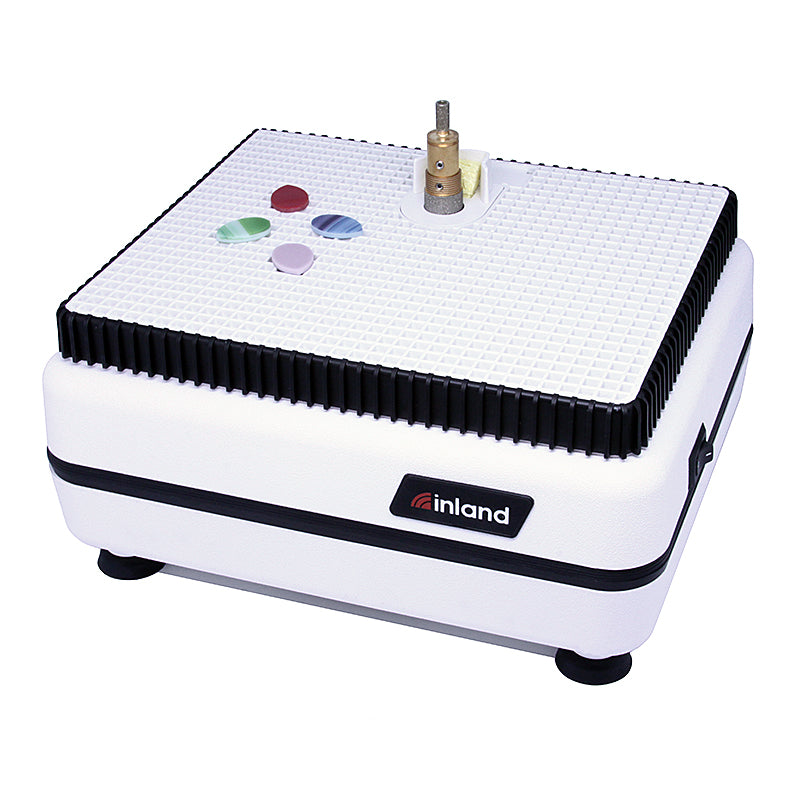
Two included bit sizes cover ordinary edges and narrower curves.
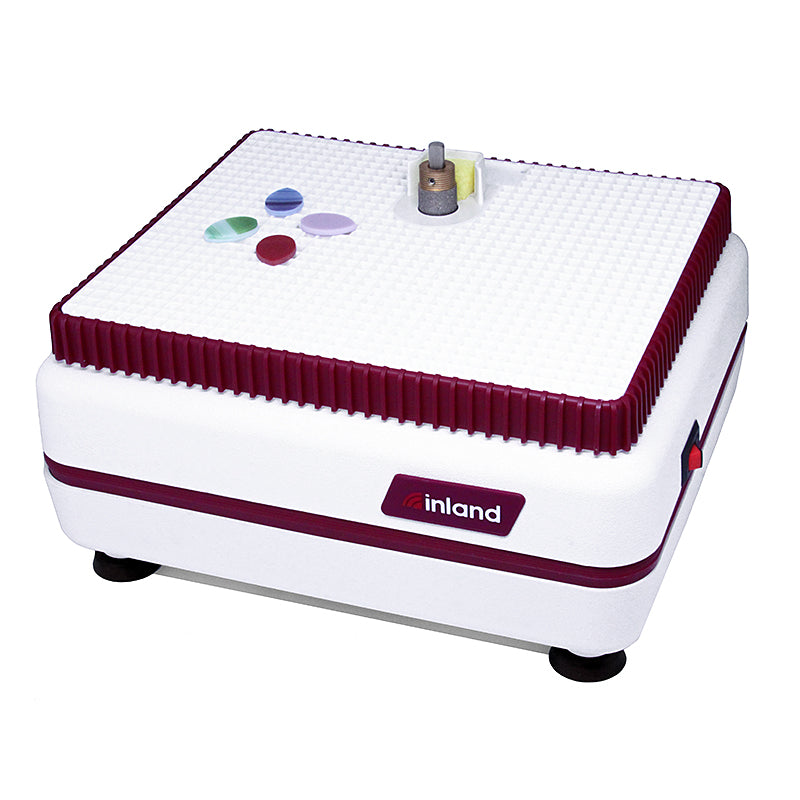
One standard bit and a familiar wet-sponge setup for occasional projects.
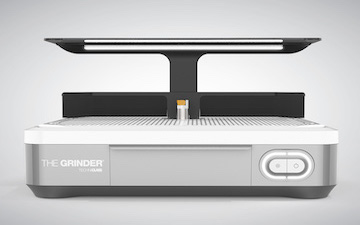
Large grid with included light, shield, curtain, and elevated platform.
| Grinder | Setup | Best reason to choose it | Main tradeoff |
|---|---|---|---|
| Inland WizCG | Mid-size, sponge-fed | Mixed straight and tight curves; two included bit sizes | Smaller work area than Wizard IV |
| Inland WizlingCG | Compact, sponge-fed | Basic edge smoothing on a modest bench | Only a 3/4 in bit in the box |
| Gryphon Gryphette | Small, sponge-fed | Occasional small pieces where storage matters | Least support for large sheets |
| Inland Wizard IV | Large, sponge-fed | Bigger panel pieces and mixed bit sizes | Needs more permanent bench room |
| Gryphon Studio | Mid-size, gravity-fed | Frequent sessions without tending a sponge | Cooling tower and drain need setup |
| Techniglass THE GRINDER 2 | Compact, brush-fed | Frequent grinding with a removable tray | Light, large curtain, and Mini G are optional |
| Gryphon Convertible | Tilting, pump-fed | A more upright view and seated posture | More setup and space than a flat compact unit |
| Techniglass THE GRINDER | Large, brush-fed | Large projects and included light, shield, splash control | Largest footprint in this roundup |
A small grinder can refine ornaments and sun catchers, but a broad sheet needs support near the bit. The Gryphette is easiest to store; the WizCG and WizlingCG suit a regular hobby bench. The Wizard IV and original THE GRINDER give larger pieces a wider resting area. Measure the space for both the machine and the glass you will hold around it.
A 3/4-inch bit is a useful general edge tool. A 1-inch bit works broadly on long edges, while 1/4-inch and 1/8-inch detail bits reach progressively tighter recesses. Tiny bits are for fine shaping, not rapid material removal, and every working surface must receive water. The WizCG includes a 1/4-inch bit; the WizlingCG does not. Techniglass THE GRINDER 2 includes 3/4 inch, while its Mini G platform and fine bits are optional. Check bit, sleeve, shaft, and platform compatibility before buying spares.
Inland and Gryphette use a wet sponge touching the bit; check contact and refill as needed. The Gryphon Studio has a gravity-fed cooling tower and a drain to catch water. The Convertible uses a pump in its flat or inclined position. Techniglass uses an Aqua Flow brush that wicks water from the reservoir; pre-wet the brush as directed. All systems still need attention to the water level and a clean bit. Never grind glass dry.
Compare the useful accessories in the box rather than assuming every product photo is a complete kit. A face shield or splash curtain, second level for a small bit, removable tray, and included bit diameters change the real setup cost. Techniglass THE GRINDER includes the LumiShield, curtain, and Mini G platform; THE GRINDER 2 treats those larger accessories as optional. Inland Wizard IV includes its FaceShield and SecondStory. Verify the current Amazon bundle before checkout.
Key details: 115 V · 10.5 × 8.5 in reversible work surface · 3/4 in and 1/4 in 100-grit diamond bits · sponge-fed water · five-year warranty.
The WizCG is a strong first dedicated grinder because the included 3/4-inch bit handles ordinary perimeter cleanup while the 1/4-inch bit reaches narrower inside curves. The two bits can be stacked, so you can move from a broad edge to a tighter area without fully changing the setup. Its removable reservoir and reversible grid make a routine session and cleanup straightforward.
The sponge has to contact the working bit and stay wet; it is not an automatic pump. The 10.5 × 8.5-inch grid is comfortable for small and medium panels but less supportive for large pieces. Choose the cheaper WizlingCG if you only need one standard bit, or the Wizard IV if wide glass sections and an included shield matter more.
Key details: 115 V · 10.5 × 8.5 in reversible work surface · one 3/4 in 100-grit diamond bit · sponge-fed water · five-year warranty.
The WizlingCG shares a practical bench-sized work surface with the WizCG and gives occasional makers a simpler way to true up edges before foiling. A 3/4-inch bit is a useful general-purpose size for broad outside curves and straight sections. The top grid comes off for filling and cleaning the water reservoir.
There is no 1/4-inch bit in the basic package, so a pattern with tight inside curves can push you into an immediate accessory purchase. The WizCG is the better deal when you already know your work needs both sizes. Neither grinder makes the initial score-and-break cut for you; plan to use a glass cutter and running or grozing pliers first.
Key details: Compact tabletop grinder · sponge-fed bit · small working platform; confirm the exact included bit and voltage in the current listing.
The Gryphette is the space-saving alternative for ornaments, suncatchers, and small mosaic pieces. Its compact footprint is easy to put away between sessions. The straightforward water-and-sponge arrangement keeps the bit cool when the sponge is positioned correctly and the reservoir is filled.
A very small grid leaves less support under a long or heavy piece of glass, and its basic setup offers fewer conveniences than the larger Studio or Inland models. Use moderate pressure and smooth lateral passes rather than forcing the glass into the bit. If your first project is a window panel, choose a wider surface instead.
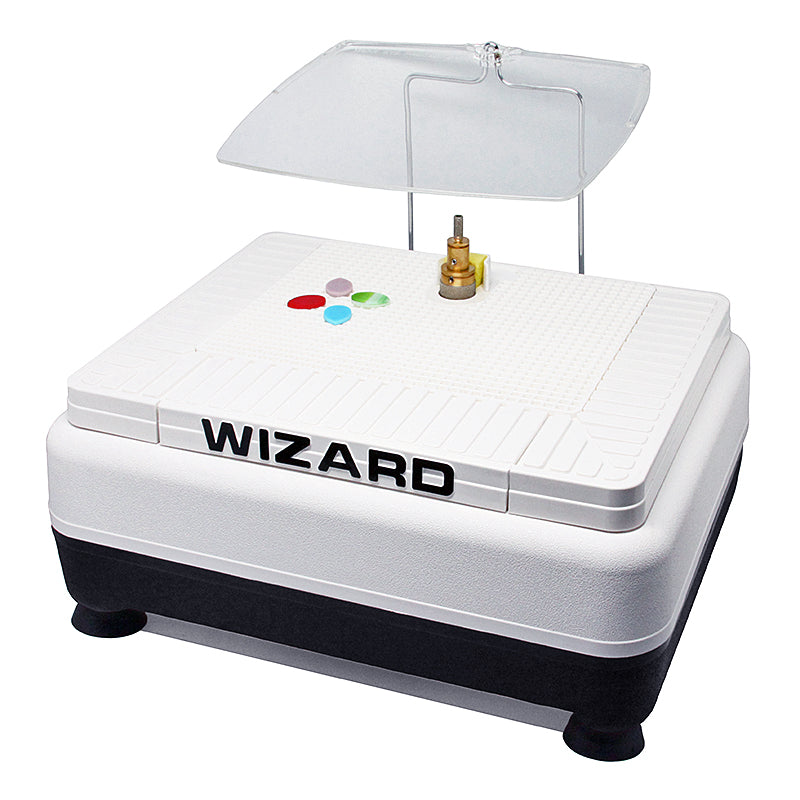
Key details: 115 V · 14.5 × 11.5 in work surface · 1 in and 1/4 in bits · 40 oz-in motor torque · FaceShield and SecondStory included.
The Wizard IV earns its larger footprint when you regularly hold broad glass pieces against the bit. The 14.5 × 11.5-inch work surface gives more room to support those pieces than the Wiz series. A 1-inch main bit suits faster broad-edge shaping, while the small included bit and SecondStory platform serve detail work; the included FaceShield improves splash and chip control.
The larger work area costs bench space and does not remove the need to score accurately. Keep the sponge wet at whichever bit is in use and check the upper-bit water path when using the SecondStory. For small jewelry or sun-catcher pieces, the less expensive WizCG is easier to justify.
Key details: Gravity-fed cooling tower · drain hose · larger work surface and motor than Gryphette; check package contents for the exact listing.
The Studio is the Gryphon choice when you want water delivered from a cooling tower rather than relying on a sponge at the main bit. Filling the tower, placing a container under the drain hose, and checking the water path become part of setup. That arrangement can feel more consistent over a longer edging session.
It is a more involved workstation than the small Gryphette, and the drain needs an appropriate catch container. This is a useful upgrade for repeat work on moderate panels. Choose the Convertible below if a tilted, seated working posture is the actual reason you are replacing a grinder.
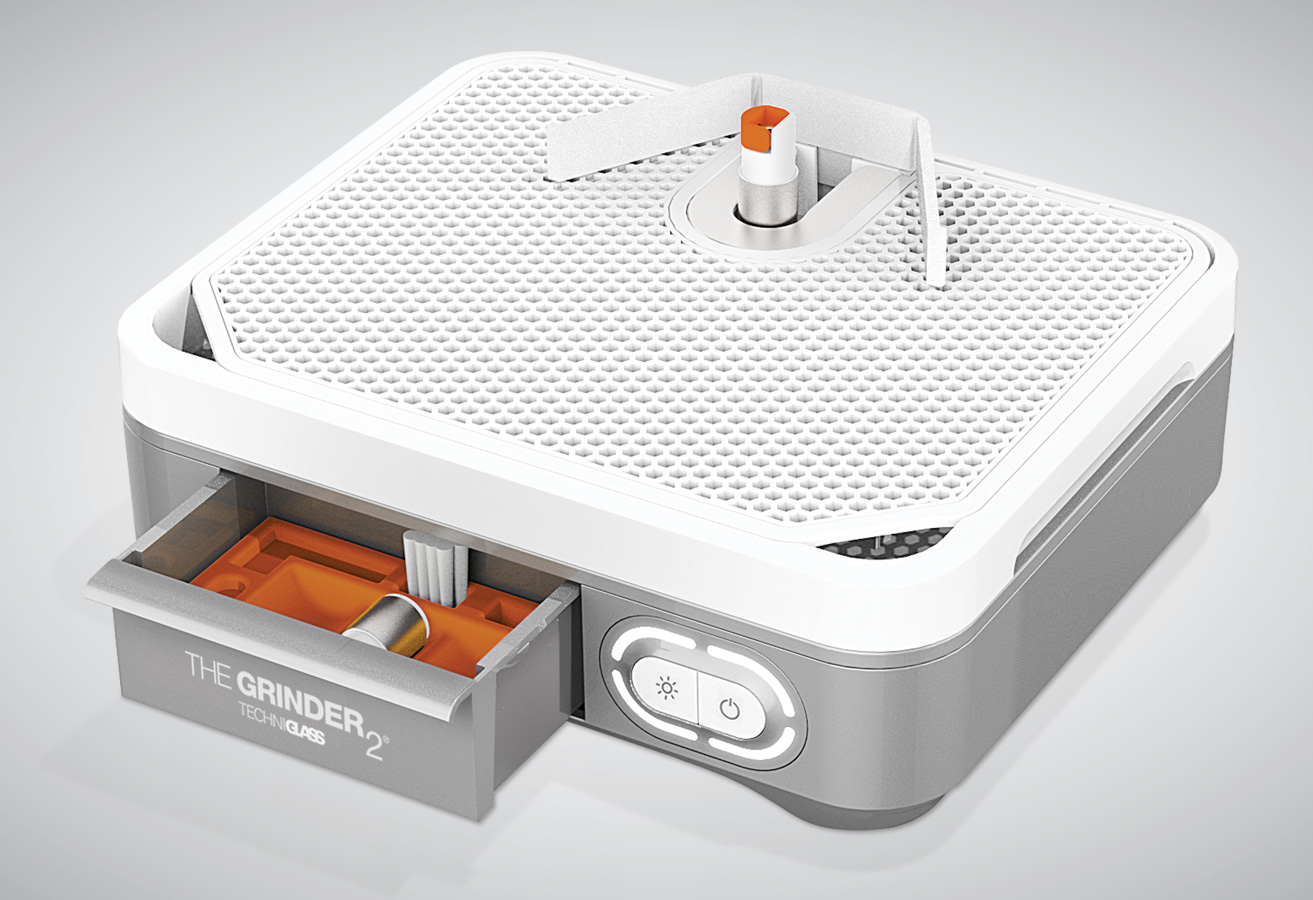
Key details: 10.5 × 13 in footprint · 4500 rpm · 57 oz-in torque · dual-voltage 110–220 VAC · 3/4 in Quick-Fit bit and Aqua Flow brush included.
THE GRINDER 2 fits a higher-feature water system into a smaller footprint. Its Aqua Flow brush wicks water to the Quick-Fit bit without a sponge, and the removable water tray makes sediment cleanup less awkward. An accessory drawer stores bits and brushes. The included 3/4-inch bit is enough to begin ordinary edge cleanup.
Do not assume the photographed or advertised add-ons are all in the base box. The illuminated LumiShield, larger splash curtain, Mini G elevated platform, and 1-inch bit are optional for this model. If you need small 1/4-inch or 1/8-inch detail bits, price the compatible Mini G system too. The original THE GRINDER below includes a fuller accessory package and a much larger work surface.
Key details: Horizontal or inclined work-surface configuration · electric pump supplies water in either orientation · confirm included bits and accessories for the listing.
The Convertible changes the way you face the work. Its surface can be assembled flat or tilted, allowing a seated maker to see the grinding line more directly instead of hunching over a horizontal grid. An electric pump keeps the bit wet in either orientation, a crucial feature when the surface is inclined.
The angle and pump add moving parts and setup compared with a simple flat grinder. A tilted surface can feel unfamiliar when guiding larger glass sections, so give yourself time to learn the hand position and keep the work supported. Select it for the ergonomic benefit, not because a tilted grid automatically grinds more accurately.
Key details: 12.75 × 17.375 in footprint · 4500 rpm · 57 oz-in torque · dual-voltage 110–220 VAC · 1 in Quick-Fit bit, LumiShield, splash curtain, and Mini G platform included.
The original THE GRINDER is the ready-equipped choice for a dedicated studio bench. Its larger work area supports broad panel pieces, while the included illuminated shield and splash curtain address visibility and mess. A removable tray and Aqua Flow brush simplify water delivery and cleanup, and the included Mini G elevated work surface makes it easier to add fine-detail bits.
The package takes substantial table space and costs more than an entry Inland grinder. The Mini G platform is included, but its 1/4-inch and 1/8-inch bits are listed separately, so inspect the live bundle before counting on those sizes. Choose this model when you will use its generous support, light, and accessory system; a compact model is enough for infrequent small work.
| Problem | What to check | Next step |
|---|---|---|
| Edge chips or runs hot | Dry bit, heavy pressure, worn abrasive sleeve | Stop; restore water delivery, ease pressure, inspect the bit |
| Bit does not remove glass evenly | Worn band at the usual height | Use a fresh working area if the maker permits vertical adjustment, or replace the bit |
| Water is not reaching an upper detail bit | Upper platform or separate water path | Fill and wet the correct second-level feed before using it |
| Motor bogs down or glass grabs | Too much material and pressure, unsuitable bit | Re-score and groze closer to the line; work in small passes |
| Slurry spreads across the table | High water level, poor splash control, blocked drain | Check fill mark, shield and curtain placement, and catch container |
A cutter, running pliers, and grozing pliers do the primary shaping. A grinder makes fit corrections and edge cleanup easier, especially around curves and before foiling. Small simple projects can be started with hand tools; if your pattern has many closely fitting pieces, a wet grinder saves time.
Both are useful general sizes. A 3/4-inch bit gives a little more access to moderate curves; a 1-inch bit presents a broader contact area on long edges. Neither replaces a 1/4-inch detail bit for tight inside areas. Start with the bit included on the grinder and add only the sizes your patterns require.
No. The diamond head needs water for cooling and glass-dust control. Confirm the sponge, brush, tower, or pump is actually feeding the contact area before touching the glass to the bit. Follow the machine’s instructions for filling and cleaning.
It is not an efficient replacement for scoring and breaking. Cut near the pattern line first, remove large waste with the appropriate pliers, then grind the remaining edge in small passes. A stained glass cutting guide covers that first step.
Check whether a 1/4-inch bit is included, whether the spindle supports an upper detail bit, and how that upper bit receives water. A narrow bit is only helpful if you can support the glass and wet the bit during use. For extremely narrow recesses, revise the cut plan or consider another appropriate glass-cutting method.
The Inland models listed here are 115 V US versions. Techniglass specifies 110–220 VAC compatibility for THE GRINDER and THE GRINDER 2, with region-appropriate removable cords. Check the exact cord and electrical specification of the listing you buy; do not infer compatibility from a plug adapter alone.
Choose the Inland WizCG for a practical first grinder with two useful bit sizes. Choose the WizlingCG when one standard bit is enough and bench space is limited, or the Gryphon Gryphette when storage is the overriding constraint. For larger work, compare the Inland Wizard IV with the more fully equipped Techniglass THE GRINDER. The Gryphon Studio changes water delivery, THE GRINDER 2 packs a premium system into a smaller station, and the Gryphon Convertible is the distinct choice for seated, inclined work. Match the bit, water feed, and work surface to your patterns before you buy.