

As an Amazon Associate we earn from qualifying purchases.
For stained glass, the best soldering iron is one that can keep a broad tip hot as it travels along copper foil or lead came. A tiny electronics tip may melt solder but struggle to make an even bead. The Hakko FX-601 is our most flexible pick because it combines adjustable temperature, a suitable included chisel tip, and a slim handpiece. The Studio Pro Hobby 100 is a simpler budget iron; the Weller W100PG offers tip-regulated heat without a station.
A 67 W, 120 V iron with closed-loop temperature control and a T19-D5 chisel tip for foil seams.
A straightforward 100 W iron with a 1/4-inch chisel tip; allow for careful heat management.
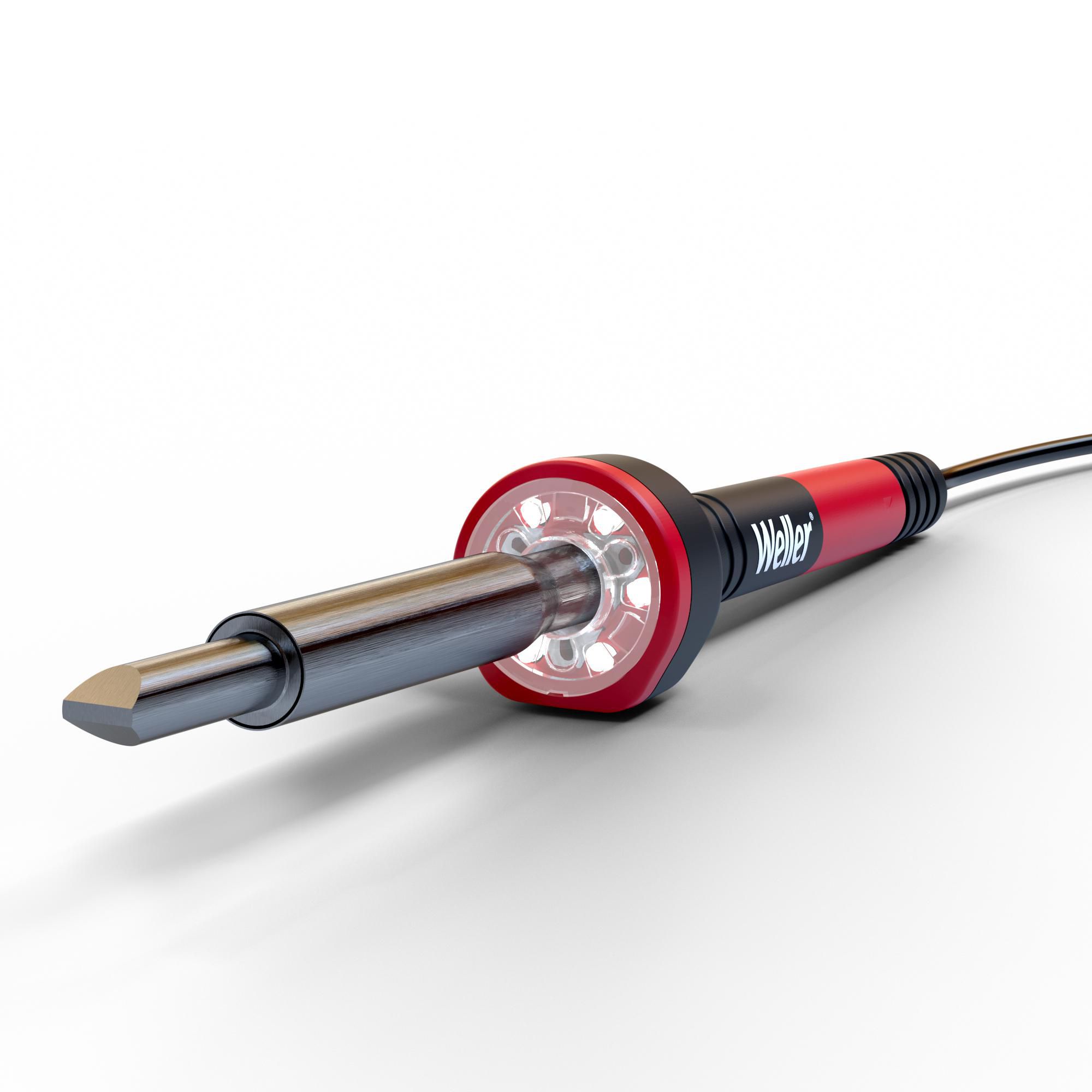
An 80 W iron with an LED halo around the barrel and integrated rest for detail work.
| Iron | Rated power / voltage | How heat is managed | Tip and setup | Best fit |
|---|---|---|---|---|
| Hakko FX-601 | 67 W / 120 V | Adjustable closed-loop temperature control | Included T19-D5 chisel; add a suitable stand | Most foil and mixed stained-glass projects |
| Studio Pro Hobby 100 | 100 W; check listing voltage | Fixed-output iron; compatible external controller may be used | Included 1/4-inch chisel | Occasional work on a budget |
| Weller WLIR8012A | 80 W / 120 V | No adjustable temperature dial | Chisel-style tip; integrated rest and LED halo | A small or dimly lit bench |
| Weller W100PG | 100 W / 120 V | Magnetic closed-loop control; select temperature by compatible tip | Amazon listing includes CT6F7 700°F tip; other CT6 tips sold separately | Longer seams and an iron without a station |
Watts describe electrical power, not the temperature of the glass or solder bead. A broad, properly tinned tip transfers heat to the joint, while feedback control or a temperature-rated tip helps the iron recover between passes. Check that the exact iron and replacement tips use the correct voltage and tip series before buying.
For a smooth copper-foil bead, a flat chisel tip gives the solder and foil more contact area than a needle point. A 1/4-inch tip is a useful general starting point; narrower or wider compatible tips can suit different seam widths. Keep the working face clean and lightly tinned. Pressing a point into the joint longer to compensate for poor contact can overheat nearby foil adhesive or crack glass.
An adjustable iron lets you test a lower setting and raise it if solder does not flow freely. The Hakko adjusts electronically; the Weller W100PG changes its regulated operating temperature when you change to another rated CT6 tip. A plain iron such as the Hobby 100 can work, but you manage heat through pacing, contact time, and proper tip care. The Weller LED iron lights the work without adding a temperature dial.
Leave room for a stable heat-resistant stand, a suitable chisel tip, tip cleaner, appropriate flux, and stained-glass solder. For foil work, tack the pieces first, then solder short lengths so no one spot takes excess heat. The common 60/40 leaded stained-glass solder is 60% tin and 40% lead; follow the solder and flux makers’ instructions for the materials you use. Keep food away, control fumes at the work area, and clean lead-contaminated surfaces and hands thoroughly after working.
Key details: FX601-02 · 67 W / 120 V · adjustable 464–1004°F range · ceramic heater · included T19-D5 chisel tip · compatible T19 tip series.
The FX-601 gives you more control over a changing project than a plain plug-in iron. Set it for the solder and seam you are making, then adjust in small steps on an offcut until the solder flows without lingering on the foil. Hakko’s heater senses temperature and regulates its output; that is why a 67 W figure alone does not tell you how it compares to a simple 100 W iron in use. The included T19-D5 flat tip suits broader glass seams.
The slim handpiece is useful when guiding a long bead or working around small pieces. Its tradeoffs are a higher upfront cost than a basic iron, a separate stand to plan for, and the need to confirm you are buying the correct 120 V FX601-02. Choose it if stained glass will be a regular hobby or you want to practice with adjustable heat. Check the seller and exact model when ordering; Hakko warns that counterfeit irons exist on marketplaces.
Key details: Studio Pro original Hobby 100, item 679H · 100 W · 1/4-inch chisel tip · insulated grip · no built-in temperature setting.
This is the direct option for an occasional stained-glass project. The included chisel tip covers common foil seams, and the simple construction avoids a station on the bench. Diamond Tech lists it specifically for stained-glass work and says it can be used with a suitable external temperature-control device. Let the iron heat fully, then work in short, controlled sections rather than holding a hot tip in one place.
The fixed output gives you less control than the Hakko, particularly around small pieces or foil that starts to lift. You will still need flux, solder, tip care, and a safe place to rest the iron. Check the current listing for the original 679H configuration and electrical rating. Choose it if you want a low-cost first iron and can accept the simpler controls; choose an adjustable model if you regularly change between delicate and substantial seams.
Key details: 80 W / 120 V · LED halo ring · ergonomic grip · integrated rest · compatible Weller 80 W replacement-tip series.
Weller includes stained glass among the intended applications of this iron. The ring around the barrel illuminates the immediate joint, which can help when a dark piece of glass or a raised solder line hides the edge of the foil. The molded grip and attached safety rest make it easy to give a hot iron a consistent place between short passes.
Lighting is a convenience, not a substitute for tip temperature regulation. This model has no adjustable heat dial, and its rest does not replace a sensible heat-resistant workspace. Select a compatible flat tip for your seam if the included shape is not right. Choose it when visibility and a compact plug-in setup matter; choose the FX-601 if changing temperature is your priority.
Key details: 100 W / 120 V · magnetic closed-loop heat regulation · Amazon listing identifies included CT6F7 700°F tip · compatible CT6 temperature-rated tips available separately.
The W100PG is a solid option for long runs of foil or lead came when you prefer an iron without a base station. Its magnetic temperature system cycles power as the rated tip reaches its operating temperature. To change the temperature, choose the matching CT6 tip rather than turning a dial; Weller lists 600°F, 700°F, and 800°F tip options. The specific Amazon model shown includes the 700°F CT6F7 tip, so plan for additional tips if you need another rating or shape.
The heavier-duty handpiece and tip system can make sense when your work stays on wider seams, but the inability to change temperature instantly is a real limitation on mixed projects. It also needs a separate secure stand. Choose it if you value regulated heat and repeatable seams without a station; choose Hakko if you want to tune a dial as you switch projects.
For the stages before soldering, see our stained-glass cutting guide, glass grinder picks, and starter stained-glass kits. For further workplace handling guidance, see NIOSH’s lead precautions and the HSE’s flux-fume guidance.
It can be when designed for this work. Hakko rates the FX-601 at 67 W and specifies it for stained glass. The tip’s contact area, heat recovery, and the size of the seam matter more than the watt number alone. Very narrow electronics tips are harder to use for a broad bead.
A power dial changes how much power a basic iron receives; that does not automatically hold the tip at a selected temperature. Closed-loop control senses the heat and adjusts power to maintain the setting. The W100PG uses the rating of its compatible tip for this purpose; the FX-601 has an adjustable control on the iron.
No. You are melting solder onto copper foil or came, which joins the glass pieces. Excess heat held in one area can still crack the glass or loosen foil adhesive, so keep moving and let sections cool between passes.
No. It is 60% tin and 40% lead. Check the spool label, and follow appropriate ventilation, handling, cleaning, and disposal guidance. Lead-free solder has different working behavior; use a suitable formula and iron settings if you choose it.
Use a stable heat-resistant rest whenever the iron is energized. The Weller WLIR8012A has an integrated rest; the other models here need you to account for their stand or holder when setting up your bench. Never leave an energized tip on the table or glass.
For most copper-foil work, pick the Hakko FX-601 and its adjustable heat. For a simpler occasional iron, start with the Studio Pro Hobby 100. Choose the Weller WLIR8012A when extra light at the seam helps, or the Weller W100PG for repeated longer seams with temperature-rated tips. Whichever you choose, a broad clean tip, an appropriate stand, flux, and a safe work area matter as much as the iron.