

As an Amazon Associate we earn from qualifying purchases.
To carve a wooden spoon by hand, you need a straight knife to shape its handle and outside, plus a curved hook knife to hollow its bowl. A box of straight detail knives cannot do both jobs comfortably. The best spoon carving tools depend on whether you want a guided first project, a reusable set of knives, a left-handed hook, or a compact tool to take along.
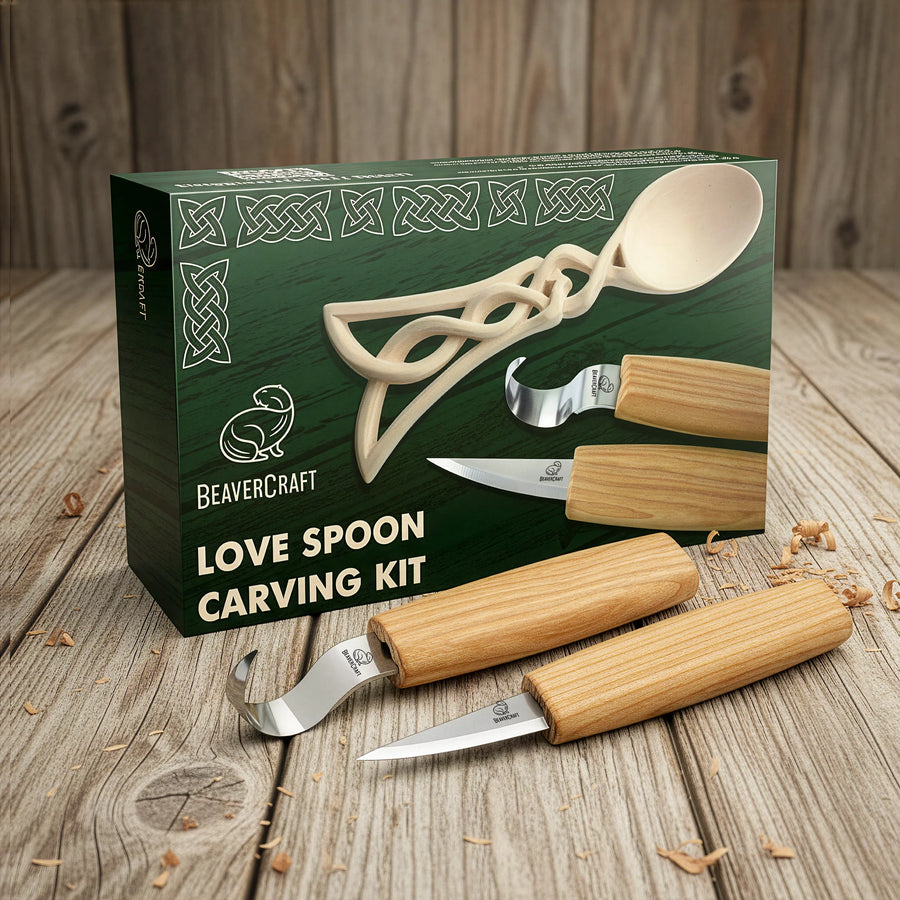
Two knives, a basswood blank, honing supplies, and a guided love-spoon project.
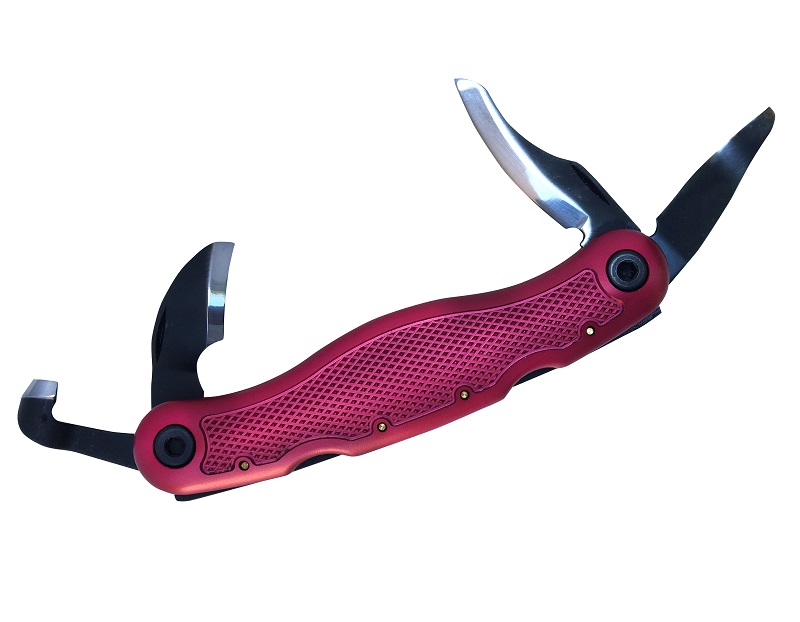
Four folding carving profiles for a carver who already owns a straight shaping knife.
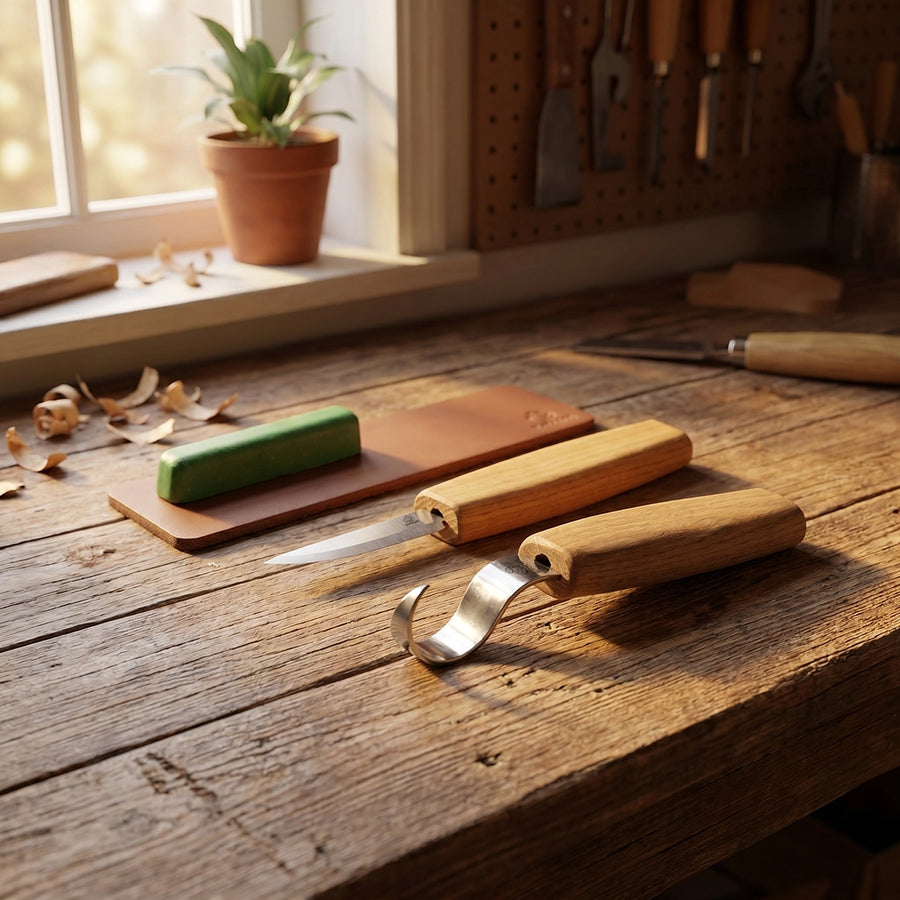
A straight knife and left-handed hook, with a strop and compound; add your own wood.
| Tool | Best for | Straight knife | Bowl tool | Wood and honing gear |
|---|---|---|---|---|
| BeaverCraft DIY04 | First guided project | C13 whittling knife | SK1 hook knife | Basswood blank; strop and compound |
| BeaverCraft S13 | Repeat spoon projects | C4m sloyd and C8 detail knives | SK1 hook knife | Strop, compound, tool roll; supply wood separately |
| BeaverCraft S01L | Left-handed bowl cuts | C1 whittling knife | SK1L left-handed hook | Strop and compound; supply wood separately |
| Flexcut JKN296 | Pocketable bowl-shaping profiles | Pelican knife for curved cutting; separate straight knife recommended | Two hooks and a gouge scorp | Supply wood and honing gear separately |
| Morakniv Hook Knife 164 Right | Adding a dedicated deep-bowl hook | No | Right-handed 164 hook | Leather edge protection; supply straight knife, wood, and honing gear |
These are different purchases: the first three are sets that can shape and hollow a spoon, while the Flexcut folding tool and Morakniv hook are specialty additions. Check the hook’s cutting orientation before ordering, especially if you carve left-handed.
Included: C13 whittling knife · SK1 hook knife · pre-cut basswood love-spoon blank · strop and compound · pattern, instructions, and finishing supplies.
The DIY04 gives you a defined first project. Shape the outside with the straight C13, hollow the bowl with the SK1, and follow the pattern and booklet for its Celtic love-spoon design. The included basswood blank saves the work of sourcing and laying out the first piece of wood. A leather strop and polishing compound help maintain the cutting edges as you work.
Its decorative design is more ambitious than a plain eating spoon; the openwork details take patience. The kit includes cut-resistant tape, but tape does not make a blade safe to point toward a hand. Choose this if you want the whole activity in one box. For regular spoon production, buy new blanks after the first project and consider a simpler design while you practice.
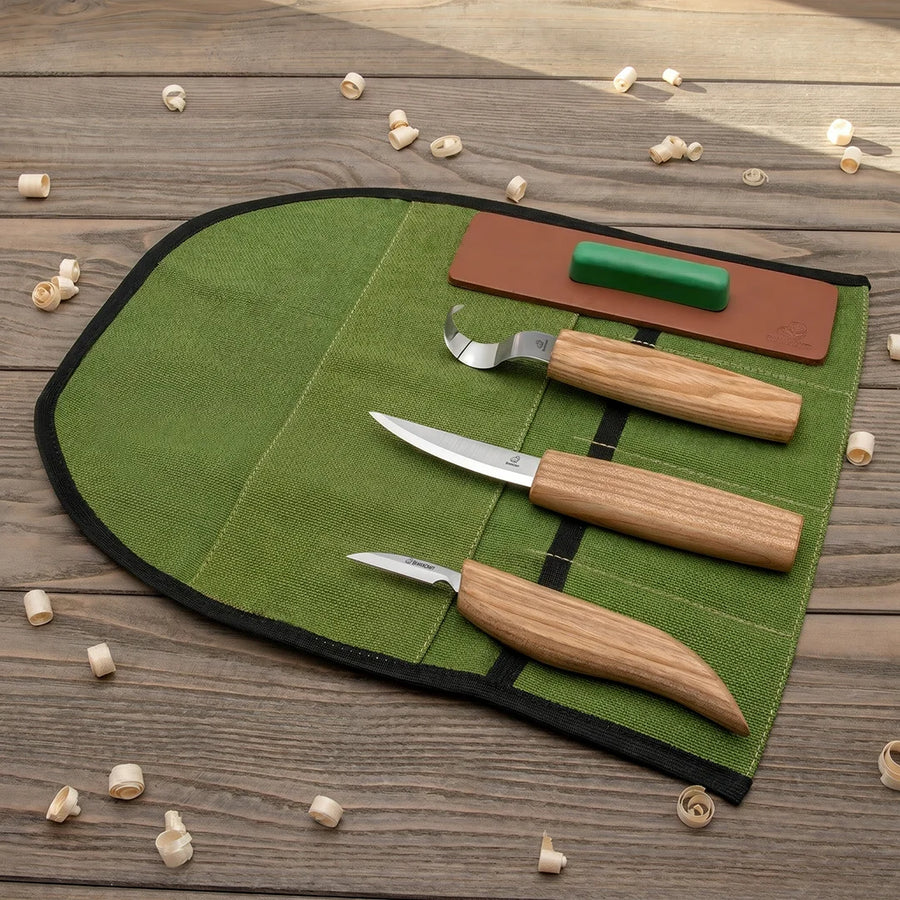
Included: C4m sloyd knife · C8 detail knife · SK1 hook knife · leather strop, polishing compound, and tool roll.
If you already have spoon blanks and plan to make more than one spoon, the S13 offers three useful cutting profiles without tying the purchase to one project. Its sloyd blade does most of the shaping, the hook hollows the bowl, and the shorter detail knife helps at the neck and small transitions. The canvas roll keeps the pieces together; the strop and compound make frequent edge maintenance easier.
BeaverCraft describes the set for soft wood and warns that the fine edges can dull faster in hard wood. It does not supply a spoon blank. Choose this over the DIY04 if you want the extra detail knife and can supply your own wood; choose the DIY04 if an included project and instructions matter more. Left-handed carvers should check the hook orientation rather than assume this standard S13 works from both sides.
Included: C1 straight whittling knife · SK1L left-handed hook knife · strop and polishing compound; ash handles and carbon-steel blades.
A hook knife’s sharpened side determines how it cuts across a bowl. The S01L includes BeaverCraft’s left-handed SK1L rather than assuming a right-handed hook will work in the same grip. Its C1 handles the outside and handle, while the hook removes wood from the bowl. The supplied strop and compound cover routine honing, but you need to bring your own blank.
This pair is simpler than a three-knife kit: you give up a dedicated fine-detail knife, though that may not matter for a plain kitchen spoon. The left-handed designation refers to the hook, not a promise that every person who writes with the left hand will prefer the same cut. If possible, think about which direction you naturally draw a hook knife before buying.
Four profiles: variable-radius hook · hook knife · gouge scorp · pelican knife. Folding aluminum handle.
Flexcut fits several curved cutting profiles into a folding handle. The two hooks give you different ways into a bowl, the scorp works concave areas, and the pelican knife helps with tight shapes. It is appealing if you already know how to carve and want several profiles without carrying four separate handled tools. The official product distinguishes this JKN296 version from the earlier Spoon Carvin’ Jack models.
Its strength is compact variety, not a full beginner kit. The pelican blade has a different shape from a long sloyd knife, so bring a separate straight carving knife for comfortably roughing out a spoon’s handle and outside. Folding blades also require care when you open, close, and strop them. Check which edge is usable from your preferred hand and grip before making it your only bowl tool.

Type: single right-handed hook knife · 55 mm stainless-steel blade · tight bowl-cutting curve · birch handle · leather edge protection.
If you already own a straight carving knife, a dedicated hook can complete your spoon kit. Morakniv’s current 164 Right has a tight curve for scoops and deeper hollows, with a stainless blade and oiled birch handle. The leather edge cover protects the sharpened curve during storage. Its listed right-hand version has a specific grind, so verify hand orientation before choosing it.
This is one knife, not the complete pair needed to shape a spoon from a blank. A larger shallow bowl may feel easier with a different hook radius, and a second knife is still needed for the exterior and handle. It suits someone who wants to upgrade a bowl-cutting tool separately instead of buying another mixed kit.
Use a sloyd or whittling knife for the spoon’s back, sides, and handle. Use a hook knife for the hollow of the bowl. A short detail knife can tidy the transition from bowl to neck, but it does not replace either basic shape. If you are also comparing general-purpose tools, the site’s beginner wood carving tools guide covers a broader range of projects; check that any kit intended for spoons actually includes a hook.
Some hooks cut on one side of the curve, some on the other, and some are ground on both sides. A right-handed label usually describes the designed cut, not whether the handle physically fits one hand. Check the blade and your preferred pull or push direction. Tight curves work well for deeper scoops; a broader sweep can feel easier across a shallow bowl. Never push a blade toward the hand holding the work.
A pre-cut basswood blank makes a sensible first attempt. Work from sound wood, secure the blank when a cut calls for it, remove small shavings, and leave enough thickness under the bowl. Check the grain before every change in cutting direction. Save very hard wood for when you can maintain a sharp edge and control it comfortably. If you prefer powered carving for other projects, our Dremel wood-carving guide covers that separate workflow.
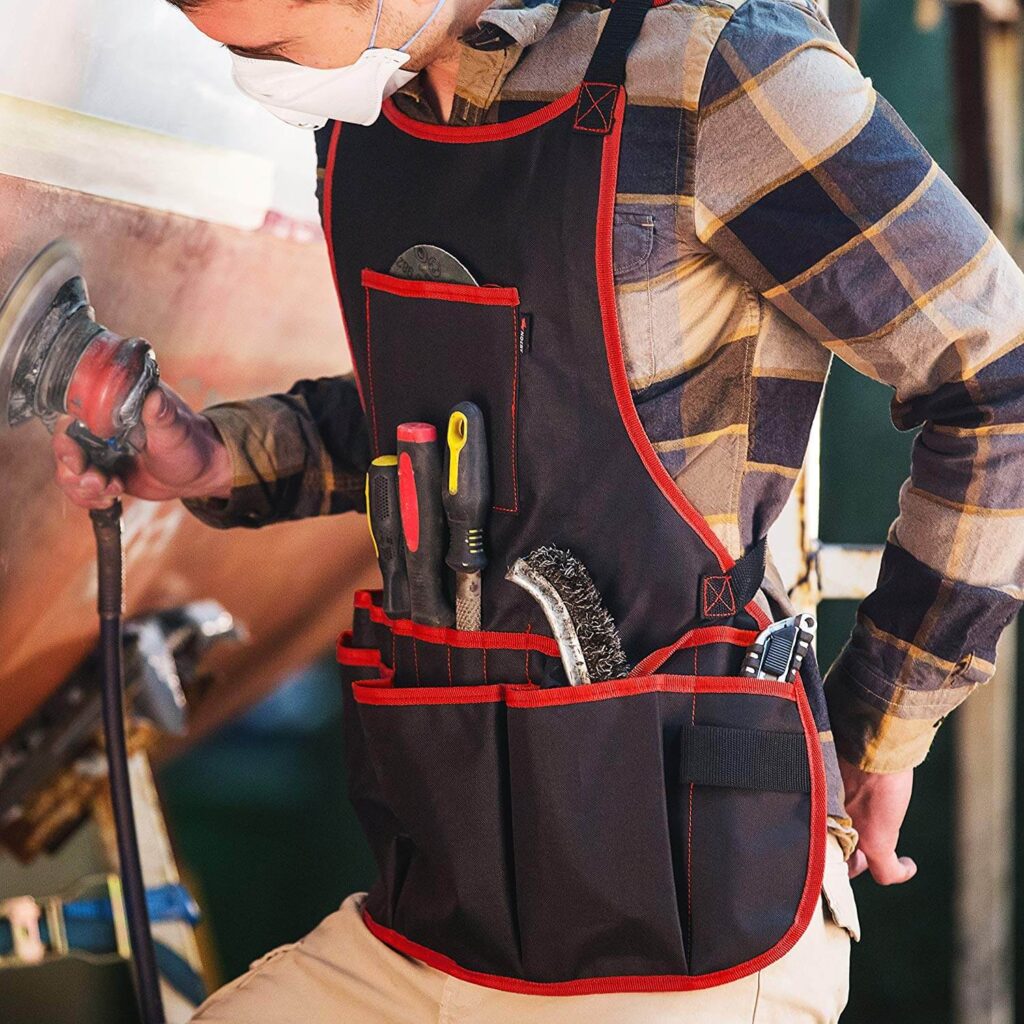
Strop a clean edge regularly with suitable compound and learn how to reach the inside of a hook safely. A strop maintains an edge; damaged or badly dulled blades may need more involved sharpening. Keep blades dry, cover exposed edges, and use a stable work surface. A woodworking apron can keep chips off clothing, but protective clothing is no substitute for a controlled cutting path.
A hook knife is the simplest hand-tool choice for hollowing the bowl. A suitable gouge or scorp can also do the job. A straight knife alone makes controlled hollowing much harder.
Choose a set with both a straight knife and a hook, a soft spoon blank, and a way to maintain the edges. The DIY04 includes a guided blank. If you already have wood, the S13 offers a third detail knife, while the S01L provides a left-handed hook.
It depends on the hook’s grind and how you make the cut. If a hook has an edge intended for one direction, the left-handed version can make a natural cutting stroke easier. Check the actual cutting side of the hook before purchasing rather than relying only on which hand you write with.
Stainless steel generally demands less attention to corrosion, while carbon-steel blades still need to be dried and cared for after use. Edge geometry, sharpness, and how well you maintain the blade matter at least as much as its broad steel category. Follow the maker’s care guidance for your particular knife.
It has several profiles for curved cuts and a pelican knife, but a separate longer straight knife remains useful for shaping the outside and handle. It also does not include a wood blank or guided first project.
Start with the BeaverCraft DIY04 if you want a blank and instructions in the box, or the S13 if you already have wood and want a reusable three-knife set. For a left-handed hook choose the S01L. Add the Morakniv 164 Right when you need one dedicated bowl knife, or the Flexcut JKN296 when a portable selection of curved profiles matters most.